Published: June 30, 2026
Updated: October 1, 2026
|
There is a version of the lawn tractor versus zero turn conversation that lives entirely in the spec sheet. Top speed. Cutting width. Horsepower. Whether the steering wheel is a wheel or a pair of levers. That version of the conversation is everywhere on the internet and we have written it ourselves more than once.
This is the other version. The one that lives in a spreadsheet. The one where a customer at the parts counter in Lebanon last spring pulled out a notebook and said, "I am not asking which one is better. I am asking which one will cost me less over seven years to mow my three acres in Warren County." We did not have a great answer that day. We have one now, and this post is it.
If you have read our March 2026 piece on choosing between zero turn and lawn tractor, think of that one as the philosophical guide and this one as the financial guide. They are meant to be read together if you want both halves of the answer.
The honest answer is acreage-driven
Before any dollars, here is what we tell every customer at the lot. Zero turns win on time. Lawn tractors win on simplicity. The size of your property determines which one matters more, and the breakeven is not where most people think it is.
For roughly 1 to 1.5 acres of flat-to-rolling lawn, the time savings of a zero turn over a lawn tractor are real but small. You are mowing for an hour and 15 minutes instead of an hour and 45 minutes. Over a season, that adds up. Over seven years, it adds up to about 90 hours of your life. Worth thinking about, not worth panicking about.
For 3 to 5 acres of mostly-open lawn, the time savings are large. A zero turn that finishes in two hours and 15 minutes can replace a lawn tractor that takes three and a half. That is a different conversation entirely. Over seven years, that gap is roughly 600 hours, which is a meaningful chunk of summer weekends.
For properties under one acre, the lawn tractor usually wins on every dimension that matters, including cost.
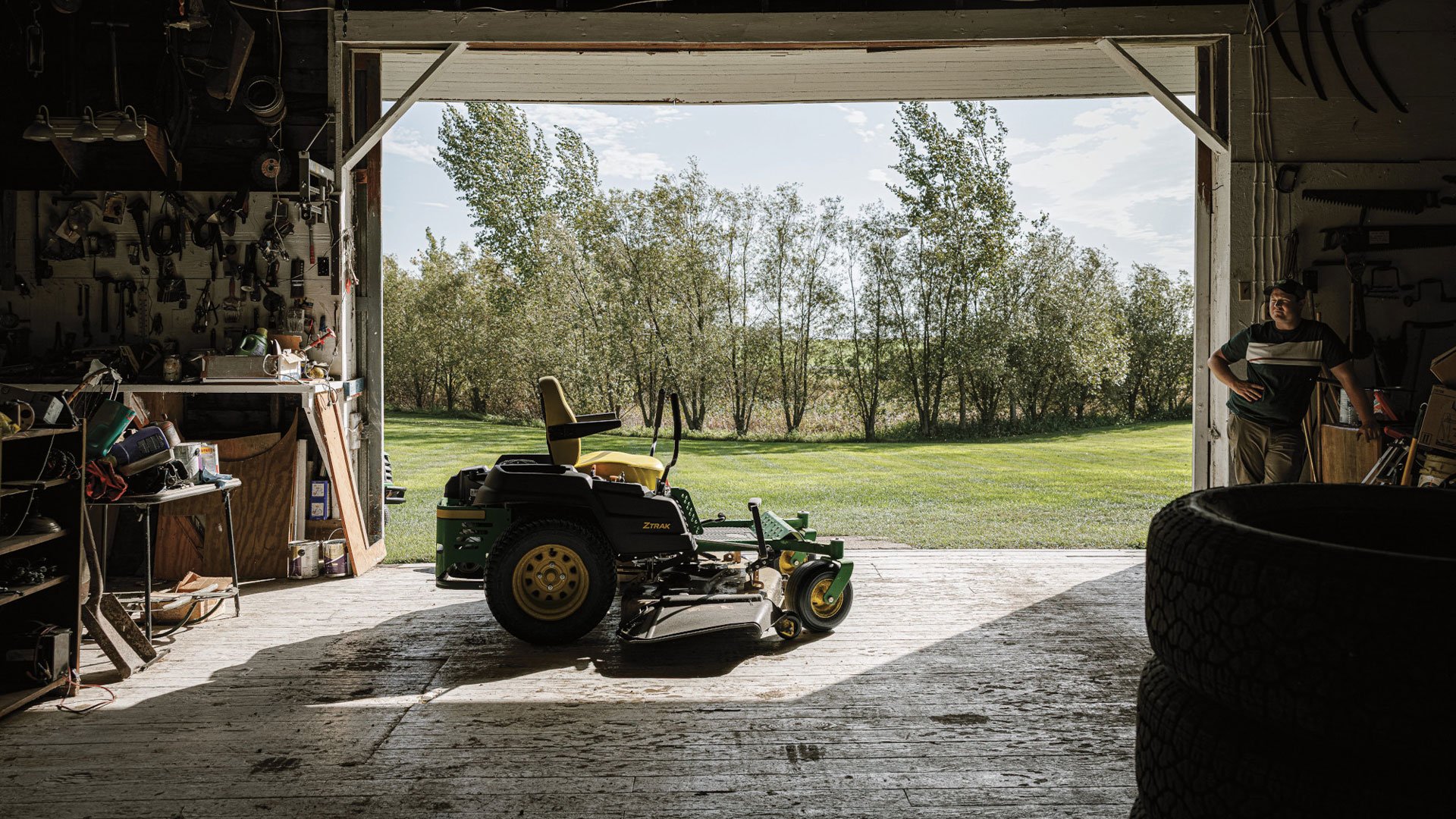
Mowing time math: what to actually expect
Here are the working numbers we use at the lot, calibrated to the average Ohio and Indiana residential property with light obstacles (trees, beds, fence corners). Real numbers vary 15 to 25 percent depending on the property, but these are honest mid-points.
| Property size | Lawn tractor (42-46 in deck) | Zero turn (48-54 in deck) |
|---|---|---|
| 1 acre | 50 to 60 minutes | 35 to 45 minutes |
| 2 acres | 1 hr 40 min to 2 hr | 1 hr 5 min to 1 hr 25 min |
| 3 acres | 2 hr 30 min to 3 hr | 1 hr 35 min to 2 hr |
| 4 acres | 3 hr 20 min to 4 hr | 2 hr 5 min to 2 hr 40 min |
| 5 acres | 4 hr to 5 hr | 2 hr 35 min to 3 hr 20 min |
A few caveats that always come up at the counter:
- Obstacles eat the zero turn advantage faster than you think. A property with a lot of trees, beds, and tight corners narrows the gap, because the zero turn's speed advantage shows up on open straight runs. A tractor's predictability around tight spots saves time.
- Wet conditions hurt the zero turn more. Lighter weight on the front, more torque to the rear wheels, and the way zero turns can scuff turf when conditions are marginal all reduce the time advantage.
- Slopes matter a lot. Most zero turns are rated for slopes up to 15 to 20 degrees. Above that, a lawn tractor with the right tire setup is the safer machine, often by a wide margin. Our December 2024 post on lawn tractors for Ohio's hilly landscapes covers that case in detail.
The 7-year true cost model
Here is the breakdown we use when a customer asks the actual dollars question. We will model a 3-acre property as the example, since it is the most common case where the question comes up. Numbers are current 2026 retail and current Koenig parts and service rates.
Lawn tractor: John Deere S180 (or comparable Gravely)
-
Purchase price: $3,200
-
Annual fuel (estimated 35 gallons at $3.40): $119
-
Annual maintenance (oil, filter, blade sharpening, belt as needed): $130
-
Annual blade replacement (every 2 years): averaged $35
-
Tire and battery (replaced once over 7 years): averaged $50
-
Resale value at year 7 (assuming maintained): $900
-
7-year total cost: about $5,200
Lawn tractor mid-grade: John Deere X350 or X380
-
Purchase price: $5,600
-
Annual fuel (estimated 35 gallons): $119
-
Annual maintenance: $145
-
Annual blade replacement: $35
-
Tire and battery: $50 averaged
-
Resale value at year 7: $1,800
-
7-year total cost: about $6,300
Residential zero turn: John Deere Z330R or Gravely ZT XL
-
Purchase price: $5,700
-
Annual fuel (estimated 38 gallons): $129
-
Annual maintenance (oil, filter, blade sharpening, hydraulic checks, deck spindles): $185
-
Annual blade replacement: $50 (3 blades on most ZT decks)
-
Tires (potentially Tweels, more on this below): higher up front, lower over 7 years
-
Resale value at year 7: $1,900 - 7-year total cost: about $6,900
Pro-residential zero turn: John Deere Z530M or Gravely ZT HD
-
Purchase price: $8,400
-
Annual fuel (estimated 40 gallons): $136
-
Annual maintenance: $225
-
Annual blade replacement: $50
-
Tires and minor consumables: averaged $50
-
Resale value at year 7: $3,200
-
7-year total cost: about $9,200
The honest read: lawn tractors are roughly $1,000 to $4,000 cheaper to own over seven years on a 3-acre property than equivalent-tier zero turns. The trade-off is real and so is the time savings on the zero turn side. The question is whether the time saved is worth the money spent.
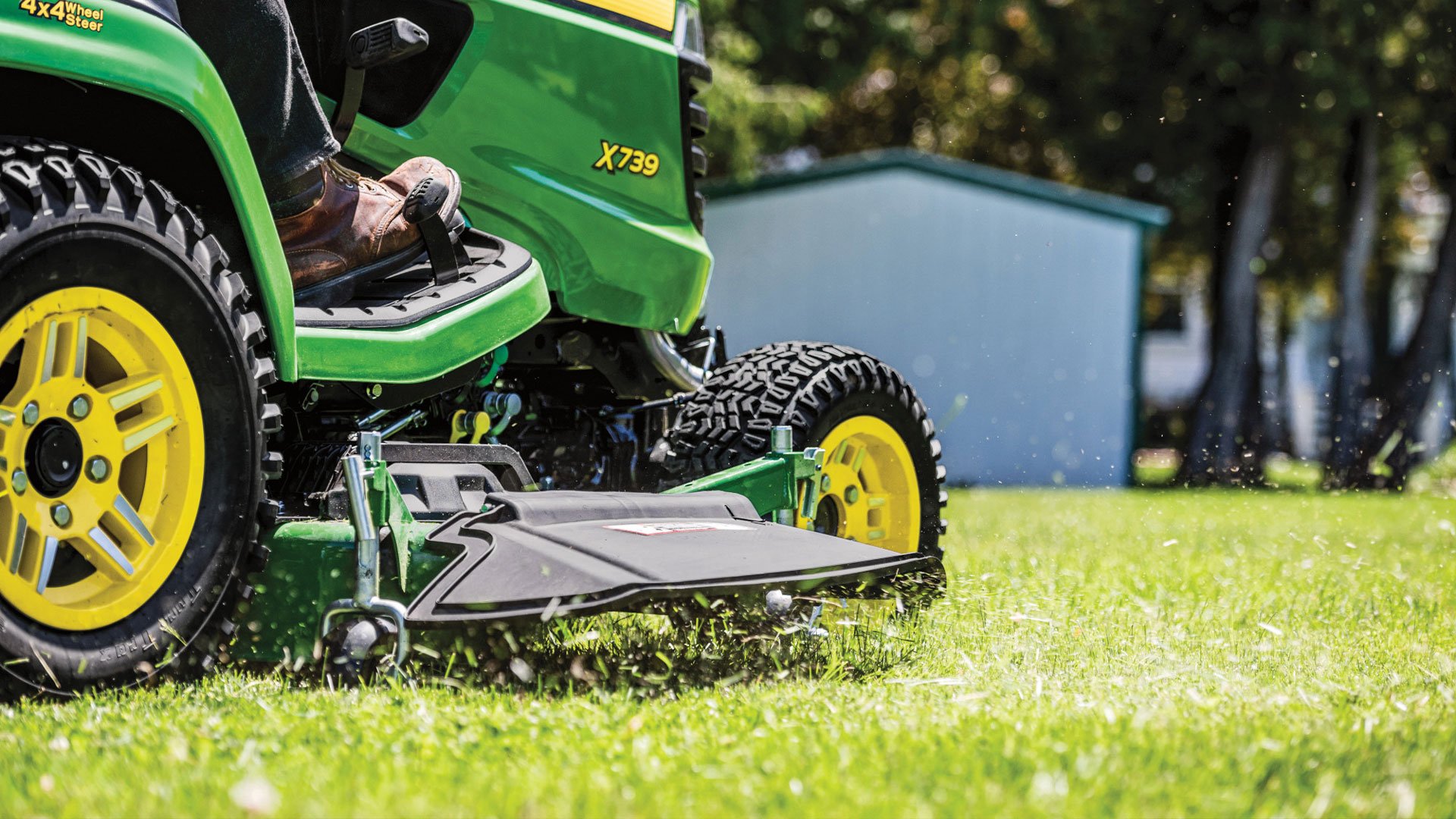
Where Tweels change the math
One specific cost we did not include in the base model is worth its own paragraph. Tweels (airless tires) are increasingly available on John Deere zero turns, and they eliminate flat tires entirely, reduce turf damage on tight turns, and last roughly two to three times as long as pneumatic tires. Tweels add several hundred dollars to the front-end cost of a Z900M and similar pro-residential machines.
Over a 7-year window, Tweels effectively eliminate one of the persistent annoyances of zero turn ownership, which is the surprise mid-summer flat. If you have ever had to load a zero turn onto a trailer with a flat front tire, you know exactly how much you would have paid that morning to avoid the situation. That is the case for Tweels.
This is the kind of small line item that does not show up in a generic comparison but shows up in your driveway in July. Worth asking us about when you are configuring a machine.
Maintenance cost details most people miss
The 7-year totals above include the basic maintenance picture. A few sub-categories where the difference between platforms shows up in ways the spec sheet does not warn you about:
Deck spindles. Zero turn decks have three spindles spinning at high RPM under more load than a lawn tractor's two. Spindle replacement happens. On a heavy-residential zero turn it can happen in the 800 to 1,200 hour range, at $150 to $300 per spindle plus labor. A lawn tractor spindle that lasts the full 7 years is more typical than not. Plan for one spindle event on a zero turn over 7 years and you are budgeting realistically.
Hydraulic systems. Zero turns have hydrostatic drive systems on each rear wheel. They are well-engineered and rarely fail under normal residential use, but when they do, the repair is significant. Lawn tractors typically have a simpler single-pump hydrostatic transmission that is cheaper to service. Budget for one hydro fluid and filter service on either platform somewhere in the year 4 to 5 window.
Belts. Zero turn deck belts and drive belts wear faster than lawn tractor belts due to the higher RPM and tighter geometry. A lawn tractor often runs a single drive belt through year 7 with one replacement in the middle. A zero turn realistically sees two to three belt events over 7 years across deck and drive.
Battery. Both platforms typically need one battery replacement in the 4 to 5 year window, about $90 to $130 for a quality replacement.
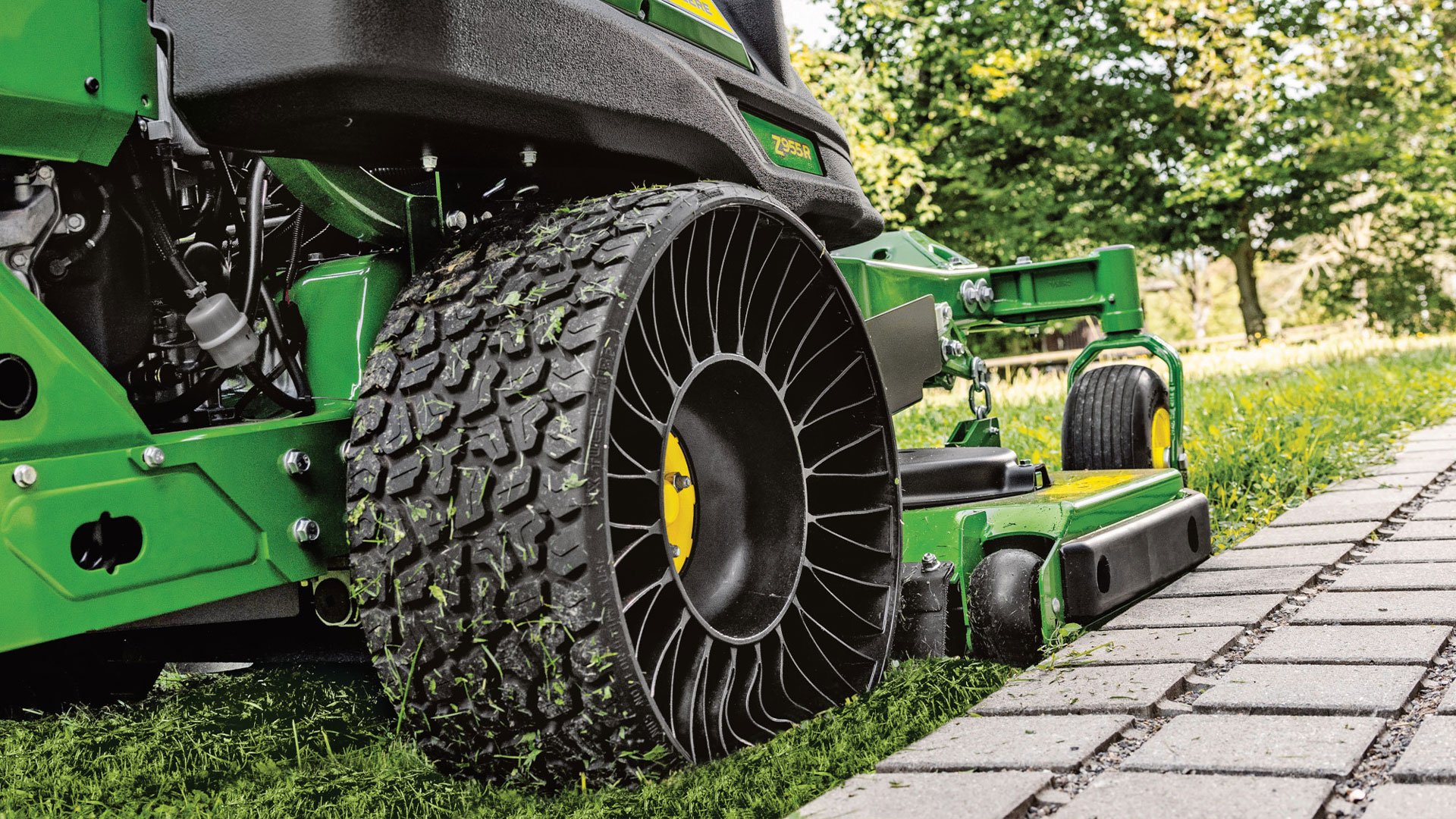
When a lawn tractor is still the right answer
The zero turn marketing wave has been so strong over the last decade that customers often assume the zero turn is the modern choice and the lawn tractor is the holdover. That is not how we read the actual buying picture.
A lawn tractor is the right pick when:
- The property has significant slopes above 15 degrees
- The mowing job often includes pulling a small cart, sprayer, or aerator
- The owner prefers a steering wheel and traditional controls
- The budget is genuinely tight and a smart 7-year total matters more than mowing speed
- The lawn includes a lot of tight corners, beds, and obstacles that wash out the speed advantage anyway
- The mower will also see occasional snow-blade or front-attachment duty in winter
A zero turn is the right pick when:
- The property is open, mostly flat, with long straight runs
- The owner values mowing time above almost everything else
- The lawn is large enough that the time savings genuinely compound (3+ acres of open ground)
- The owner is comfortable with the lever controls or has already used them
- The owner is willing to spend more up front for the time savings over 7 years
If you are reading this with a property somewhere between 1.5 and 3 acres and a typical mix of open ground and obstacles, the financial argument leans toward the lawn tractor. The time argument leans toward the zero turn. Neither is wrong.
Resale and 7-year exit value
One quiet line item worth pulling out. Pro-residential zero turns hold their value better than residential lawn tractors, in absolute dollars. The S180 in the model above loses around 72 percent of its purchase price over 7 years. The Z530M loses around 62 percent. That gap is real and shows up at trade-in time.
This means the up-front price difference between platforms is partially recovered when you trade in. The 7-year totals we modeled already reflect this. If you tend to keep equipment longer than 7 years, the residential lawn tractor's lower entry cost looks even better. If you tend to trade in every 5 to 7 years, the pro-residential zero turn's higher resale narrows the gap.
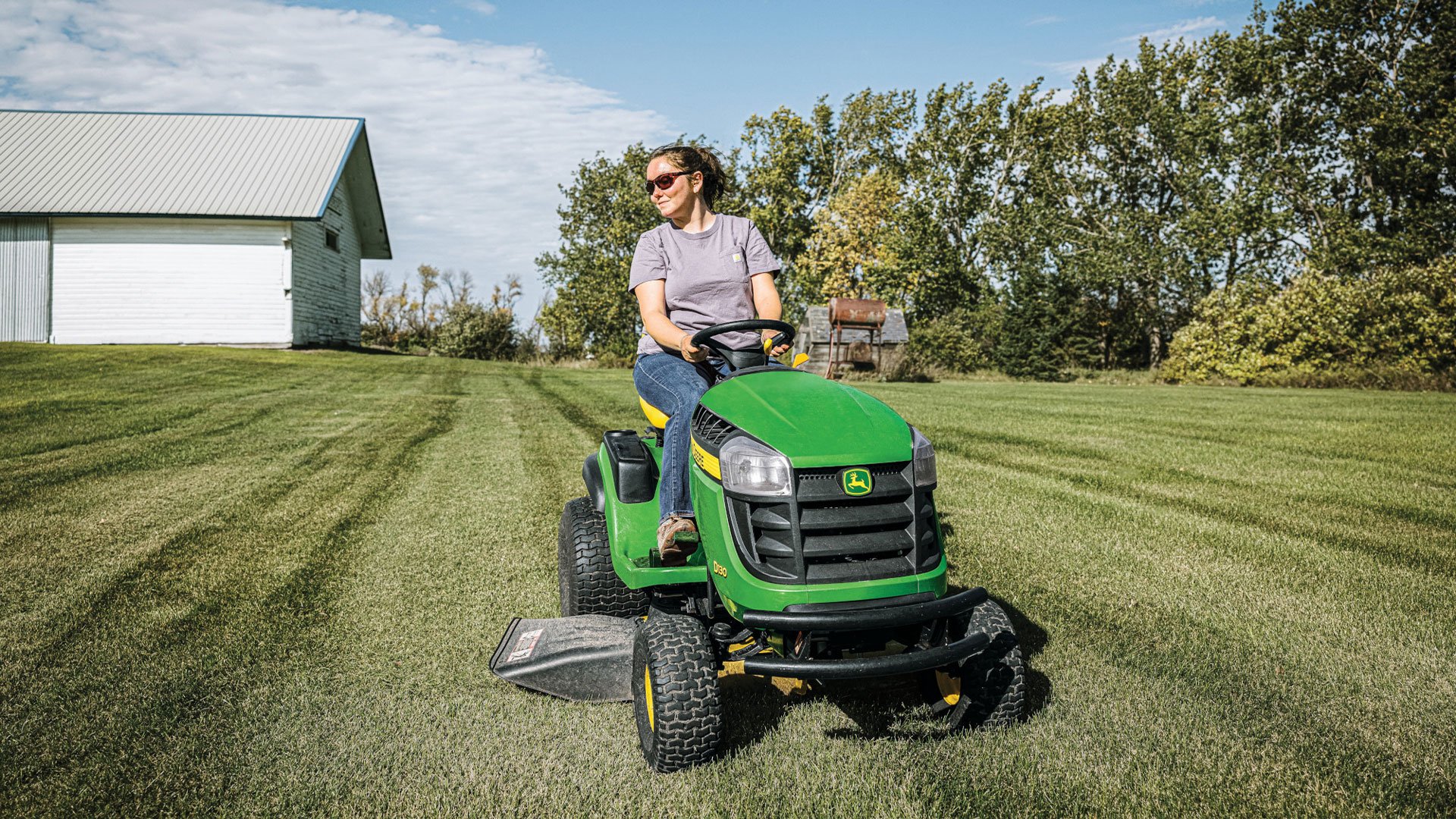
How to make the call
Three honest questions to ask yourself before you walk in:
1. How many hours a week do I actually want to spend mowing?
2. Is the property mostly open or mostly broken up by obstacles?
3. What is my honest plan for keeping the machine?
Bring the answers to those three questions when you come in and we can run the model with your actual numbers. Or stop by and just look at both, side by side, on the lot. The financial math is meaningful, but a 10-minute test on each machine answers a question that no spreadsheet can.
You can also have a member of our team head to your property to evaluate which one fits your needs better. Learn more about Koenig Property Plan.
Find parts for your S180
Shop genuine John Deere parts that fit the S180 and X350 at Koenig Marketplace — search by your exact model to see what fits.
See how the S180 compares
Weighing your options? Koenig has side-by-side spec comparisons for the equipment we sell:
- S180 vs. Cub Cadet XT1 ST54
- S180 vs. Husqvarna Ts 154X
- X350 vs. Cub Cadet XT2 SLX50
- X350 vs. Cub Cadet XT2 LX46
Not sure which mower is right for you?
Answer a few quick questions and Koenig will match you to the right John Deere mower for your property, based on how you work and what you need.