Published: March 16, 2026
Updated: August 3, 2026
|
March in Ohio and Indiana is a waiting game. The ground is still cold in the morning, there's still some frost here and there, and your lawn is somewhere between dormant and alive. But right about now is when most property owners start doing the mental math: is my mower going to make it through another season?
If you're running a machine that's getting up in age, or if this is your first spring with a property of real size, that question matters. And the decision underneath it, whether to buy a zero turn mower or a lawn tractor, is one that trips people up more than it should.
Both types of machine will cut your grass. The real question is which one fits your property, your terrain, and the way you actually use the machine. This guide walks through that honestly, so you can head into spring with a clear answer instead of a browser full of open tabs.
Why Spring Is the Right Time to Make This Decision
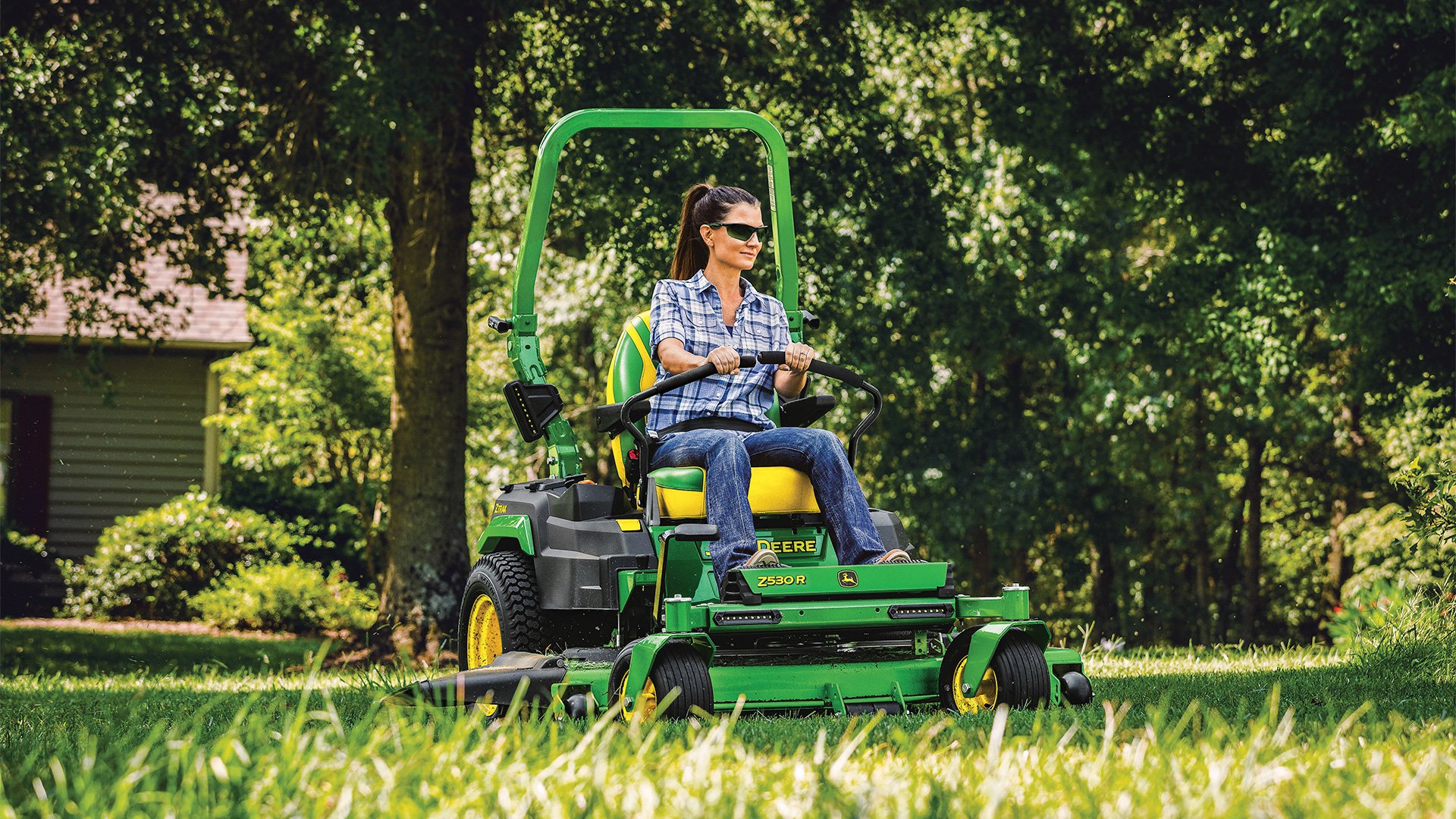
It might seem obvious, but there's a practical reason not to wait until May to think about a new mower. Equipment dealers across Ohio and Indiana see their best inventory in early spring. Once the season kicks in and everyone is suddenly motivated, availability on popular models tightens up.
More importantly, right now is when the financing offers are worth paying attention to. Through April 30, 2026, John Deere is offering 0% APR for 36 months on new residential zero turn mowers, including the Z300 and Z500 Series ZTrak models. That's a genuine zero-interest financing arrangement, not a deferred interest deal with a balloon payment waiting at the end. The X300 and X500 Select Series lawn tractors carry the same offer: 0% APR for 36 months or 4.9% APR for 60 months, also through April 30.
If you're going to buy this year anyway, starting the process in March rather than late April gives you time to evaluate the machine properly and take advantage of the promotion without rushing.
The Core Question: What Does Your Property Actually Need?
Before comparing any two brands or models, the most useful thing you can do is get honest about your property.
Two factors drive the right answer:
-
Your acreage
-
Your terrain
For most Ohio and Indiana properties under one acre, a lawn tractor does everything you need. The steering wheel operation is intuitive, the machine handles light attachments like a cart or spreader, and the price entry point is lower than a comparable zero turn.
For properties between one and three acres, the choice gets more interesting. A lawn tractor can still do the job, but a zero turn mower will cut your mowing time meaningfully. Zero turns typically run 7 to 8 mph on flat ground, versus 5 to 6 mph for a tractor. On a two-acre lot, that difference adds up to 30 minutes or more per session.
For properties over three acres, a zero turn mower almost always makes more sense on time and efficiency grounds alone. The wider cutting decks (48 to 54 inches) and faster speeds let you cover ground in a fraction of the time. The investment pays for itself in hours saved.
Terrain is the real separator, though. And this is where Ohio and Indiana property owners need to pay careful attention.
Hills Change Everything: What Zero Turns Can't Do
This comes up in almost every conversation a Koenig sales consultant has with a first-time zero turn buyer, and it's worth addressing plainly: zero turn mowers struggle on significant slopes.
Zero turns rely on two rear drive wheels for all traction and steering. On flat, dry ground, they're exceptional. On a slope above 15 degrees, especially on damp grass, the rear wheels can lose traction and the machine can slide. That's not a brand-specific issue. It's a design characteristic shared by virtually every residential zero turn on the market, including the Toro TimeCutter, the Husqvarna models you'll see at big-box stores, and the lower-end Cub Cadet lineup.
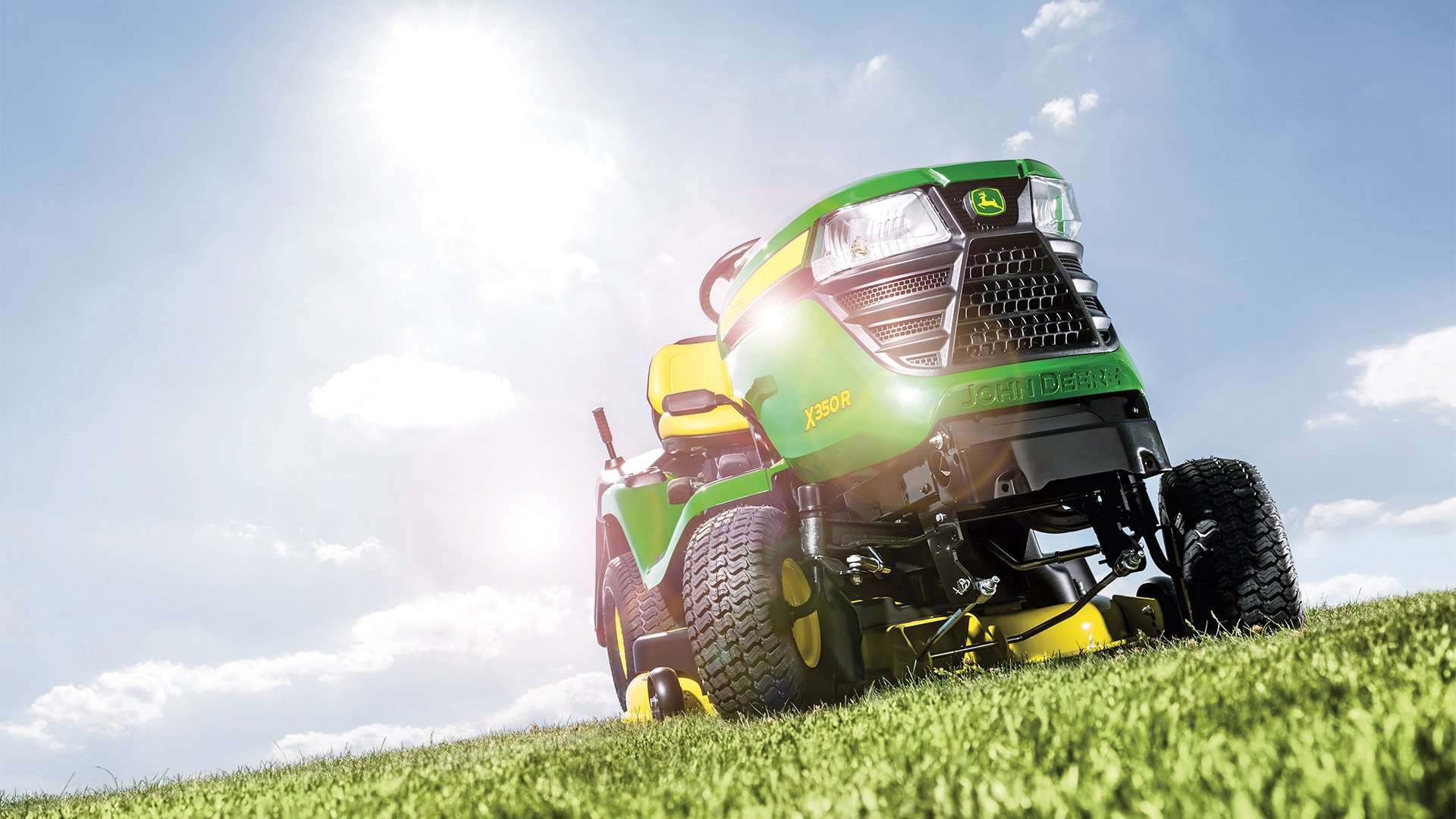
If your property has rolling terrain, hillside sections, or a yard that runs off into a slope at the back, a lawn tractor is the safer and more capable choice. The X300 and X500 Select Series lawn tractors from John Deere were specifically engineered for varied terrain. The wider wheelbase, heavier frame, and rear-wheel traction assist give them stability that a zero turn simply can't match on hills.
Koenig actually wrote about this in detail: the X300 Series lawn tractors are built with a cast-iron front axle, Traction Assist on the rear transaxle, and an iTorque Power System that delivers consistent torque on inclines without lugging or stalling. For southern Ohio's hilly terrain or the rolling land you find across central Indiana, that matters.
If your property is genuinely flat, a zero turn is often the smarter buy. If it has any meaningful slope, lean toward a tractor.
Understanding the John Deere Lineup
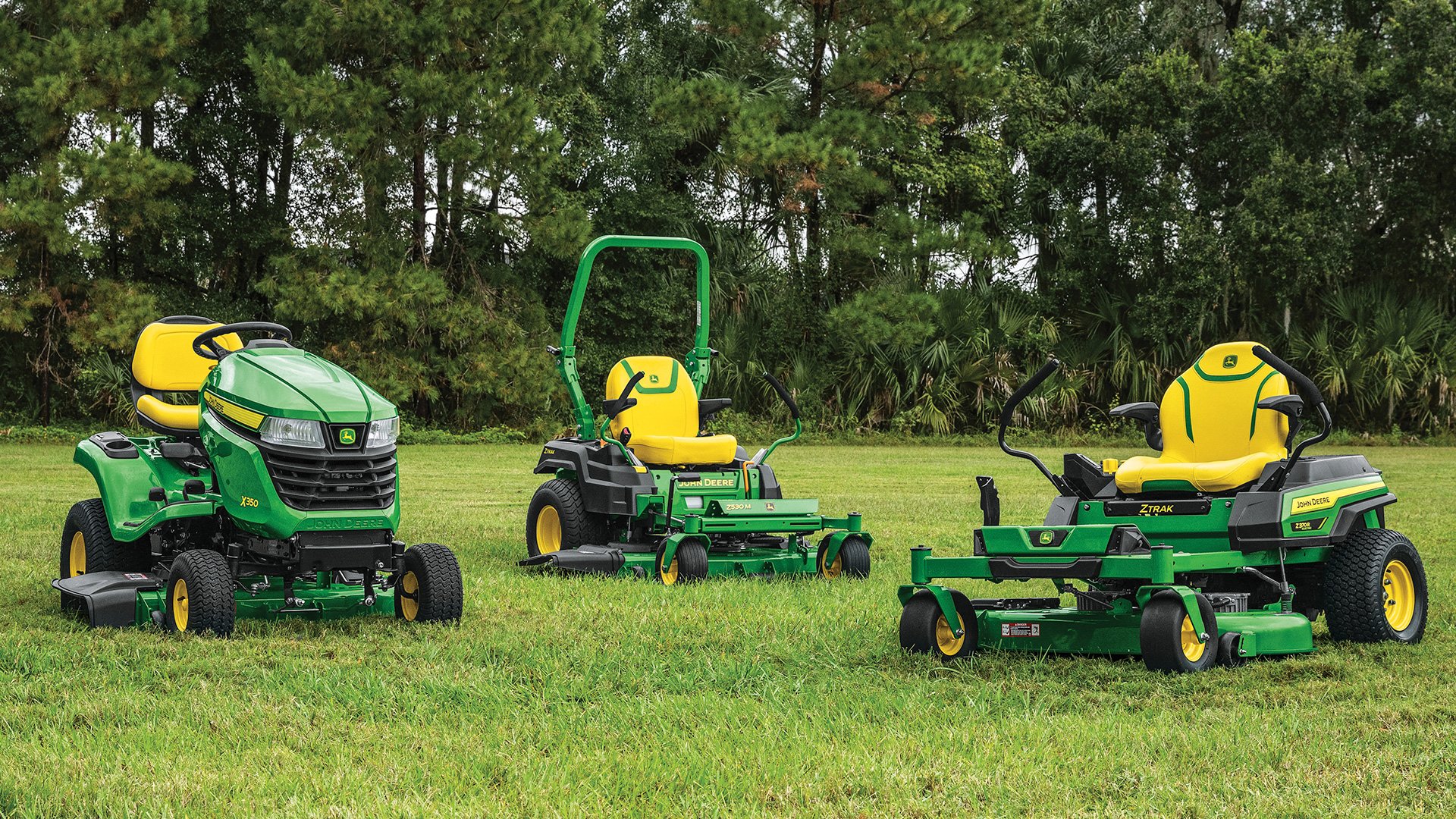
Koenig carries John Deere's full residential mowing lineup, from the entry-level 100 Series up through the X700 Signature Series. Here's how the tiers break down in plain terms.
Lawn Tractors
The 100 and 200 Series are John Deere's value tier. Reliable machines with proven engines, good for half-acre to one-acre flat-to-gently-rolling properties. These carry the "No Interest If Paid In Full within 9 Months" promotion, which works well if you want to pay it off quickly without interest.
The X300 Series is where the lineup starts to get serious. The X330, X350, and X380 models step up to cast-iron front axles, Traction Assist, and the Accel Deep mowing deck, which produces a cleaner cut with better airflow than the stamped decks on less expensive machines. Deck sizes run from 42 to 54 inches depending on the model. The 0% for 36 months offer applies here.
The X500 Select Series adds more power, larger deck options, and a more commercial-grade feel. Good choice for larger properties, three-plus acres, or anyone who uses the tractor hard. The X700 Series is the premium tier: diesel engine options, four-wheel drive, four-wheel steering on select models, and enough capability to handle acreage that most people would consider commercial scale.
Zero Turn Mowers
The Z300 Series starts at 20 to 24 horsepower with 42-inch Accel Deep decks and covers up to 2 acres efficiently. The Z315E is the entry point. The Z330R adds LED lights, armrest seating, covered storage, and a front bumper for a more comfortable ride on longer sessions. The Z370R and Z370RS are battery-electric models: no engine noise, zero emissions, 1.25 to 2 acres per charge, and a 5-year battery warranty that changes the long-term maintenance equation significantly.
The Z500 Series steps up in speed, comfort, and power for larger residential properties. The Z700 Series is the premium end of the residential zero turn market, carrying a 0% for 36 months or 2.9% for 60 months offer through April 30.
The full zero turn lineup is available at Koenig at all Ohio and Indiana locations.
How Does John Deere Compare to the Competition?
This is a fair question, and buyers researching riding mowers will encounter Cub Cadet, Husqvarna, Toro, and Honda prominently. Here's an honest look.
Cub Cadet (XT1 and XT2 Enduro series) is a genuinely good product. The XT1 LT46 carries a 23 hp engine and 46-inch deck and sells in the $2,499 to $2,650 range depending on the dealer. It's a legitimate choice for a flat, moderately sized yard. Popular Mechanics listed it as their best overall tractor in 2026. Where Cub Cadet falls short: dealer density in rural Ohio and Indiana is lower than John Deere, parts availability varies, and the machines carry lighter frames that show wear more quickly under heavy seasonal use.
Husqvarna (TS 354XD, TS 242XD) competes well in the mid-range tractor segment and gets reasonable marks from Consumer Reports. The TS 354XD has a 24 hp engine and 54-inch deck, good for larger flat properties. The trade-off is dealer support: Husqvarna's service network in the region doesn't match the depth that John Deere has through dealers like Koenig.
Toro TimeCutter is a popular zero turn at the consumer level. The TimeCutter line performs well in reviews for flat, open properties but shares the same slope limitations as any residential zero turn. Service is handled through power equipment dealers, and parts lead times can be an issue in rural areas.
The honest trade-off with John Deere
You will pay more upfront. A Z330R zero turn or an X350 lawn tractor costs more than a comparable Cub Cadet or Husqvarna. That's real.
What the premium buys you is a machine that holds its resale value better, a dealer network with several locations across your region for parts and service, and a cutting deck design (the Accel Deep) that consistently produces better cut quality in independent tests and in Consumer Reports' evaluations. John Deere has earned above-average scores for predicted reliability in CR surveys, which matters when you're planning to run a machine for 10 to 15 years.
The gap between a John Deere and a mid-tier competitor often narrows significantly when you factor in resale value at year five or seven.

The Attachment Angle: Tractors Do More Than Mow
One thing the zero turn vs. lawn tractor conversation sometimes overlooks: what do you need the machine to do in November and January?
A lawn tractor with a rear hitch is a four-season tool. The same X350 you mow with in June can pull a spreader in fall, carry a cart of firewood, push a front blade through light snow, or operate a rear bagger for leaf cleanup. The X300 and X500 Series are designed with these use cases in mind, and John Deere's attachment system makes adding implements straightforward.
Zero turns aren't versatile in the same way. They're designed primarily to mow. A few models accept a rear hitch for light towing, and some will accept a bagger, but ground-engaging attachments and snow removal are off the table. If your property asks for year-round use of the machine, a tractor almost always wins.
If all you need is fast, efficient mowing on flat ground from April through October, a zero turn earns its place completely.

Spring Prep: What Ohio and Indiana Lawns Need Right Now
Picking the right mower is the hardware side of the equation. The software side is knowing how to use it this time of year.
In Ohio and Indiana, mid-March is still early. Cool-season grasses like bluegrass, fescue, and ryegrass start actively growing when soil temperatures reach 50 degrees F consistently, which typically arrives in late March to mid-April depending on where you are in the state. Central Indiana and central Ohio tend to warm a bit earlier than the northern regions.
A few things worth doing before your mower sees real work:
Sharpen or replace your blades
Dull blades tear grass rather than cut it cleanly, leaving a ragged edge that browns out and stresses the turf. If you didn't sharpen last fall, do it now. It's a 20-minute job if you have the tools, and it makes a visible difference in cut quality.
Check and change the oil
Most residential mowers run well on annual oil changes. If you put in a full season last year without one, now's the time.
Inspect the air filter and spark plugs
A clogged filter costs horsepower and fuel efficiency. Plugs on small engines wear gradually; replacing them at the start of the season is cheap insurance.
Set your cutting height correctly
For the first few mows of spring, set the deck higher than you think you need: 3.5 to 4 inches for most cool-season lawns. You never want to remove more than one-third of the blade length in a single cut, and spring grass is tender. A high first cut protects the turf while it builds strength.
If you're not sure what height settings correspond to those measurements on your specific deck, a quick call to your local Koenig store will get you a straight answer.
A Word on Electric: The Z370R Is Worth a Look
The battery-electric zero turn isn't a curiosity anymore. John Deere's Z370R and Z370RS deserve a real look if your property is under two acres and you've been frustrated by engine maintenance over the years.
The Z370R runs a 3.2 kWh sealed lithium-ion battery, covers up to 2 acres per charge, and comes with a 5-year battery warranty. No oil changes. No spark plugs. No carburetor issues from sitting over winter. The Z370RS uses a modular battery system compatible with EGO tools you may already own, which changes the economics for some buyers.
These models carry 0% APR for 48 months right now, through April 30. That's one of the better financing windows on the electric tier.

The honest limitation: if your property is over two acres, or if you have extended mowing sessions, the range will be a constraint. But for a true one-to-two-acre flat yard, the operational simplicity makes a compelling case.

Ready to See One in Person?
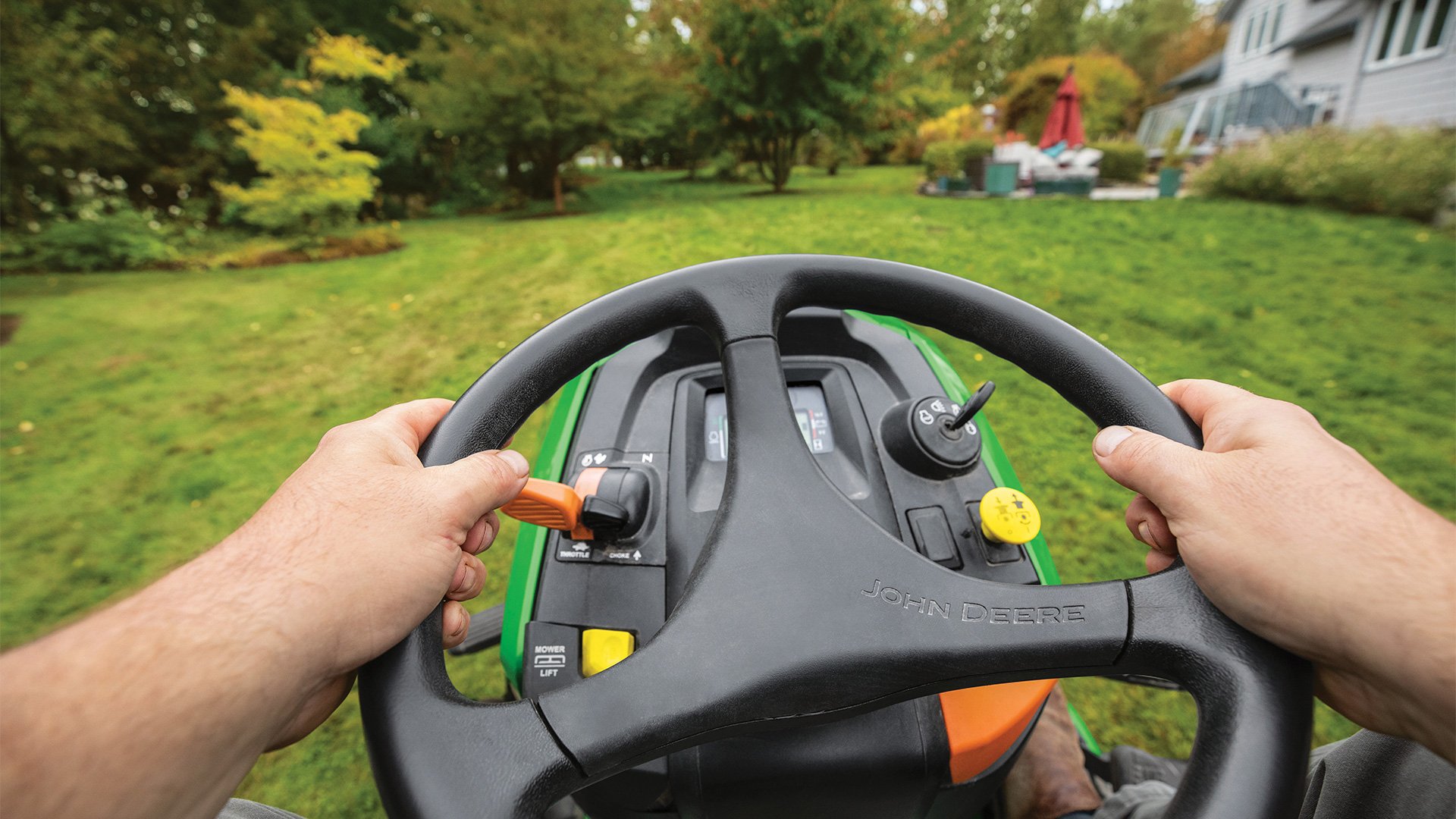
Reading about mowers gets you most of the way there. Actually sitting in the seat and understanding the controls gets you the rest. The feel of lap bars on a zero turn versus a steering wheel on a tractor is something you can't fully assess from a spec sheet.
Koenig Equipment has locations across Ohio and Indiana, and the team at any store can walk you through the current lineup, answer specific questions about your property, and run through financing options without pressure. The spring financing window closes April 30, so there's time to do this right.
If you know what you're looking for, the full lawn and garden tractor lineup and zero turn mower lineup are available on the Koenig website with current inventory by location.
Spring comes fast in the Midwest. Getting the right tool in your garage before the first real mow is one of those small decisions that pays dividends every weekend for the next decade.
Find parts for your X300
Shop genuine John Deere parts that fit the X300 and X500 at Koenig Marketplace — search by your exact model to see what fits.
See how the X350 compares
Weighing your options? Koenig has side-by-side spec comparisons for the equipment we sell:
- X350 vs. Cub Cadet XT2 SLX50
- X350 vs. Cub Cadet XT2 LX46
- X380 vs. Craftsman T4400
- X380 vs. Husqvarna Ts 348XD
Not sure which mower is right for you?
Answer a few quick questions and Koenig will match you to the right John Deere mower for your property, based on how you work and what you need.