Published: October 10, 2026
Updated: October 10, 2026
|
A lot of farms in Ohio and Indiana run a tractor for the field and borrow, rent or hire out the dirt work. Then a barn gets built, a lot needs regrading, or the manure pack needs cleaning every week, and the question changes: does the next machine belong on the ag side or the compact construction side? Sometimes the honest answer is both.
We sell and service John Deere agriculture, compact tractors and compact construction equipment, so we see this decision from both sides of the counter. This guide lays out where the machines overlap, where they don't, and how financing and service work when one operation runs both lines.
The Short Answer
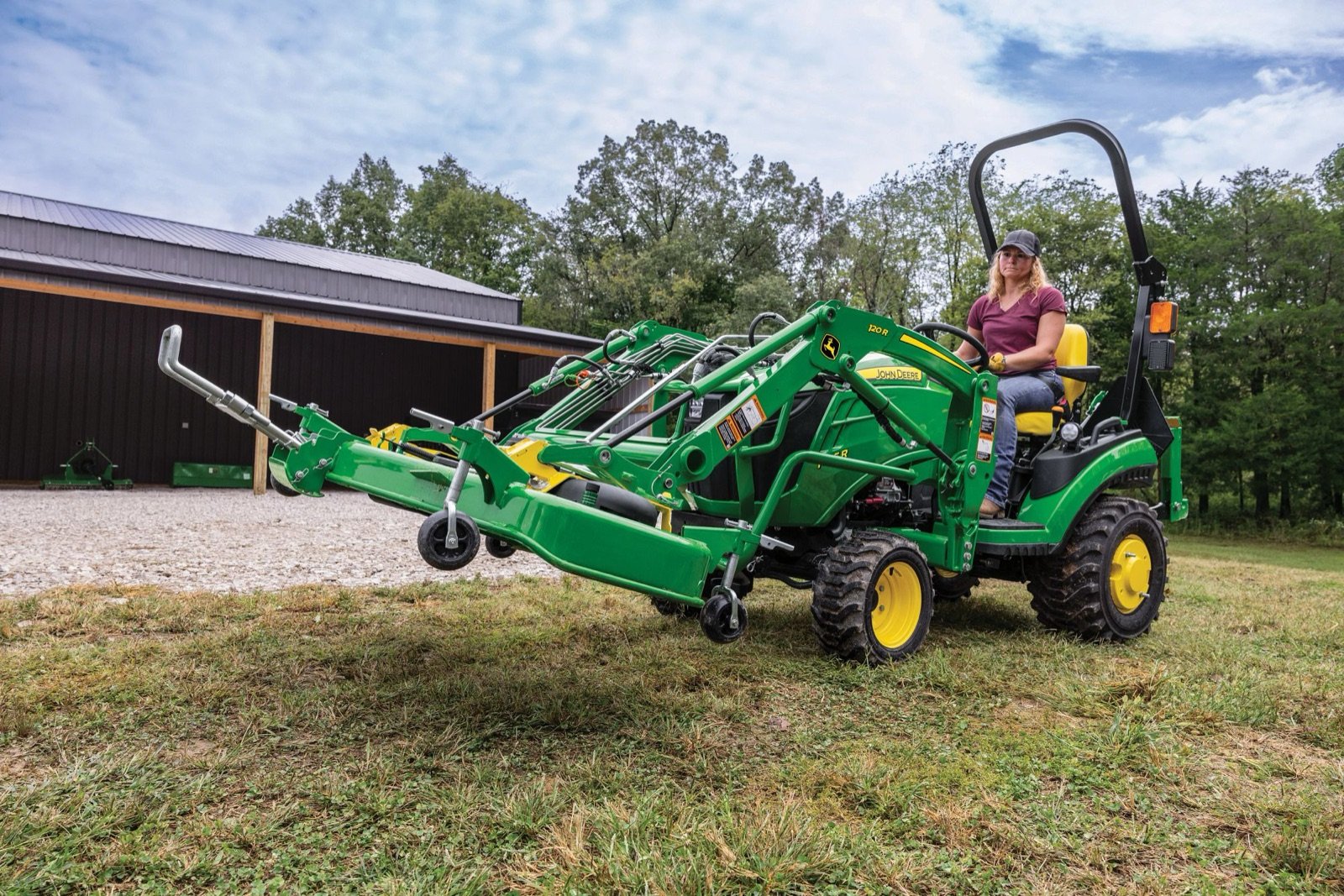
A compact or utility tractor is the better buy when the work is mostly PTO and 3-point jobs (mowing, brush cutting, tillage, hay) with loader work on the side. A skid steer or compact track loader is the better buy when the loader is the job: cleaning pens, moving material all day, grading, or running hydraulic attachments. Farms that do a lot of both usually end up with both, because a tractor makes a slow, hard-working loader and a skid steer can't run a rotary cutter off a PTO.
How the Machines Compare
Here are three machines that often land on the same short list. Figures come from John Deere's published specs.
- John Deere 4044M compact utility tractor: 42.5 gross hp, 17.4 gpm hydraulic pump, 2,500 lb 3-point lift (24 in. behind the link arms), standard 4WD, Category 1 hitch, open station only.
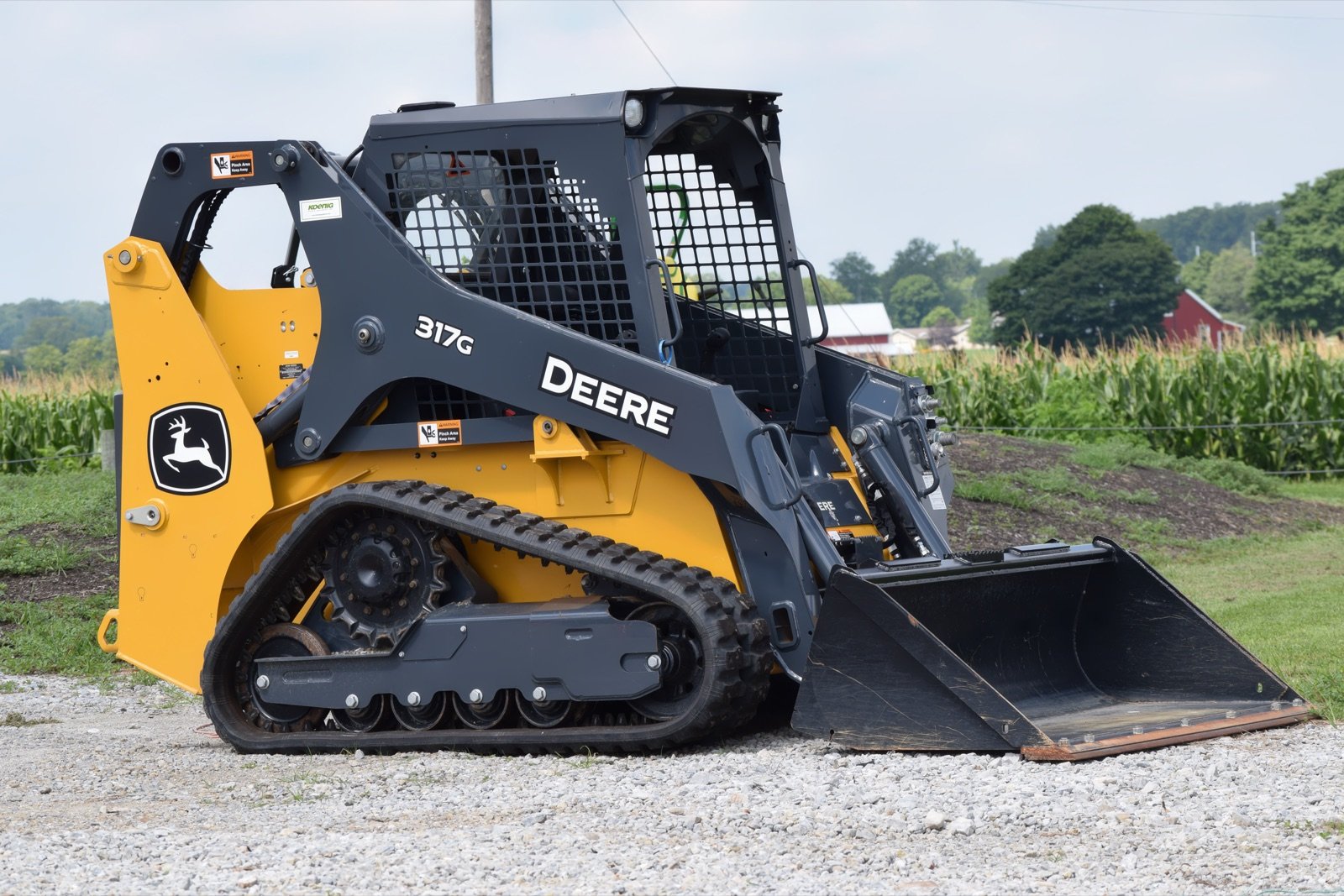
- John Deere 318 P skid steer: 65 gross hp (61 net), 1,945 lb rated operating capacity, 6,542 lb operating weight.
- John Deere 317 P compact track loader: 65 gross hp (61 net), 2,125 lb rated operating capacity, 8,423 lb operating weight.
The 318 P and 317 P share the same horsepower. The track loader carries more weight and more rated capacity, and its tracks spread that weight out, which matters in wet lots, soft pasture and freshly worked ground. The skid steer is lighter, simpler to haul and easier on concrete and hard surfaces. For a deeper look at that choice, see our skid steer vs. compact track loader comparison.
The tractor is the only one of the three with a PTO and a 3-point hitch. That is the line that decides most of these purchases.
Decision Matrix: Which Machine Fits the Job
| Job | Compact or utility tractor | Skid steer | Compact track loader |
|---|---|---|---|
| Mowing and brush cutting | Best fit (PTO) | Possible with a hydraulic cutter | Possible with a hydraulic cutter |
| Tillage, hay and 3-point implements | Best fit | Not suited | Not suited |
| Cleaning pens and lots most days | Possible | Best fit | Good fit |
| Wet lots, mud and soft ground | Possible | Limited | Best fit |
| Grading, building pads and drainage | Possible | Good fit | Best fit |
| Pallets, bales and material handling | Good fit | Best fit | Best fit |
| Snow removal | Good fit | Good fit | Good fit |
Read across the row for your most common jobs. If most of your answers land in one column, start there. If they split between the tractor column and a loader column, that is the operation that usually benefits from owning both.
Signs Your Operation Needs Both
- You hitch and unhitch the loader on your tractor several times a week to switch between mowing and loader work.
- Your tractor spends winter days cleaning lots and pushing snow, and you're putting loader hours on a machine bought for field work.
- You rent a skid steer or track loader more than a few times a year for fence lines, drainage, building pads or cleanup.
- You have hired help, and two people need two machines running at the same time.
- You're adding livestock, a shop or a building site, which means steady material handling for years, not a one-time project.
If two or more of these fit, price the second machine before the next rental or the next round of hired dirt work.
Financing Two Lines
Both lines can be financed through John Deere Financial. Promotional rates and cash offers are set by equipment line, so a compact tractor offer and a skid steer offer usually have different terms and different end dates. Before you sign either deal, look at both side by side on our current offers page and ask how a trade-in or the timing of each purchase changes the math. Our John Deere Financial page covers the application.
If you only need a loader machine for part of the year, renting or buying used can also make sense. Compare the cost of a few rentals against a payment before you decide.
Service and Parts for a Mixed Fleet
A tractor and a skid steer share some needs (engine service, hydraulic filters, loader pins and bushings) and differ on others (tracks and undercarriage on a CTL, PTO and 3-point service on the tractor). Having one dealer that services both means one service history, one parts counter and one call when something goes down during a busy week.
Our technicians work on John Deere ag, compact tractors and compact construction equipment across Ohio and Indiana. You can schedule service for either machine, book an ag off-season inspection for the field equipment, and order parts for both through Koenig Marketplace with same-day local delivery or in-store pickup.
Shop Both Lines
New equipment:
- John Deere compact utility tractors and in-stock compact tractors
- John Deere farm tractors
- John Deere skid steers
- John Deere compact track loaders
- Compact construction attachments
Used equipment:
- Used John Deere compact tractors
- Used John Deere utility tractors
- Used John Deere skid steers and track loaders
Frequently Asked Questions
Which John Deere dealers in Ohio sell and service both ag and compact construction equipment?
Koenig Equipment is a John Deere dealer in Ohio and Indiana that sells and services John Deere agriculture equipment, compact and utility tractors, and compact construction equipment, including skid steers, compact track loaders, compact excavators and compact wheel loaders. When comparing dealers for a mixed fleet, ask whether the same stores stock parts and have technicians for both lines, and whether one salesperson can quote both machines together.
Should a farm buy a skid steer or a bigger tractor loader?
If the loader runs most days, a skid steer or compact track loader usually does that work faster and saves hours on the tractor. If loader work is occasional and the tractor's PTO and 3-point jobs come first, a well-matched tractor loader is often enough.
Is a compact track loader worth it over a skid steer on a farm?
Tracks help most in mud, soft ground and wet lots. A 317 P weighs 8,423 lb against 6,542 lb for a 318 P with the same 65 hp engine, and carries 2,125 lb of rated capacity against 1,945 lb. On concrete and gravel, a skid steer is lighter and simpler to haul.
Can I finance a tractor and a skid steer together?
Both can be financed through John Deere Financial, but offers are set by equipment line, so each machine may carry different terms. Our team can lay out both options side by side.