Published: October 11, 2026
Updated: October 11, 2026
Match horsepower to your acreage first: what actually moves the needle on 5–20+ acres
For most 5-to-10-acre properties with mixed lawn, a gravel drive, and light pasture, the compact class the 3025D, 3032E, 3038E, and 3043D live in does the real work. It handles mowing, loader chores, and grading a lane without straining. If your acreage sits at the lower end and you're mostly mowing and moving mulch, a value-focused E-series like the 3032E gives you plenty of tractor for the money. Step up toward the 3043D when you're running heavier implements more often.
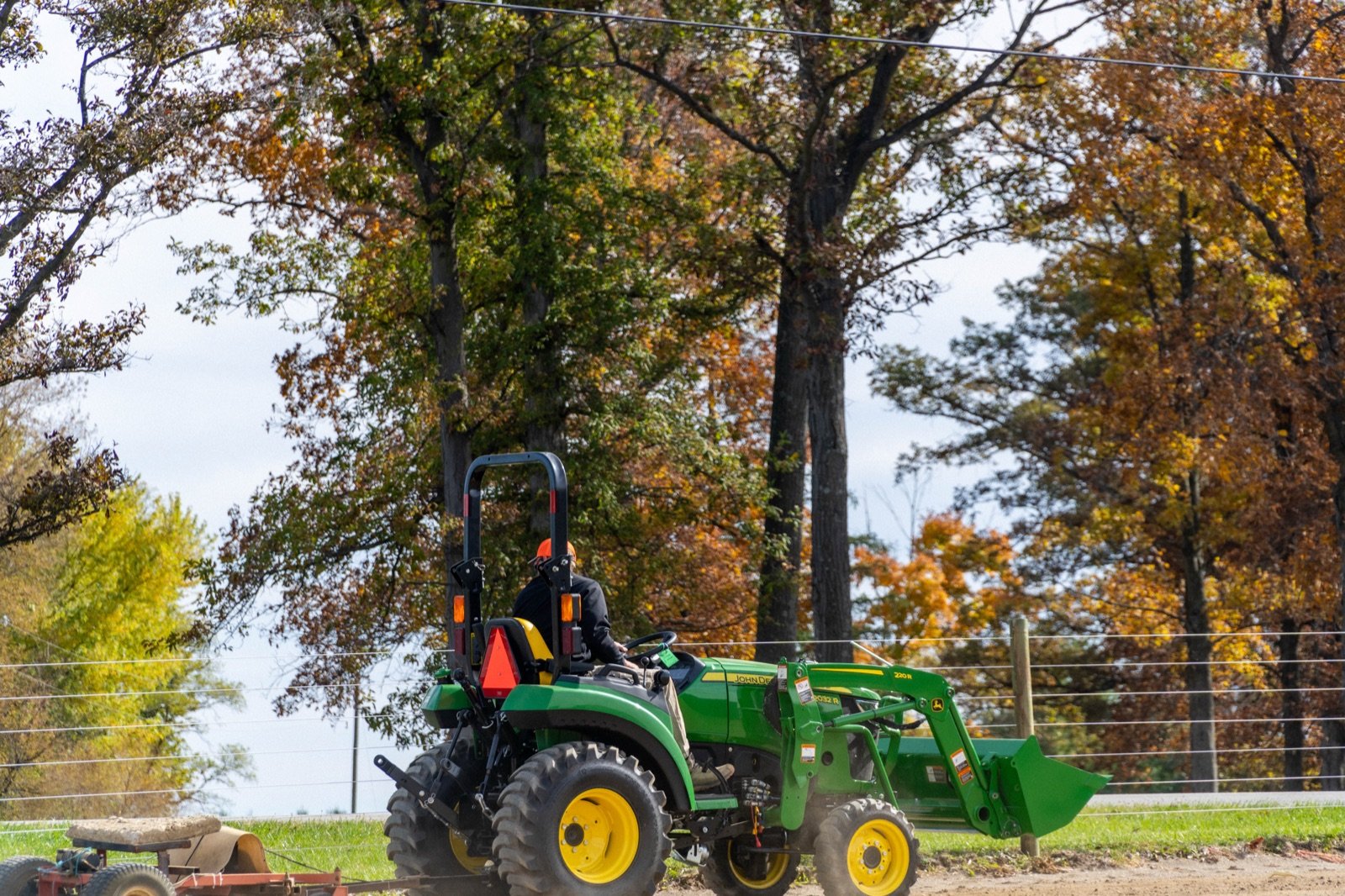
Once you cross into 15-to-20-plus acres, work slopes, or plan to run a rear blower and larger implements, look at the 4044M. The step up isn't about the badge number on the hood. What actually moves the needle is PTO horsepower for your mower or blower, hydraulic flow for loader and implement work, and the loader's rated lift for real chores like moving round bales or a full bucket of gravel. A tractor can carry a big engine number and still come up short on the spec that matters for the job you keep doing, so check the PTO and loader lift ratings on the model you're considering.
Match the class to how much of your property gets worked and how often. Light, occasional chores on 5 acres lean E-series. Heavy, frequent work across 20 argues for the 4-series. Our acreage finder walks you through it by property size and terrain.
Size a tractor to your acreageThe three attachments that earn their keep on an estate — and which tractor lifts them
Start with the front loader. On 5 to 20 acres it moves gravel, mulch, downed limbs, and snow, and it's the one attachment you'll reach for most of the year. The number that matters is loader lift capacity, so before you buy, weigh what you actually pick up. A full bucket of wet gravel or a soaked round of firewood adds up fast, and a loader rated below your real loads will strain and disappoint. The 3032E and 3038E handle typical estate chores; if you're regularly moving heavier material or want more machine under you, look at the 3043D or 4044M. Our sales team can match lift capacity to your real loads before you commit.
The drive and lane need a rear tool the loader can't replace. A rear blade or box blade cuts and redistributes gravel, fills ruts, and keeps your lane crowned so it sheds water instead of washing out. Pair it with a landscape rake to clean up post-summer erosion and level the surface. Most estate owners overspend on the front and forget the drive is where they'll see the daily payoff.
For mowing, split the property. A finish mower keeps the manicured acre near the house clean; a rotary cutter takes the back pasture and brush the finish deck can't touch. One last thing: run the rear ballast John Deere specs for your loader. It keeps the machine safe under a full bucket and saves your front tires. Check your operator's manual or ask our team for the ballast your loader and tractor call for.
Do the fall reset now: the pre-freeze punch list for property and machine
Regrade the driveway and lane first, while the ground still gives. This is the single highest-value fall loader-and-blade job on an estate. Ruts you leave in October freeze into ridges you fight until spring thaw, and a front loader plus rear blade on a 3038E or 4044M will pull that gravel crown back to center in an afternoon. Do it before the first hard freeze locks the shape in for the season.
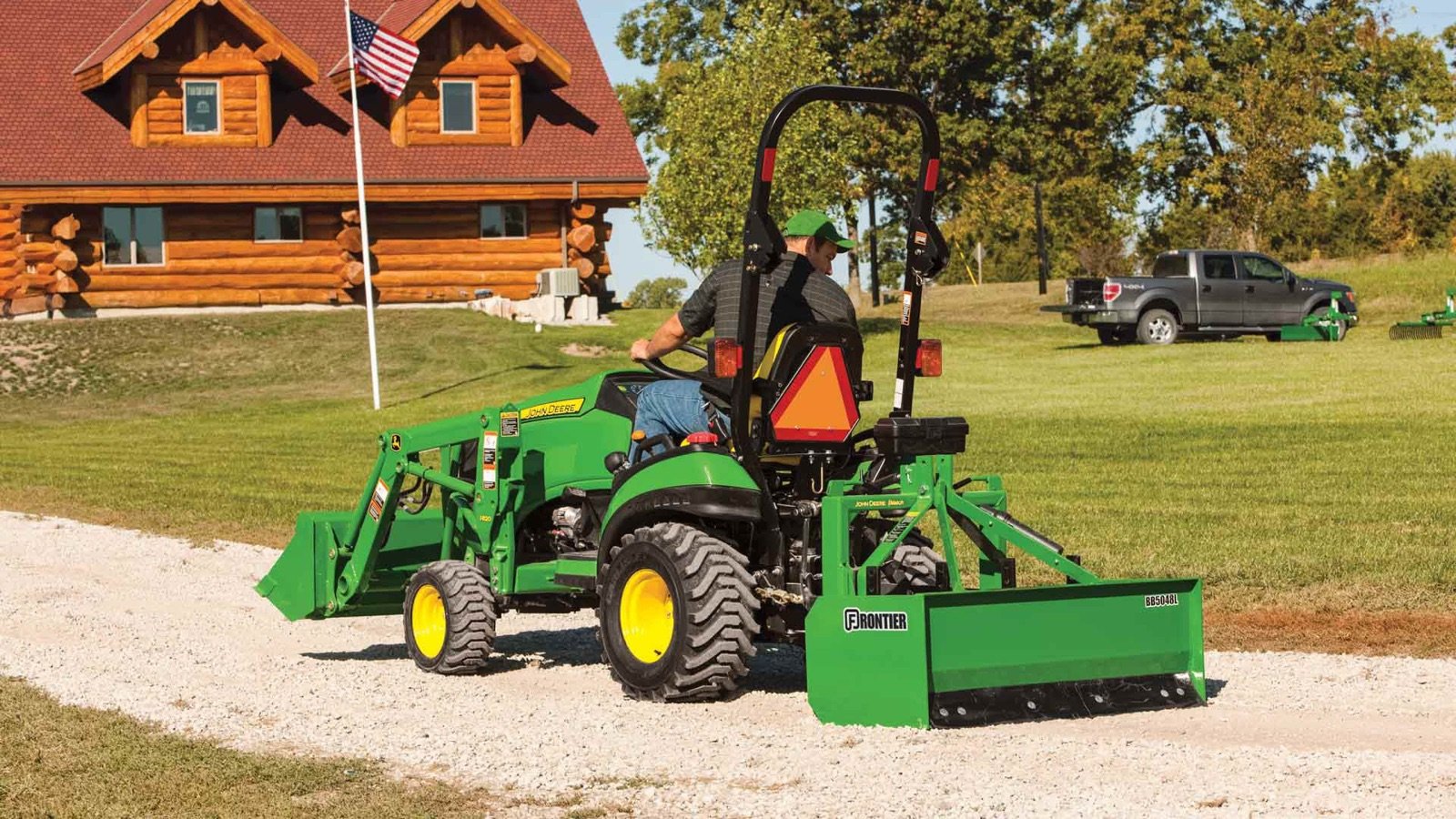
Then finish the property side: last mow, pasture cleanup, and any brush cutting you've been putting off. Once that's done, switch the tractor over to snow-ready. Pull the mower deck, hang a rear blade or snowblower, add ballast, and mount chains if your lane has any grade. A 3025D or 3032E handles a light gravel drive; longer lanes and heavier snow are where the 3043D and up earn the ballast box.
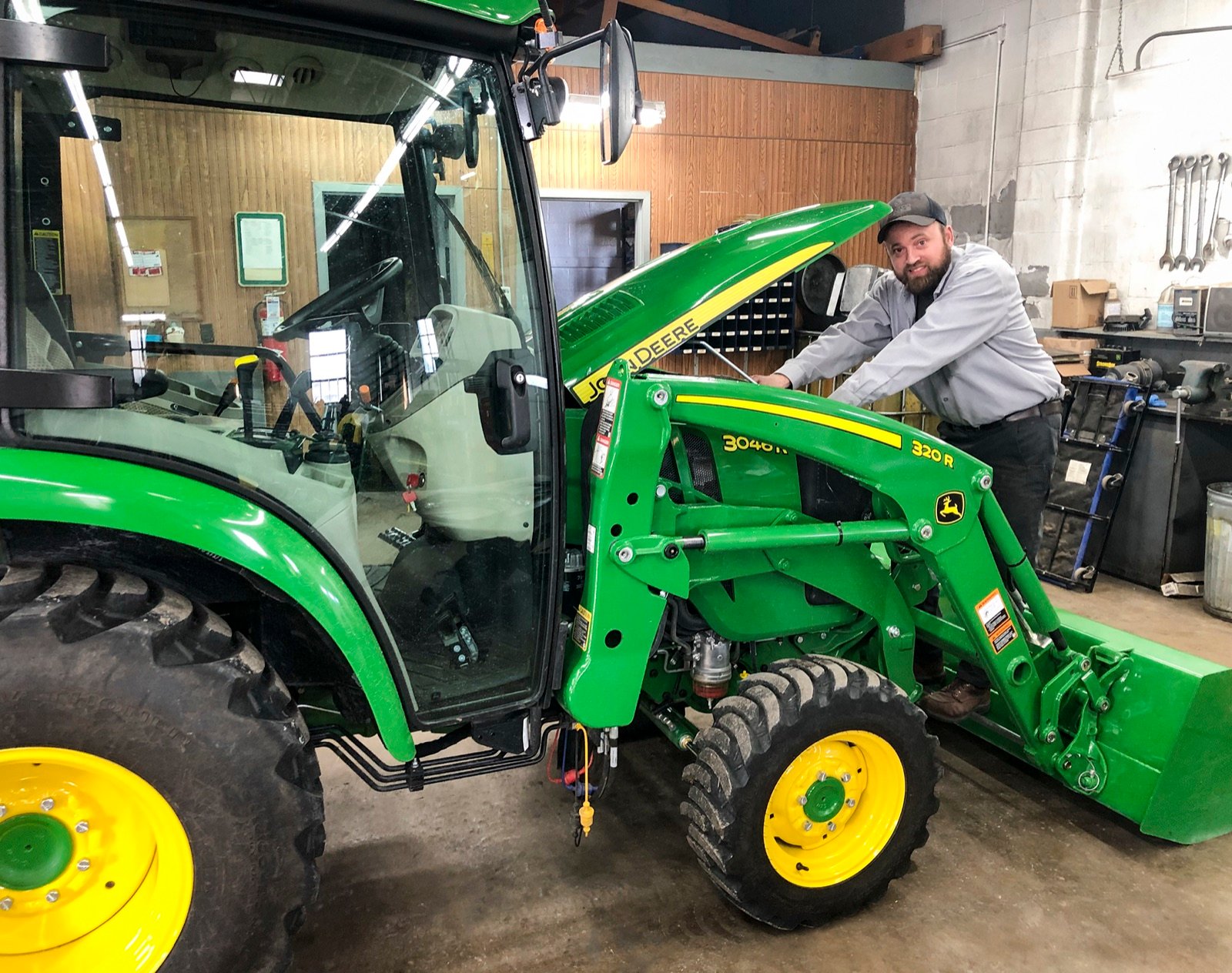
Book the off-season inspection now, before the whole county calls at first snow. Servicing your mower and tractor together is worth asking about, since off-season inspection offers can cover more than one machine. Our service team will confirm the current offers for your equipment. Order attachments early too. The snowblower you want in December is the one you buy in October.
Buy it as a package, not piece by piece
The slow way to equip an estate is to buy a tractor one fall, a loader the next, and a rear blade the winter after that. You pay full retail three separate times and end up with parts that don't quite match. Our tractor packages bundle the tractor, loader, and the attachments a property actually needs into one price built to work together from day one. On a mixed 5-to-20-acre place, that usually means a 3025D, 3032E, or 3038E paired with a loader and the mower or blade your terrain calls for. If you want to fine-tune the exact loader, mower deck, and blade combination to your acreage, the Build Your Own tool lets you spec it before you ever set foot in one of our stores.
Financing matters on a purchase you plan to keep for decades. John Deere runs published finance offers, and there are seasonal deals on attachments through the fall. We won't quote a rate here because the good ones change. Check the current terms and pair them with a package instead of paying cash for pieces over three seasons.
This is a decades-long buy, so protect it accordingly. Genuine John Deere parts, certified service, and our stores across Indiana and Ohio mean the machine you spec this fall still has support behind it years from now.
When to call us
Here is the fastest way to get an answer: tell us your acreage, your terrain, and your top three chores. That is enough for us to narrow the field between a 3025D and a 4044M, point you at the two or three attachments that actually matter for your place, and skip the ones you would use twice a year. We do this across our stores in Indiana and Ohio every week, so you are not the first person on rolling ten acres trying to decide between the 3032E and the 3043D.
Timing matters more than most people think. Get the sizing and setup done before freeze-up, because you want the driveway graded and your snow plan built while the ground still cooperates. Push it to December and you are grading frozen ruts and waiting behind everyone else who put it off. Our inspection schedule fills the same way, so booking early is the difference between being ready for the first storm and playing catch-up.
Start by checking compact tractor inventory and finding your nearest store, then book the inspection while the calendar is still open.
Find your acreage tractor