Published: October 11, 2026
Updated: October 11, 2026
Blade, blower, or push-frame: match the tool to your drive before you shop
Before you shop, match the tool to your actual drive, not to whatever a neighbor bought. A rear blade is the cheapest way to clear a long gravel lane, and it fits almost any 3-point hitch, so most tractors can run one without extra plumbing. The trade-off is honest: a rear blade pushes snow to one side, so you need room alongside the lane to windrow it. If your drive is bordered tight by fence or ditch with nowhere to pile, a blade fights you every pass.
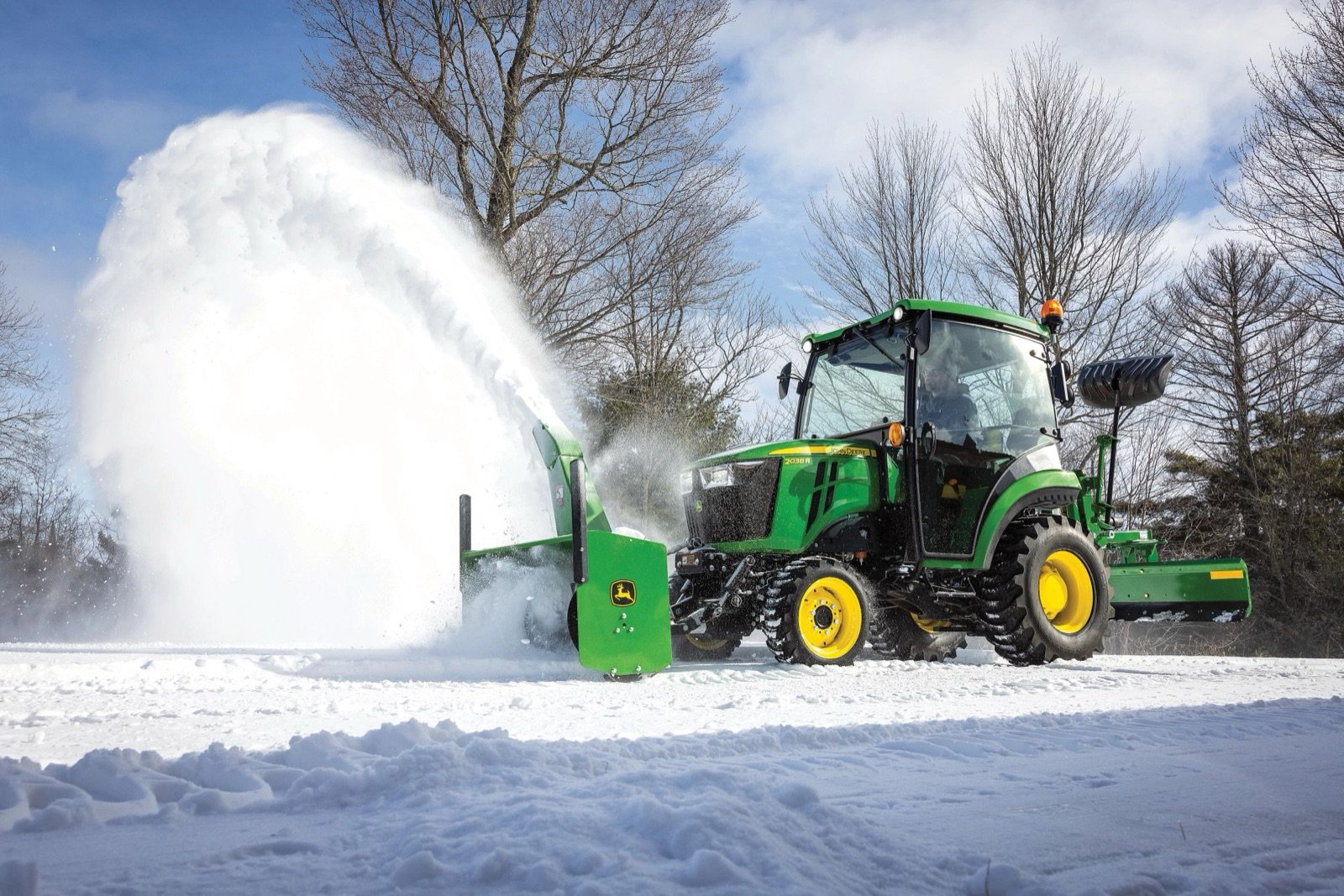
A front-mounted snow blower is the answer when snow gets deep and wet and you have nowhere to windrow, because it throws the snow clear of the lane entirely. Two things to know going in: it needs the right hydraulic setup to run, and the mount depends on your tractor. John Deere's quick-hitch front blowers are built for compact tractors, while larger tractors run a loader-mounted or front 3-point blower. If clearing around outbuildings and getting precise up against a shop door is your real headache, a push-frame blade on the loader arm gives you the most control, but it demands a loader-equipped tractor.
Be straight with yourself on four things: drive length, gravel versus paved surface, how deep your typical snowfall runs, and whether you are also clearing sidewalks. Those answers decide the tool. If you want a hand matching one to your machine, start here.
Find snow removal equipment that fits your tractorWhat your tractor or UTV actually needs to run each attachment
Start with weight class, because the wrong pairing either won't hook up or won't have the power to throw snow. The 44-inch snow blowers are built for X-series lawn tractors and smaller machines. Step up to a compact utility tractor and you need a larger blower matched to that class. Two things decide the fit: your tractor's PTO horsepower against the blower's rating, and whether your PTO type matches the attachment. If you're running a compact tractor, confirm which front hitch you have. A front receiver, a Category 3-point, or a loader mount all change what bolts on.
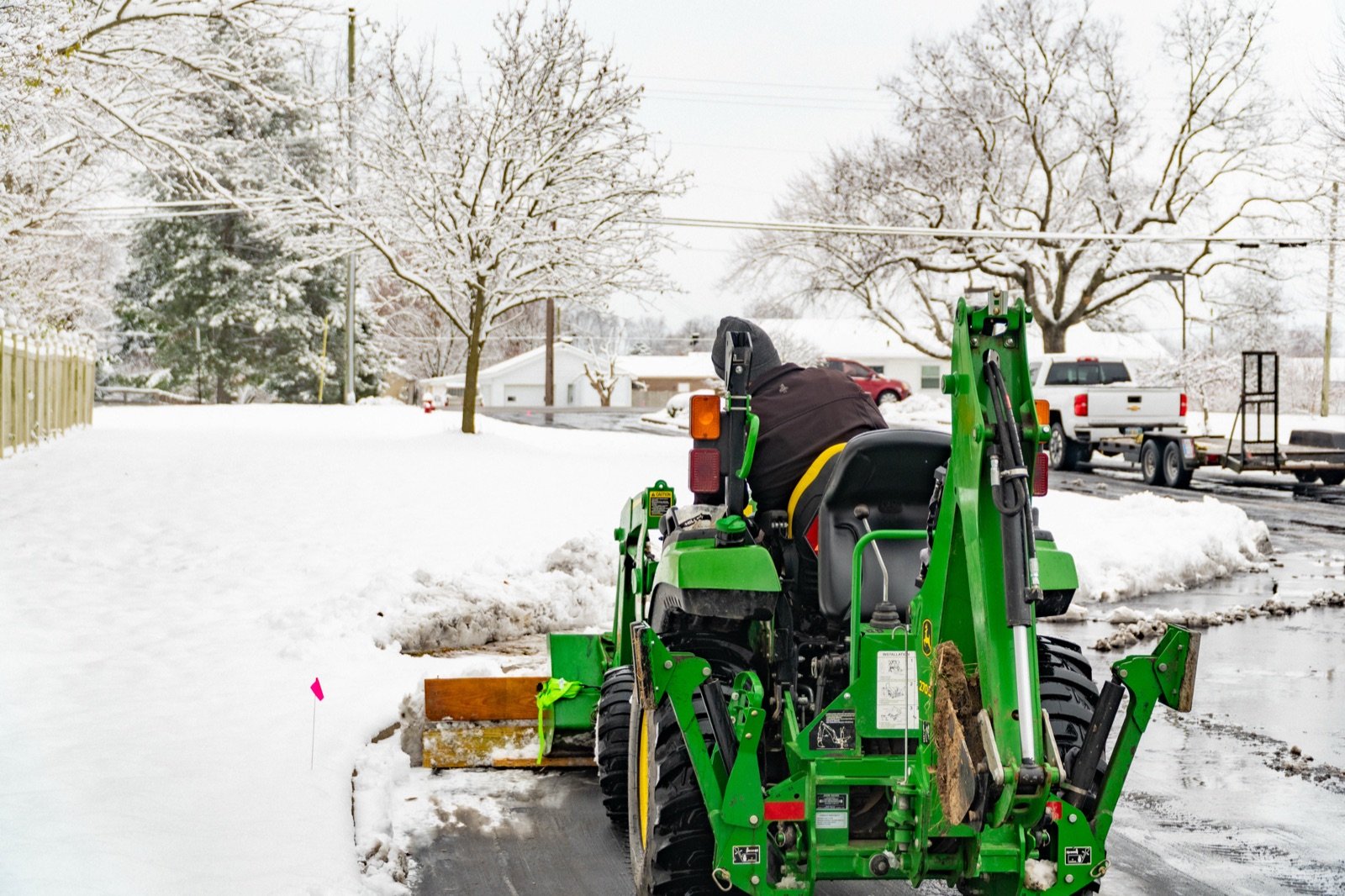
Front hydraulics are the piece people miss. A powered chute that rotates and angles from the seat needs those hydraulic outlets up front, and retrofitting them later costs more than ordering them right the first time. Have our team check your model before you buy the attachment.
Gators and UTVs are a different job. Pair them with a front blade for lighter clearing on the lane and around outbuildings, not the deep-snow blowing they aren't built for. And order the cab or weather enclosure now. It's the attachment everyone forgets until the first January morning, and it's what turns a miserable job into a bearable one.
The real lead times that make fall, not December, the time to order
Snow blowers carry the shortest ordering window of any snow attachment, and it closes fast. Front-mount blowers are matched to specific tractor models, and once the right one for your machine sells through, backorder becomes real. If you wait until the first forecast to shop, you are competing with the whole county for whatever in-stock units are left, and there usually aren't many.
The blower itself is only half the order. The parts that actually hold things up are the front hydraulic kit and, if you want to run a cab, the weather enclosure. Those are common bottlenecks. An otherwise-ready order can sit for weeks waiting on a hydraulic kit your tractor needs to lift and angle the attachment. Ordering the whole setup together now, in the fall, is what gets it installed and tested before you need it, not sitting on a truck during a spring-delivery backlog.
The payoff for ordering now is simple: install time plus a test run in your own driveway before the first storm. You find the hitch or hydraulic gap in October when we can fix it, not in the dark at six inches and climbing. Late buyers wait on a contractor or a backorder. Early ones just go clear the lane.
What it costs to own — and how financing changes the math
Sticker price is only half the picture. The other half is what you stop paying once you can clear your own drive: no more waiting on a contractor after every storm, no per-visit charge, no getting bumped down the list when the whole county needs plowing at once. Spread that across a few winters and the attachment starts paying for itself faster than most people expect.
Financing is where the timing matters. Koenig frequently offers promotional financing on select models, and John Deere runs manufacturer rebates periodically that can move the out-the-door number further. What applies to you depends on your tractor class and whether you bundle the attachment with other equipment, so ask us to run the numbers on your specific setup rather than guessing off a general rate.
Here is the part people miss: John Deere typically refreshes its offers in fall and spring. The promotion sitting in front of you now may not be the one waiting in December, and there is no guarantee the next one is better. If a current offer fits your machine, timing the purchase to it beats hoping for something stronger later.
Book the off-season inspection before the whole county calls
The first hard snow is a bad time to learn your hydraulic lines are cracked or your battery won't turn over in the cold. An off-season inspection catches the failures that strand you: worn hydraulic hoses, a weak battery, and lighting that quits right when you need to see and be seen clearing around buildings and a dark farmyard. Fixing those in the shop now costs less than an emergency call in the middle of a storm.
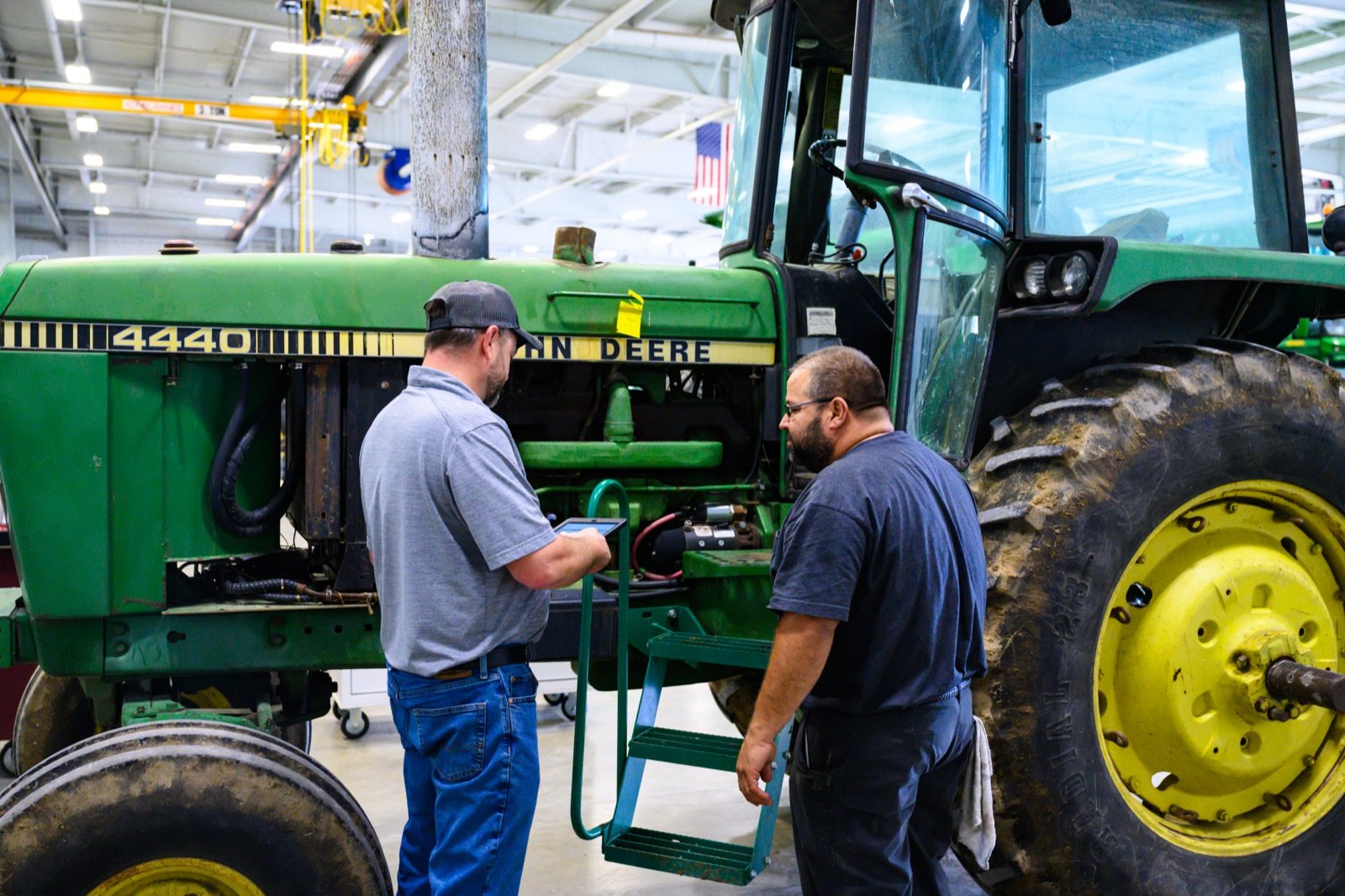
The other thing worth doing is having us check the machine, the attachment, and the hydraulics as one job. A blade or blower that fits on paper still has to run off your tractor's hydraulics and hitch in real cold, and we'd rather find the mismatch on the shop floor than in your lane at daybreak. Bring it all in together so everything works on day one.
If you run more than one machine, ask our service team what maintenance programs we have going for fleets. Bundling the work across a couple of units often gets you a better deal than handling them one at a time.
When to call Koenig
Before you call or walk in, have three things ready: your drive length and surface (gravel, concrete, or a mix), your tractor's model and year, and a rough sense of what a normal winter drops on you. With that, we can spec blade versus blower versus push-frame correctly the first time and confirm the hitch and hydraulic kit your machine needs. Front-mount fit depends on your exact tractor, so telling us your model up front saves everyone a wasted trip.
Our stores across Indiana and Ohio are full-service, which means the attachments, the hydraulic kits, and the install labor sit under one roof. If you're still deciding, our snow removal equipment finder lays out job-by-job fits so you can see what actually matches your property instead of guessing from a spec sheet.
The reason to do this now is simple: attachments are in stock and Koenig's John Deere financing offers are live, but both run out. Offers change through the season, and blowers in particular go to backorder once the first forecast hits. Call while you still have the pick of the lineup.
Match a snow attachment to your property