Published: May 1, 2025
Updated: November 11, 2026
|
John Deere tractor maintenance comes down to two habits: a short check before every use, and service done on the hours your operator's manual calls for. That holds for a 1 Series doing grounds maintenance on a few acres and for a 5 Series utility tractor putting up hay. Before each use, look at the air filter and fluid levels, then walk around the machine for visible wear or leaks. Oil, filter and fluid changes follow the hour meter, and the exact interval depends on your model.
If the manual is not handy, our service team can confirm the schedule for your tractor, and you can schedule service online when you would rather have a technician handle it.
How Often Should You Service a John Deere Tractor?
There are two clocks to watch. The first is every use: the walkaround, air filter and fluid levels. The second is the hour meter. Engine oil, filters, hydraulic fluid and coolant each have their own interval, and it differs between a 1 Series, a 3 Series and a 5 Series, so one number printed here would be wrong for many of the owners reading it. Your operator's manual has the schedule for your model.
The reason to keep up with it is practical. Problems caught early are cheaper than breakdowns, and a maintained tractor performs better, lasts longer and is safer for whoever is in the seat. Low hours do not mean no maintenance, so check the manual for time-based intervals too.
What Indiana and Ohio Weather Does to a Tractor
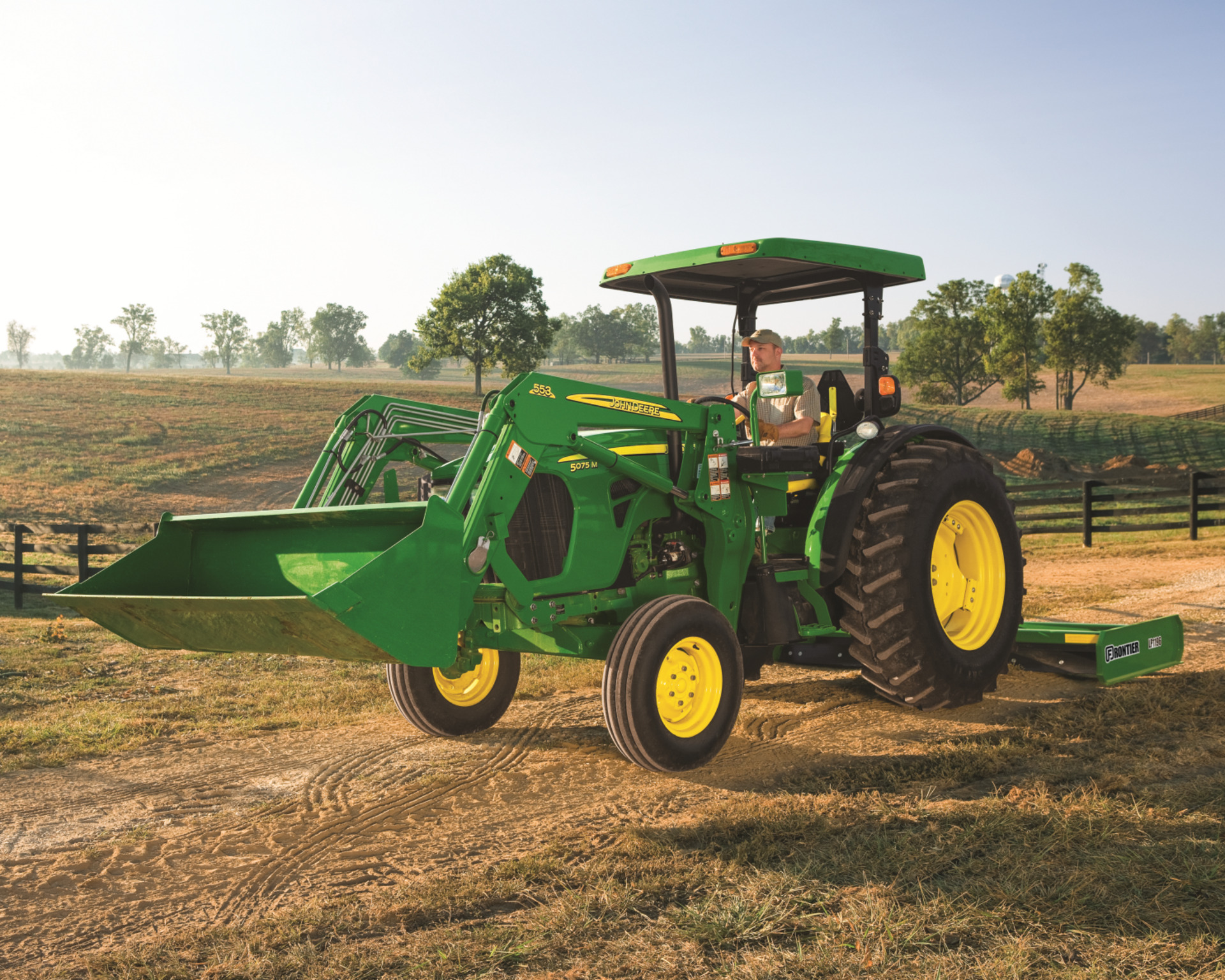
Hot summers and hard winters both speed up wear on the engine, hydraulics and tires. Cold makes engines harder to start and is tough on batteries and fluids. Wet conditions invite rust, and field debris clogs air filters. The answer is timing: go over the tractor before the busy part of your season, not during it. If you run hay and pasture ground, that means before first cutting, while there is still time to order a part and get it installed.
What to Check on Your John Deere Tractor

These tasks apply across the line, from a Select Series X394 Lawn Tractor to a 3046R Compact Utility Tractor to a 5 Series utility tractor.
Fluid Checks and Changes
Check engine oil, hydraulic fluid and coolant levels, and change them on the schedule in your manual. Clean fluid at the correct level reduces engine wear and helps prevent overheating and hydraulic failures.
Air Filter Maintenance
Dust and crop debris are a fact of life in our fields. Inspect the air filter regularly, then clean or replace it to protect the engine and maintain fuel efficiency. Our parts team will confirm the right filter for your model, or you can find parts by machine model online.
Tire Inspection
Proper pressure and sound tires matter for traction and stability, especially on wet or uneven ground. Look for wear, punctures and low pressure before each use.
Battery and Electrical System
Cold winters can drain batteries quickly. Check battery voltage and connections, and clean off any corrosion so the tractor starts reliably year-round.
Cleaning and Storage
Mud, crop residue and chemicals build up and lead to rust and wear. Clean the tractor regularly, especially the undercarriage, and store it indoors whenever you can.
Routine Inspections
A walkaround before each use catches small problems early. Look for leaks, loose bolts, worn belts and damaged hoses. If you find one, order the part now. A hose replaced on a slow week costs far less time than one that fails in the field.
Repair or Replace: When Used Makes More Sense Than New
Most of the time, maintenance beats replacing. If your tractor starts, does the work and needs only routine repairs, keep it. When you do need to add one, used equipment usually makes more sense for a second tractor that sees seasonal hours, like raking hay or mowing pasture. New is the better fit for the machine you depend on every day. Current offers change through the year, so check them before you decide. These are the John Deere lines we sell and service:
John Deere 1 Series: Ideal for small farms and lawn care, with easy-to-use attachments for mowing, tilling, and hauling.
John Deere 3 Series: Premium compact tractors for building, mowing, and digging, featuring AutoConnect decks and hydrostatic transmissions.
John Deere 5 Series: Utility tractors for larger operations that handle hay production, snow removal, and heavy hauling.
John Deere X300 Lawn Tractors: Built for homeowners. The X394 is a strong pick in this line, and its model page lists the current specs.
When to Bring It to Our Shop
Daily checks, cleaning and topping off fluids are owner jobs, and we would rather you do them than pay us to. Bring the tractor in for scheduled services you lack the tools or time for, hydraulic leaks, electrical problems and anything you cannot trace. As an authorized John Deere dealer, we service these machines with genuine parts at our stores across Indiana and Ohio.
If you farm, ask about our No-Cost Service Inspections for ag equipment to find problems before the season does. Online scheduling works well for planned work. If a tractor is down in the middle of a job, call or text your nearest store instead, because a conversation gets you an answer faster than a form.
Walk around your tractor this week with the manual open, write down what you find, and bring us the list.
Find parts for your 437e
Shop genuine John Deere parts that fit the 437e and 3046R at Koenig Marketplace — search by your exact model to see what fits.
See how the 3046R compares
Weighing your options? Koenig has side-by-side spec comparisons for the equipment we sell: