Published: November 6, 2026
Updated: November 6, 2026
If your yard is one or two acres and your driveway is the two-car kind you would otherwise shovel, a John Deere lawn tractor will do the job with a front blade, tire chains and wheel weights. That is its realistic ceiling: a few inches of fresh snow pushed off a short, flat drive, then a summer of mowing, which is what most homeowners around our stores in Indiana and Ohio actually need.
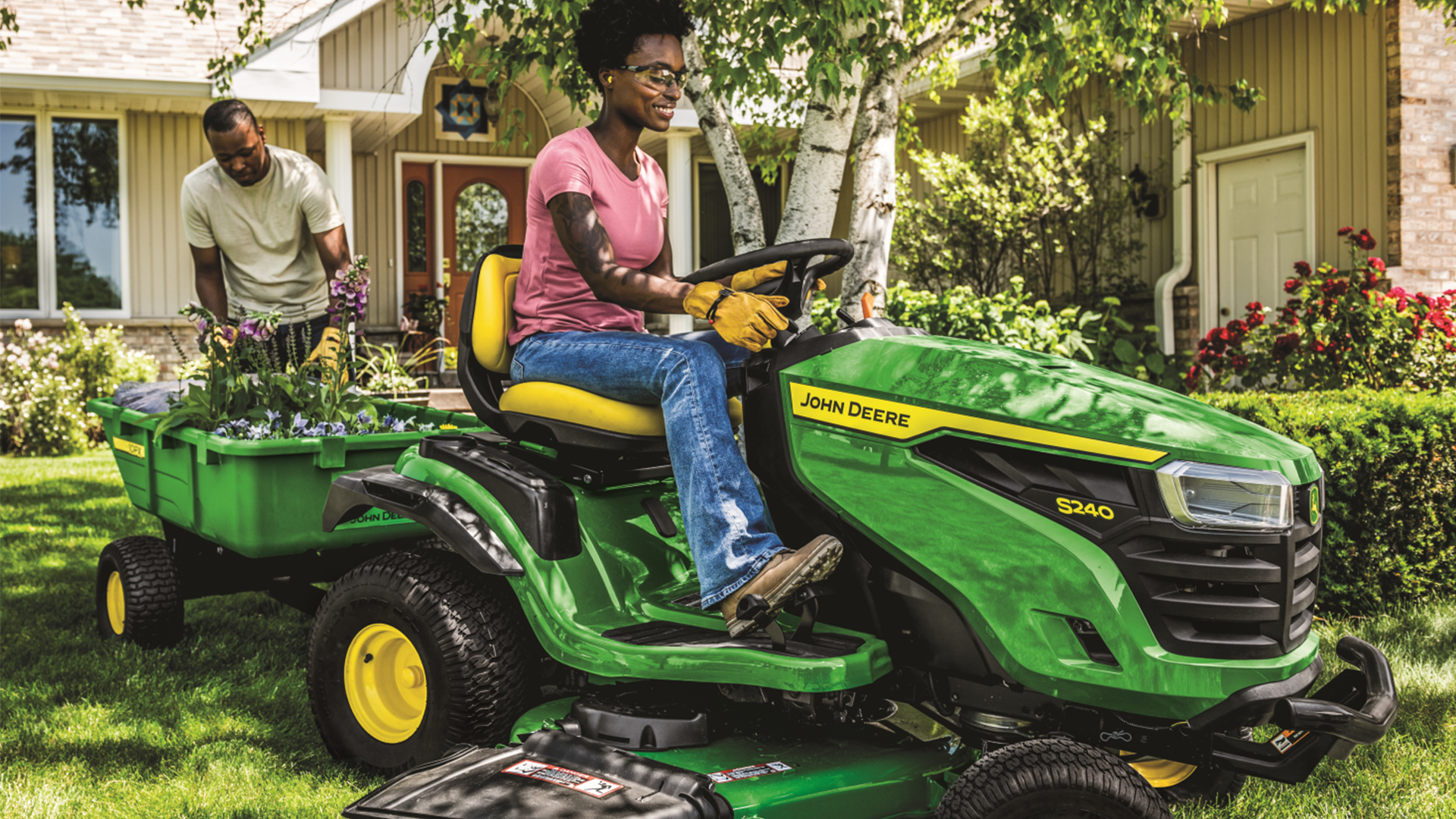
If the drive is longer, it drifts, and you want to throw snow instead of pile it against the garage, a garden tractor is the one machine that handles both seasons. It takes a blower, not just a blade, and its heavier frame and hitch are built for that load. If the drive climbs a hill or you keep saying the word loader, neither is right; a compact utility tractor like the 2038R is the better fit, and we cover that below.
The timing part is simple. A snow attachment has to be ordered, delivered to our store, installed and tested on your tractor before the first storm, and every one of those steps gets harder the closer that storm gets.
Frame, drivetrain and hitch: the three differences that decide what you can bolt on
Start with the frame, because it decides everything downstream. A lawn tractor is built light on purpose: its job is to carry a mower deck across turf. A garden tractor carries a heavier frame built to take the twisting load of a blade biting into frozen gravel at the end of a driveway. That is why many lawn tractors are not offered with a snow blower at all; the attachment is engineered for the heavier machine, and forcing it onto the lighter one shortens the life of both.
The drivetrain and the hitch finish the story. A lawn tractor's transmission is sized for mowing speed on grass. A garden tractor's heavier-duty drivetrain is what keeps you moving when one tire finds ice, and the machine is built to accept front attachments and the lift system that raises and lowers them, so swapping the deck for a blower in November is a bolt-on job in your garage. Hitch and lift options vary by model, so ask before you assume.
The plain test for any model you are considering: look at the attachments John Deere actually lists for it. If the only snow option is a front blade, you are looking at a lawn tractor, whatever the badge or the price tag suggests.
Blade, blower, chains, weights: what each tractor realistically handles on your driveway
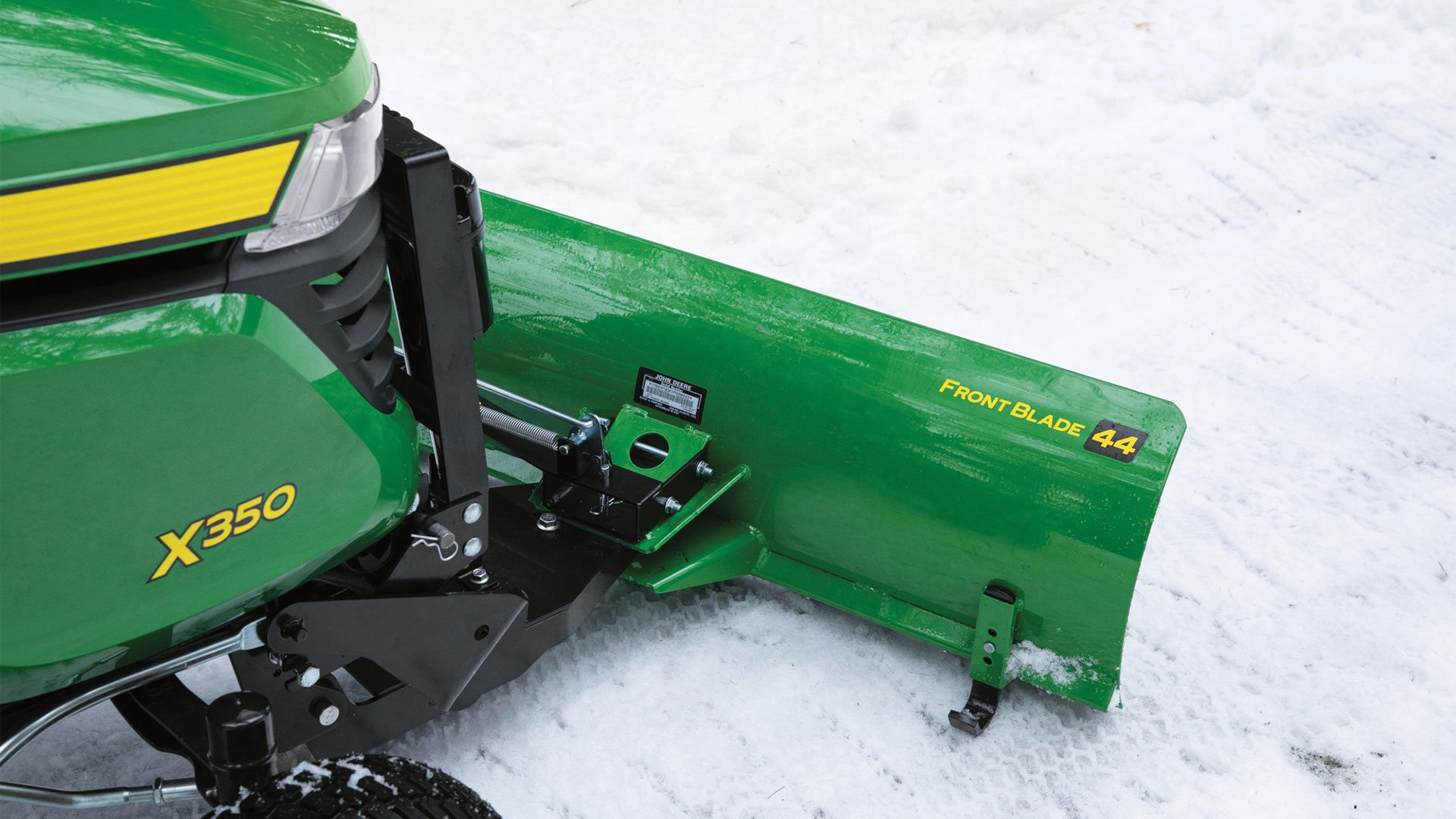
A front blade bolts onto either machine, but it does different work. On a lawn tractor, plan on light snow pushed straight ahead on a short, flat drive, and plan on stopping when the pile at the end gets heavy. On a garden tractor you can angle the blade, roll the windrow off to the side, and finish a long drive without the machine bogging down.
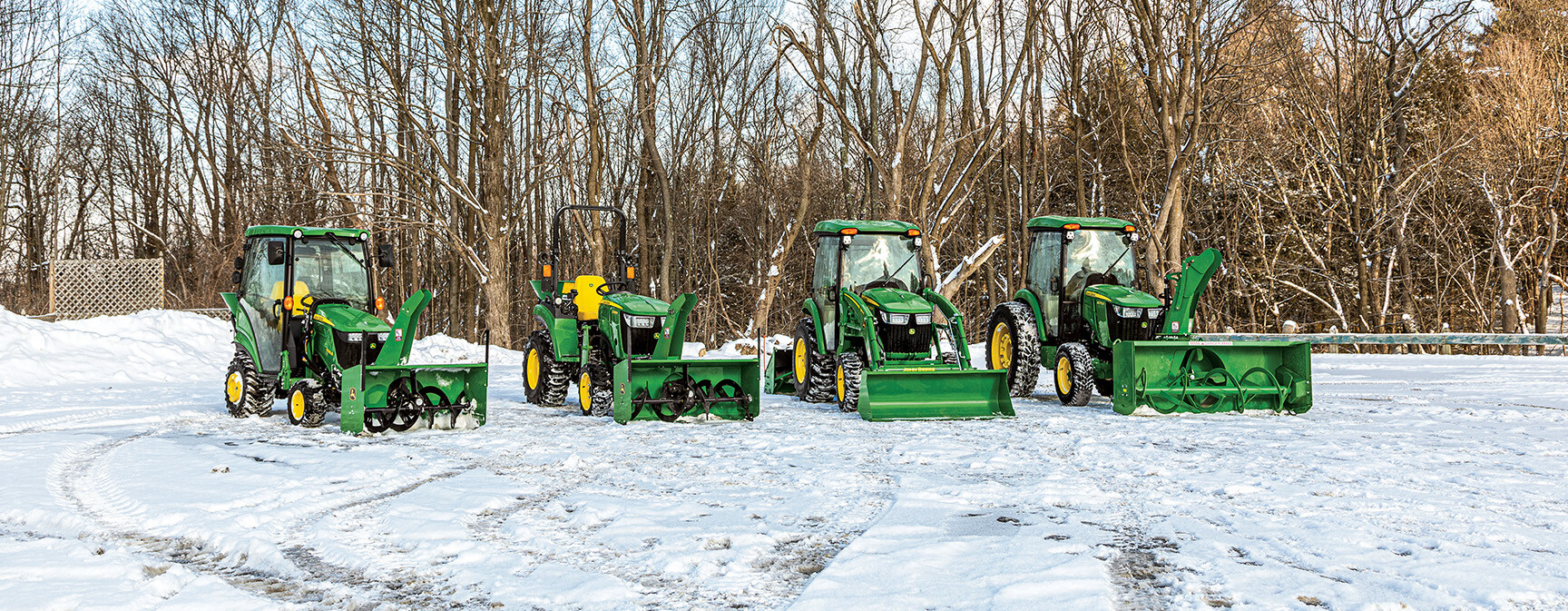
The snow blower is the garden tractor attachment. It handles deep snow and the drifts that stack along a fence line instead of plowing the same strip over and over. Width and mounting depend on the series, so the blower has to be matched to the tractor before it leaves the store.
Chains and wheel weights are not optional on either machine, so budget them into the quote from the start. An unweighted lawn tractor on an icy Ohio slope spins, and nothing you do with the blade fixes that.
One more reality check for the one-to-five-acre owner. If your lawn tractor already works near its limit every summer, adding winter work shortens its life. That, more than any single attachment, is the argument for stepping up to a garden tractor. If your drive is short and flat and your mowing is light, keep the lawn tractor and spend the difference on weights and chains.
Why to buy before the first snow, not after it
Snow blades and blowers arrive in the fall, and once a size is gone it may not be back before your first storm. A garden tractor with no blade in January is just a garden tractor parked beside a drifted-in driveway.
Install time works the same way. Ahead of the first storm the shop has room to mount a blade or blower, hang the weights, fit the chains and test the setup. Once the snow hits, that same job lines up behind every emergency repair at our stores across Indiana and Ohio, because the Customers who waited all call the week the storm does.
Financing is the one place not to assume. Koenig runs promotional financing on select models through the year, and John Deere adds manufacturer rebates periodically, but what is on the table in fall is not what was there in spring. Check current offers before deciding a garden tractor is out of budget.
The honest limit: when neither tractor is enough and a compact tractor is the right call
A garden tractor pushes snow. It does not lift it. If your winter plan includes moving the pile the township plow leaves at the end of the drive, or the heavy, wet March snow a blade rides up and over instead of through, you are describing a tractor with a loader. Same story if summer means moving mulch, gravel or firewood. That is a compact utility tractor, and no set of wheel weights or chains turns a garden tractor into one.
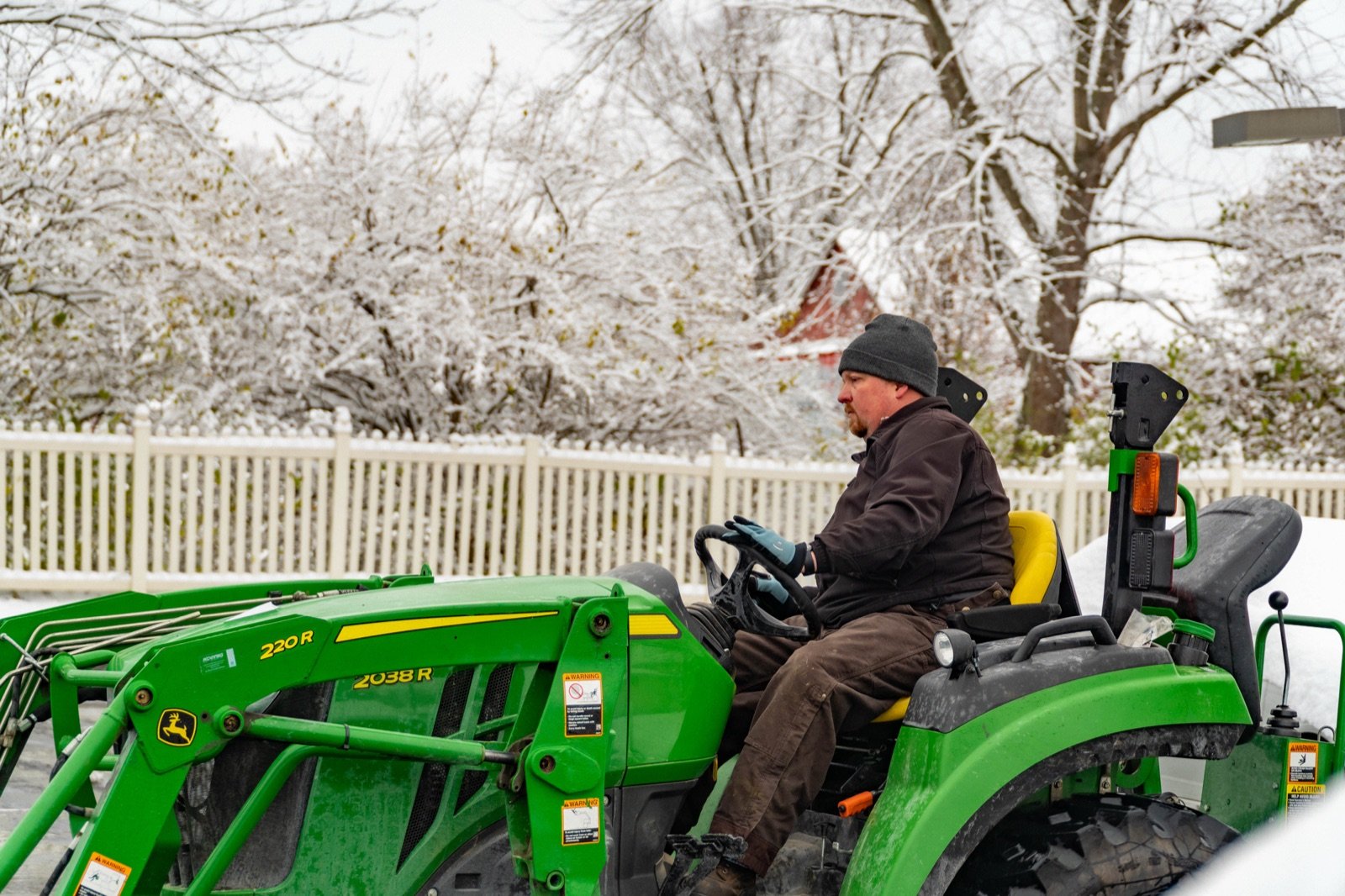
The step up is often closer than Customers expect in the fall. John Deere Financial runs promotional rates and rebates on new compact tractors, and our tractor packages (tractor, loader and snow attachment priced together) often carry their own financing terms. Those change with the season and the model, so check the offers page for what applies to the machine you are looking at.
Be honest going the other direction too. A compact tractor mows a small lawn slower and leaves a heavier footprint in soft spring ground than a garden tractor does. If your summer is mostly mowing and your snow is the ordinary Indiana and Ohio kind, the garden tractor is the better buy. Do not purchase for a worst day that comes once in five winters.
Next step: bring your driveway, your acreage and your worst snow day to a Koenig store
Before you visit, pace off the driveway and write down how long it is, whether it is gravel or paved, and how steep it gets. Add the acreage you actually mow, not the lot size on the deed. Those few details settle lawn tractor, garden tractor or compact tractor faster than any spec sheet.
In the store, ask us to price the whole setup together: machine, blade or blower, chains and weights. Base prices tell you nothing about what each costs ready to push snow, so compare the winter-ready totals side by side. Not sure where to start? Our snow removal finder narrows it down in a few questions. If you are trading in a mower or tractor you already own, have us put a number on it during the same visit; age, hours, brand and condition all affect what it is worth. If you plan to run your current mower one more winter instead, book an off-season inspection now. Our lawn and garden inspection program includes a discount for preventative maintenance done in the off-season, and we will tell you plainly whether its frame and transmission can carry a blade and weights or whether you are about to wear out a machine that would otherwise mow for years.
Any of our stores across Indiana and Ohio can check attachment availability and get your install on the shop schedule before you leave, so the tractor is set up and tested before the first storm shows up.