Published: November 5, 2026
Updated: November 6, 2026
|
Feeding round bales from an open-station tractor through an Ohio or Indiana January gets old by about the second week, and a tractor that will not pick a wet bale clean makes it worse. The package we point cattle Customers to is the John Deere 5075E with a 520M loader and a cab, which we call the 5075E Cattleman Solution, with the AB13G bale spear added on. We recommend it for operations of 50 acres and up where feeding, barn work, and manure all land on the same tractor.
Most of the new 5075E units we have in stock right now are premium-cab, loader-ready tractors at our Greenville, Ohio store. They share the same bones: a PowrReverser shuttle for loader work, mechanical front wheel drive, and the loader prep package already on the tractor so the 520M goes on without an afternoon of plumbing. Inventory moves, so check that list before you drive over. It stays current and this post does not.
Loader and Bale Spear: Size the 520M for the Heaviest Bale You Will Lift
A round bale that sat under a tarp since August and took on rain and ice weighs a good deal more in February than it did coming off the baler. Size the loader to that bale, the heaviest one you will spear on the worst morning, not the dry average. The 520M pairs with the AB13G bale spear, and on these cab units the loader runs through dual mid valves with a mechanical joystick, so you curl and lift with one hand while the other stays on the wheel. If the same tractor has other jobs, our guide to loader attachments covers what else earns a spot on the rack.
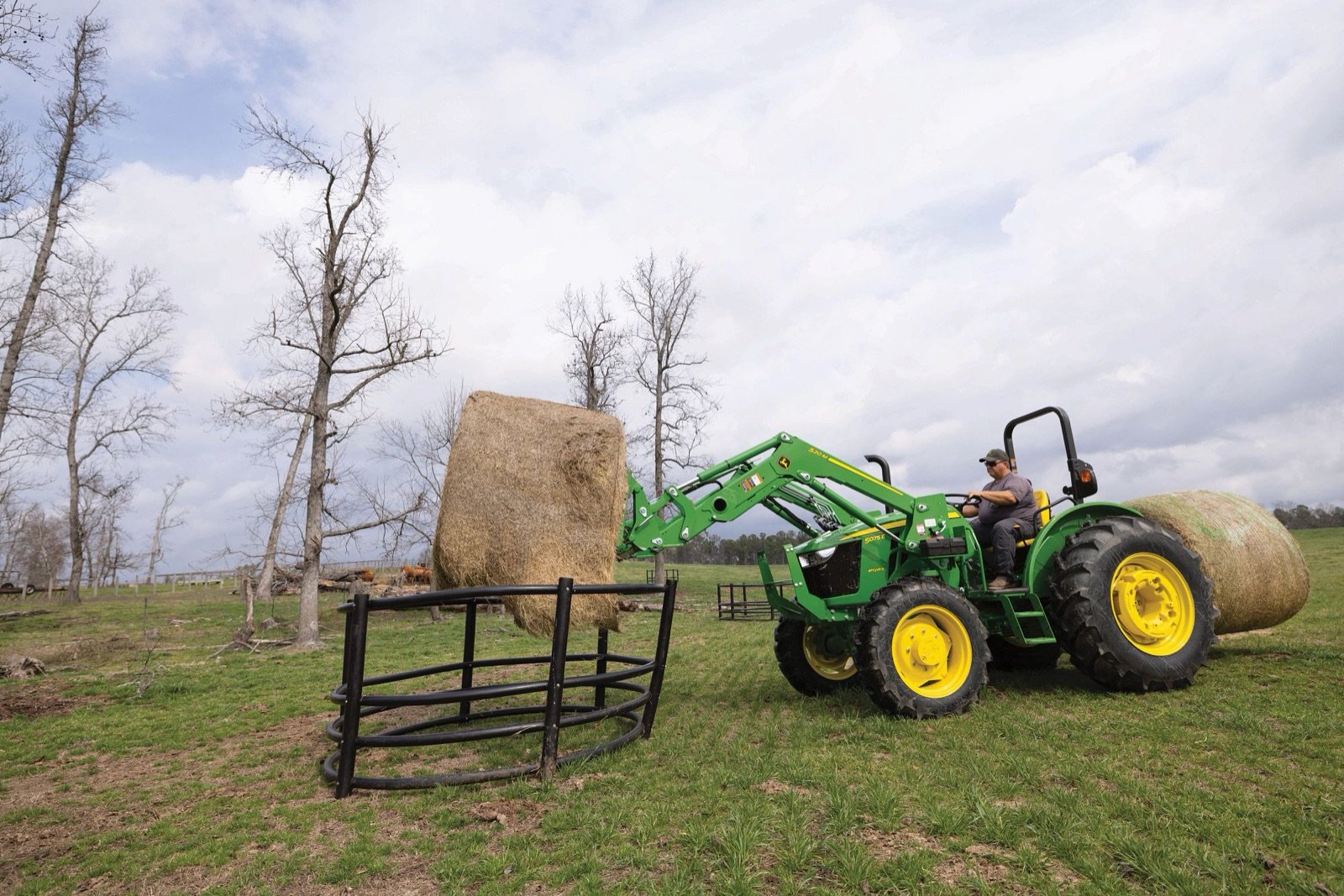
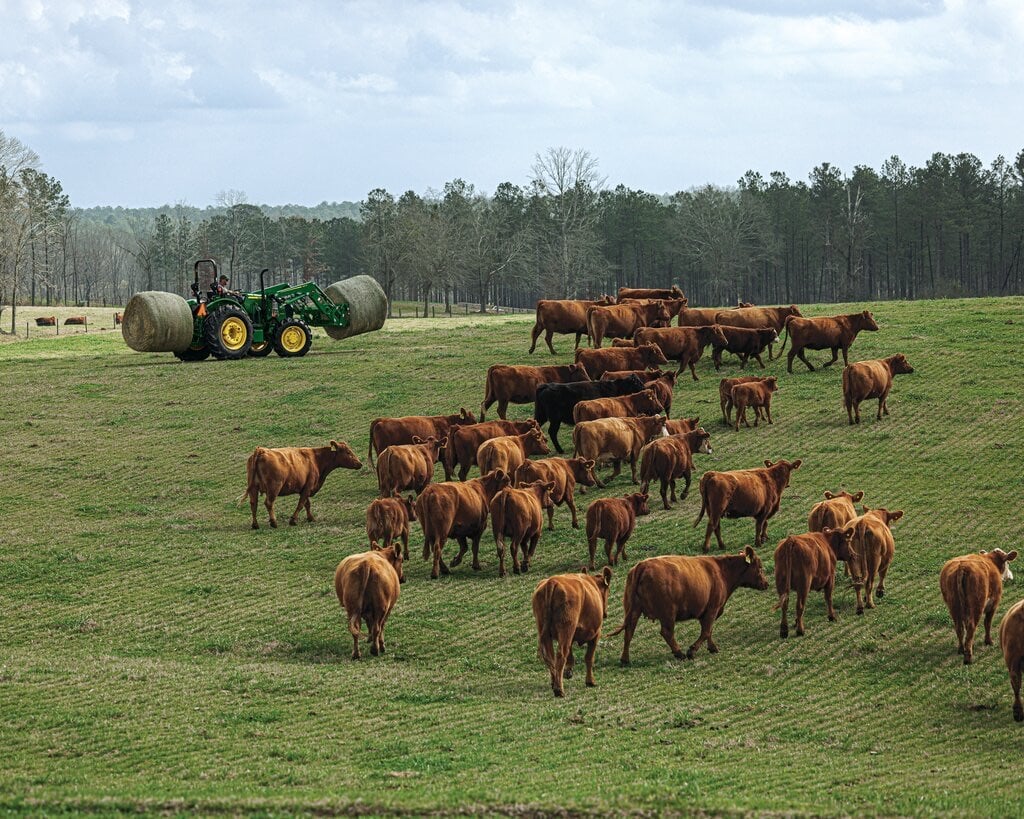
Rear hydraulics decide how many bales you move per trip. A rear spear carrying a second bale needs a rear remote to run it, and the Greenville units carry two mechanical stackable rear SCVs. Whatever tractor you compare, count the valves before you count anything else.
MFWD and the R1 ag tires keep the tractor pulling when a bale up front takes weight off the rear axle and the lot is frozen ruts. Without front wheel drive, that is where a loaded tractor spins and you walk back to the barn for the chain.
PowrReverser and Cold Starts: What to Set Up Before the First Hard Freeze
The PowrReverser matters more for a feeding tractor than any number on the spec sheet. The shuttle lets you go forward into the stack, back out, and forward to the bale ring without touching a clutch. You repeat that motion dozens of times a winter morning, and doing it with a fingertip instead of a left foot is the difference between a chore and a workout.
Cold starts are where a feeding tractor earns its keep, so set them up at delivery rather than on the first single-digit morning. Have a block heater installed, switch to winter-blend diesel once temperatures turn, load-test the battery before the season, and keep a spare fuel filter on the shelf. Check the owner's manual for the fluids your unit carries so you know what can gel.
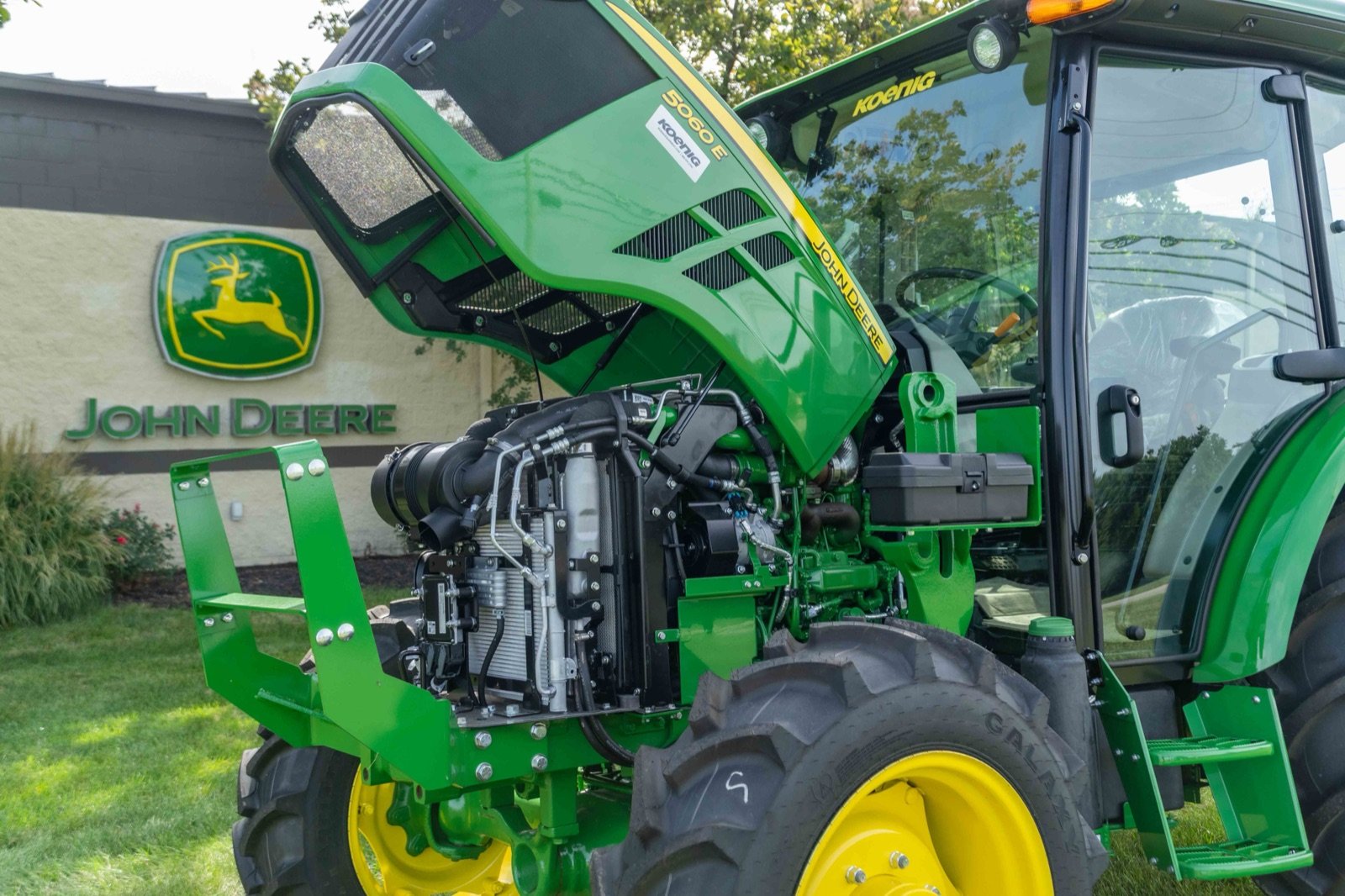
These units come with a JDLink modem, which logs hours remotely so your service list writes itself by the time the herd is back on pasture. It does not replace a walk-around with a grease gun.
Standard Cab or Premium Cab: What the Upgrade Buys You Over a Winter of Feeding
Either cab is the real upgrade from open station: heat, a sealed door, and glass between you and a January wind. The premium cab is what we have at Greenville today, so the real question is whether it is worth having over a standard cab.
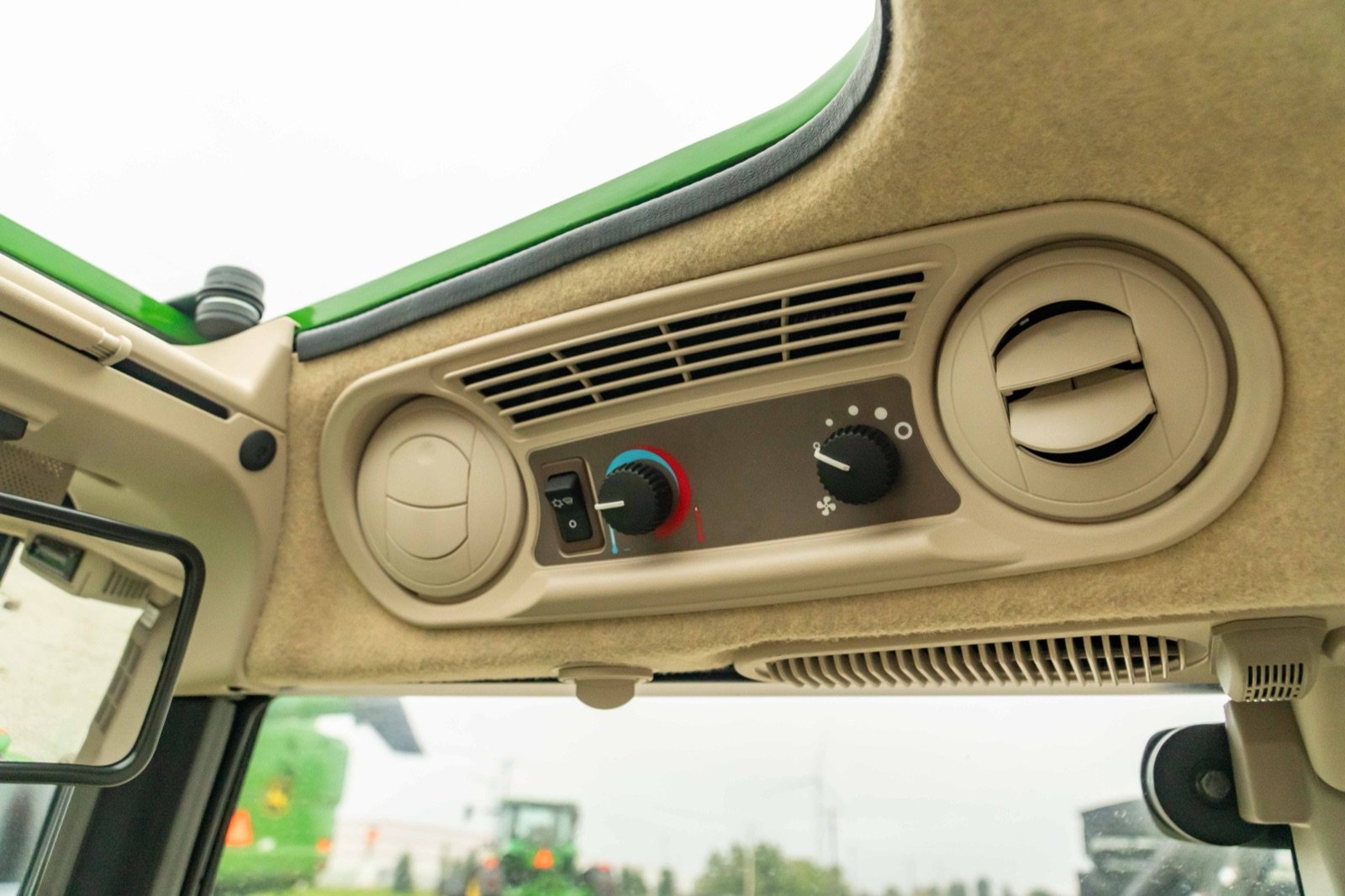
The premium cab adds a more finished operator station. The climate controls move overhead, with a fan speed knob, a temperature knob, and a switch you can reach without looking down from the spear. A retractable sunshade pulls across the roof glass for the low winter sun that sits right in your eyes on an east-facing lot at daybreak. None of that moves a bale any better. It makes the seat a nicer place to spend time.
So the question is how much time that is. A few dozen head fed from a barn across the drive is a short run; a couple hundred head spread over several lots is a long stretch every day all season. Long daily cab time is where the premium earns its price difference, and short runs are where a standard cab is the smarter money. If part of that long run is hauling feed and fence supplies rather than moving bales, a Gator may be the better tool for it. Before you decide, climb into one at Greenville and look down through the windshield at the spear tips with the loader curled. That sightline matters more than the trim.
The Honest Limit: The Advertised Price Is Loader-Ready, Not Loader-Included, and the 5075E Is Not Right for Every Herd
The advertised price on these cab units buys the tractor with the loader prep on it. The 520M loader and AB13G bale spear are added when you sign, so the number to compare against any other dealer or brand is the full package price with loader and spear on the sheet. Ask for that figure and we will write it down.
The 5075E with the 520M and a spear is the right tractor for a herd that feeds one bale at a time. It is the wrong tractor for an outfit stacking the heaviest bales several high or dragging a large mixer wagon through mud every morning. On that work it will get the job done slowly and wear faster than it should, and a larger frame tractor is the honest answer. If that sounds like your lot, say so when you call and we will quote the bigger tractor instead. Still deciding whether this size fits your place at all? We wrote a separate look at whether the 5075E is right for a small farm.
John Deere financing offers come and go through the year, and every promotion is good for a limited time. The current offers page stays updated, and our financing guide explains how rates and cash back trade off. We will confirm which one fits your deal and lock it in before it expires.
Next Step: Bring Your Bale Size and Lot Layout to Greenville
Stop in at Koenig Greenville or your nearest Koenig store and ask for a quote on the 5075E Cattleman package with the AB13G bale spear added, so the number you see is the number you feed with. Bring the weight of your heaviest bale, how many you move on a cold morning, and whether you want a rear spear so one trip carries two. That tells us whether a single rear valve covers you or a second one is worth having before the tractor leaves the lot.
If you are keeping your current tractor as the feeding backup, get it on the schedule for a No-Cost Service Inspection now, while there is still open shop time. A backup that will not start in January is not a backup. Whatever we find goes on the same visit as your 5075E quote, and we will tell you straight if the old tractor still has a few winters left in it.