Published: November 20, 2026
Updated: November 20, 2026
John Deere's answer to the mini skid steer is on the way. At Equip Expo 2026 in Louisville in October, Deere gave contractors a first look at two stand-on machines it calls utility track loaders: the 10 G-Tier and the 12 G-Tier. They are Deere's first machines in the class most crews call mini skid steers or mini track loaders, and they fill the gap below Deere's sit-in skid steer and compact track loader lines.
Here is what Deere has shared publicly so far, what it hasn't, and how to plan your next season around a machine that isn't on dealer lots yet.
What we know about the 10 G-Tier and 12 G-Tier
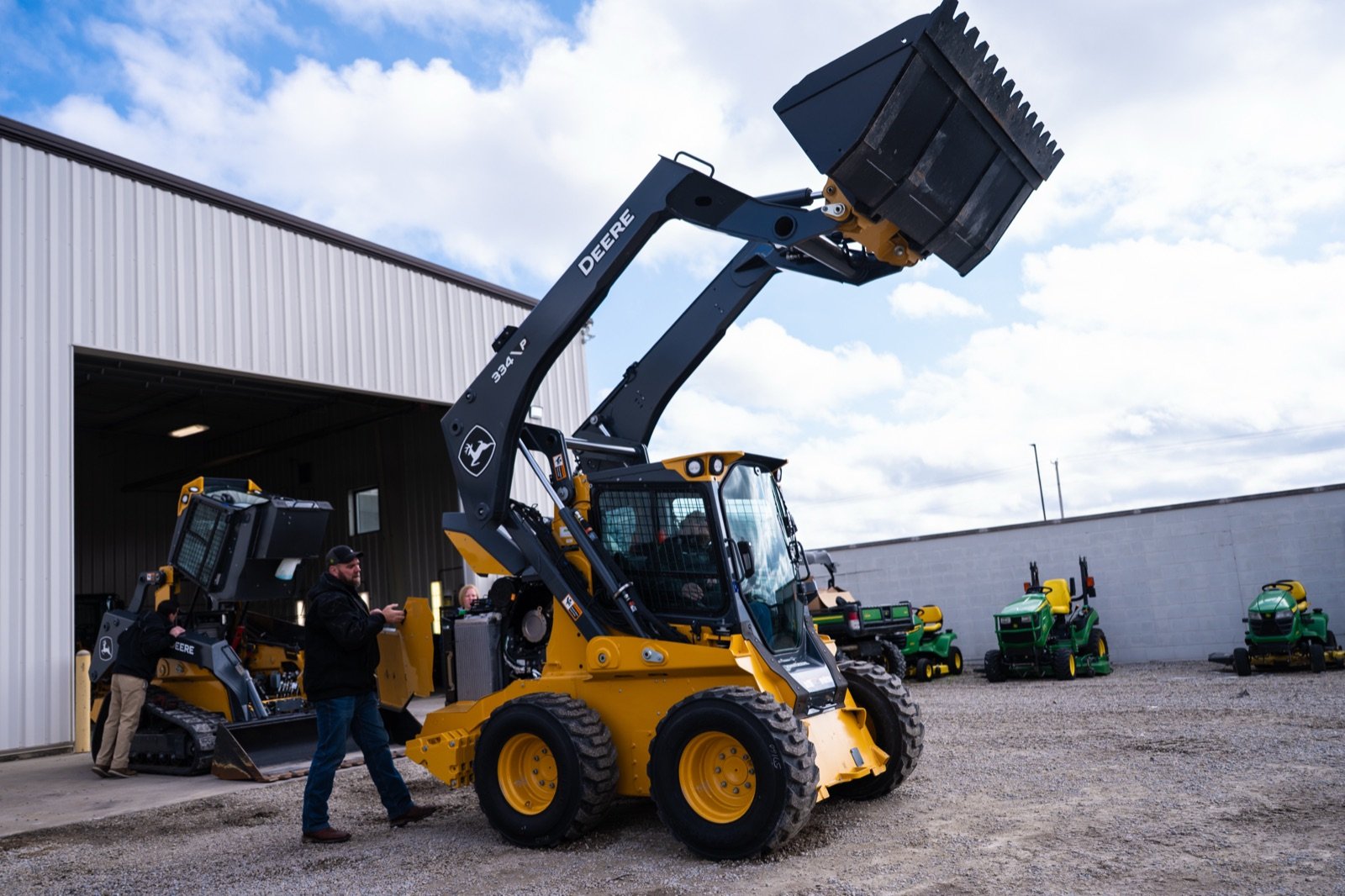
Only the 10 G-Tier was on display at the show, and our team got a look at it on the show floor:
Based on Deere's announcement and trade-press coverage from the show floor, here is the picture so far:
- Width. The 10 G-Tier is just under 36 inches wide, sized for fenced backyards, gates and doorways. The 12 G-Tier is wider, at about 42 inches.
- Power. Both are reported to run a Yanmar diesel of roughly 24 horsepower.
- Lift. Early reports put the 10 G-Tier's operating capacity around 1,000 lb and the 12 G-Tier's around 1,250 lb. Deere has said the 12 G-Tier gets its extra lift from added weight at the back. Deere has not published full spec sheets yet, so treat these as preliminary until it does.
- Attachments. Both are reported to use a common industry interface (CII) coupler. Launch attachments named so far include grapples, a stump grinder, an auger, pallet forks and several bucket sizes.
- Connectivity. Deere says each new machine includes a JDLink modem as standard, so you can see machine data in John Deere Operations Center.
- Timing. Coverage from the show says the loaders will be available in spring 2027. Deere has not announced pricing.
Deere's pitch is aimed squarely at landscape crews: install, construction and design-build work done with fewer people on shovels and wheelbarrows. As Deere's product marketing team put it at the show, "The name of the game here is maximizing crew hours." We'll update this page as Deere releases official specs.
Stand-on or sit-in: which kind of loader fits your work?
A utility track loader and a compact track loader solve different problems, so start with your jobs, not the machine.
The gate. Measure the narrowest gate you pass through every week and leave a few inches so the operator doesn't clip a post. If your work lives in fenced backyards and tight side yards, a 36-inch machine gets in where a sit-in loader can't. That is the job the 10 G-Tier is built for.
The load. Check capacity against what your crew lifts every day, not once a season: a pallet of pavers (the weight is on the supplier's tag), a yard of mulch, a full bucket of wet soil. A stand-on loader rated around 1,000 lb handles mulch, soil and light material well. Full paver pallets and wet soil call for a sit-in frame. Deere's smallest sit-in skid steers, the radial-lift 316 P (1,750-lb rated capacity, 6,180-lb operating weight) and the vertical-lift 318 P (1,945 lb rated, 6,542 lb operating weight), both make 61 net hp and carry far more per trip. A machine working at its limit tips more easily and wears faster, so size for your heaviest routine load.
The lawn. On finished turf, tracks spread the machine's weight over far more ground than tires. A light stand-on track loader is gentler still, which is a big part of why landscapers like them. A wheeled skid steer turns by skidding its tires and tears sod on every pivot. If your work is mostly on gravel, dirt or hardscape base, wheels are often the better buy. Our wheels-versus-tracks guide covers that choice in more detail.
Attachments and trailering: where a small loader earns its keep
Start with the attachments you already own. Don't assume the forks and buckets from a full-size skid steer will fit. Stand-on loaders typically use a smaller mounting plate than the universal skid steer quick-attach on sit-in machines. If you already run a stand-on loader from another brand, ask how its tools match the G-Tier's coupler before you plan on reusing them. On any loader, check auxiliary hydraulic flow against your hungriest attachment. An auger or stump grinder that's starved for flow runs slow all day.
Then weigh the whole rig. Add the loader's operating weight to the heaviest attachment you haul with it, and compare that total to your trailer's GVWR and your truck's tow rating. Stand-on loaders typically weigh far less than sit-in machines, so one can often ride behind the truck your crew already drives. Whether a given setup stays out of CDL territory depends on your truck, trailer and state rules, so run the numbers on your own rig.
Uptime decides the payback. Undercarriage wear is part of owning any track machine, and when something breaks, how far you are from parts and a technician matters more than any spec on the sheet.
Planning your season before spring 2027
If tight-access work is a big share of what you do, the G-Tier machines are worth waiting on. In the meantime, rent a stand-on loader for the backyard jobs you have now and keep notes on your gate widths, loads and attachments. That gives you real numbers to bring to the conversation when Deere releases specs and pricing.
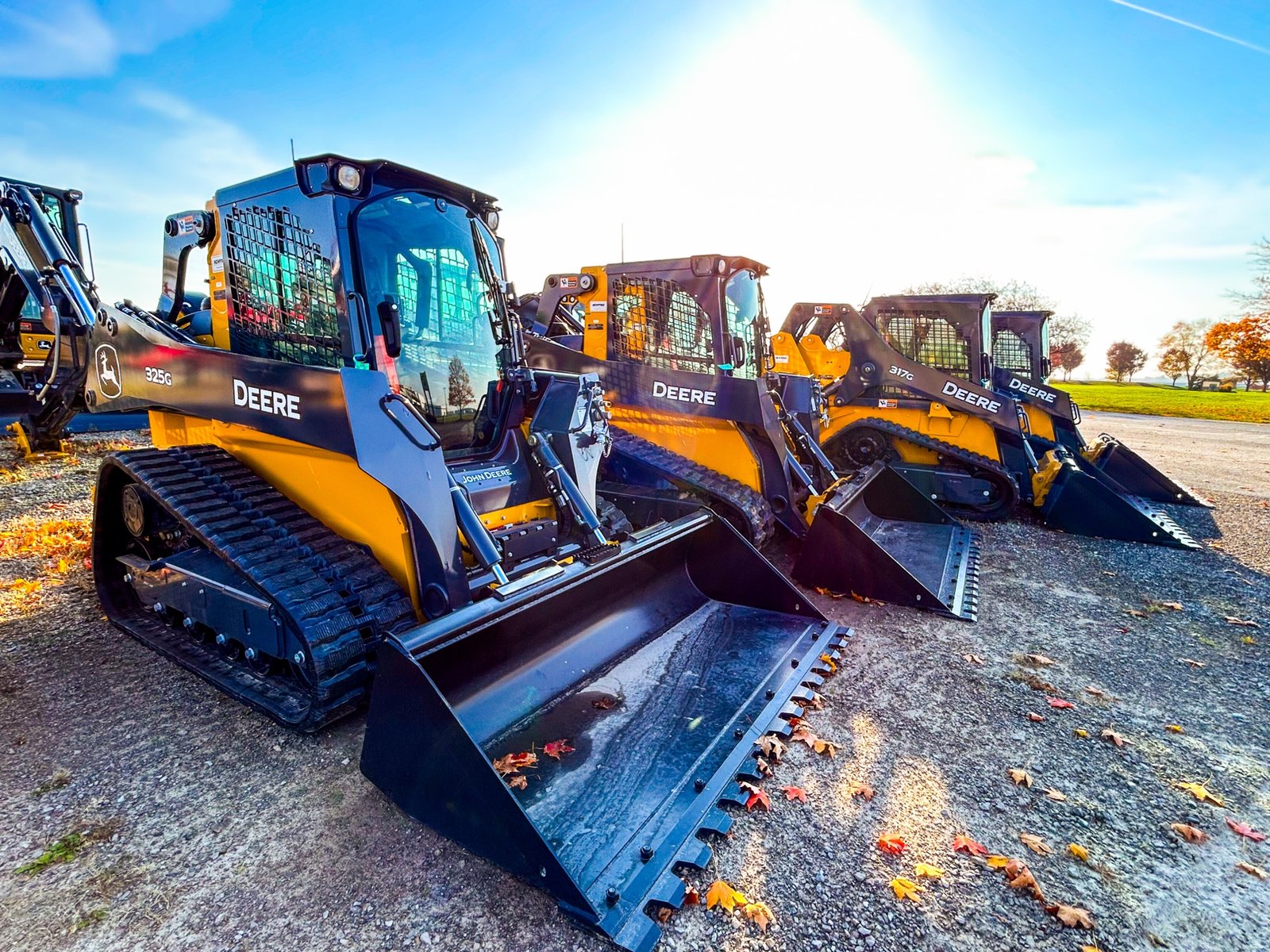
If your work is mostly open sites, heavy pallets and grading, a stand-on machine isn't the right tool, and there's no reason to wait. A sit-in skid steer or track loader will move more per trip today. For heavy grading or high-flow mulching, a larger frame such as the John Deere 325G earns its extra width.
Some crews will end up running both: a sit-in loader for the heavy lifting and a stand-on unit that goes through the gate behind it. To see whether a loader pays, add up the days you rented a skid steer or track loader last season, plus the crew hours spent wheelbarrowing base and hand-spreading topsoil, and put that next to a monthly payment. If the loader covers its payment in the weeks you'd have rented anyway, every other week it works is margin.
John Deere Financial can finance compact equipment together with a tractor or mower, and current promotions change through the year, so ask for today's terms before you build them into a bid. Our team offers service for compact equipment, and our parts counter can confirm the right filters, teeth and track parts for your machine.
Want to talk through the 10 G-Tier and 12 G-Tier, or find a loader that works now? Look through new skid steers and compact track loaders, then stop by any of our stores across Indiana and Ohio with your narrowest gate width, your typical loads and your truck and trailer specs. We'll share what Deere releases as it comes and help you match a machine to the work you actually do.