Published: September 29, 2026
Updated: September 29, 2026
|
Every October, some version of the same phone call comes into our parts and sales counters. A property owner has a compact tractor, a long gravel drive, and a memory of last January. They want a snow blower. They want it installed before Thanksgiving. And the model that fits their tractor, the one they saw on the floor in August, is gone.
It is the single most common ownership regret we hear heading into winter. Not buying the wrong attachment. Buying the right one too late.
This post explains why the snow attachment window closes as early as it does, how to figure out what actually fits your machine, and what to decide in the next few weeks so you are not shoveling around a tractor that is sitting in the shed with nothing on the front.
When should you buy a snow blower for your tractor?
Earlier than feels natural. For most Ohio and Indiana property owners, the right time to commit to a snow attachment is late September through mid-October. That feels backward when it is still 70 degrees and the mower is still running, but the timing has nothing to do with the weather. It has to do with how snow attachments are built and shipped.
Tractor-mounted snow blowers and blades are seasonal products. Manufacturers build them on a production schedule that is mostly set months ahead, based on dealer orders placed during the summer. Dealers stock what they expect to sell, and floor inventory for the season is largely in place by early fall. Once a popular size sells through, getting another one is not a matter of calling the warehouse. It often means waiting on a later production run or searching other dealers' inventory.
So the question is not "has it snowed yet." The question is "is the size that fits my tractor still on the floor or still orderable for delivery before December." In late September, the answer is usually yes. By Thanksgiving, it is often no.
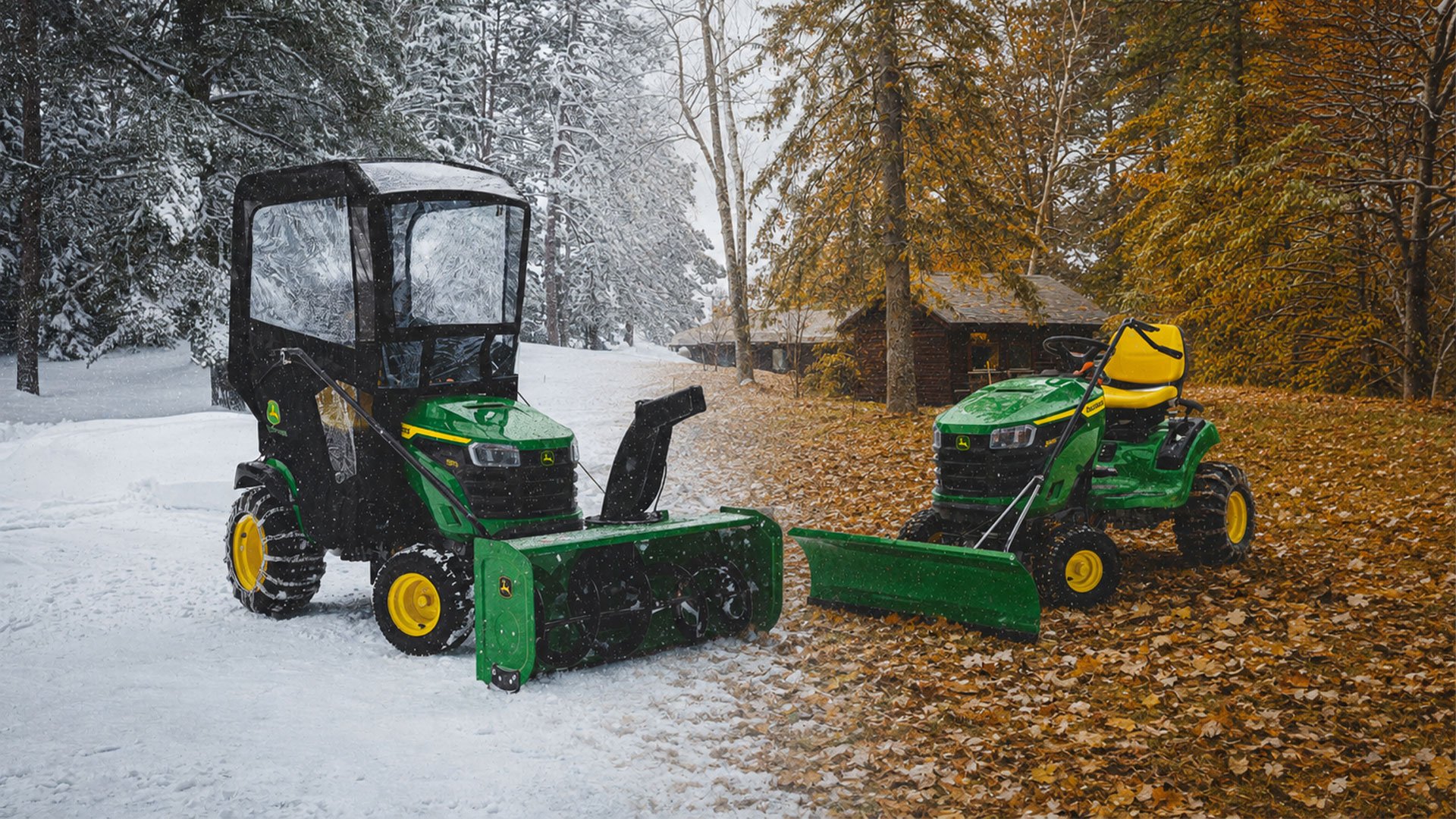
Why do snow attachments sell out so early?
Three reasons, and they compound.
First, demand is concentrated. Nearly every snow attachment sale in our region happens in a window of about ten weeks, from mid-September to the week after the first real snowfall. Mowers and loaders sell across a long season. Snow blowers do not.
Second, the first storm triggers a rush. The day after the first measurable snow, we see more snow attachment inquiries than the entire month before it. Everyone who was planning to "get to it" calls at the same time. If your size is one of the popular ones, it goes that week.
Third, fitment narrows the options. A snow blower is not a universal product. The one that fits a 1 Series sub-compact is not the one that fits a 3 Series compact, and neither fits a Ventrac or a zero turn. When a specific size and mount combination sells through, there usually is not a substitute on the floor that will work on your machine.
The practical result is that the widest selection and the best install scheduling both happen now, before any of that pressure starts.
Front-mount or rear-mount snow blower: which is better?
This is the first decision, and it depends on your tractor, your driveway, and how much you like looking over your shoulder.
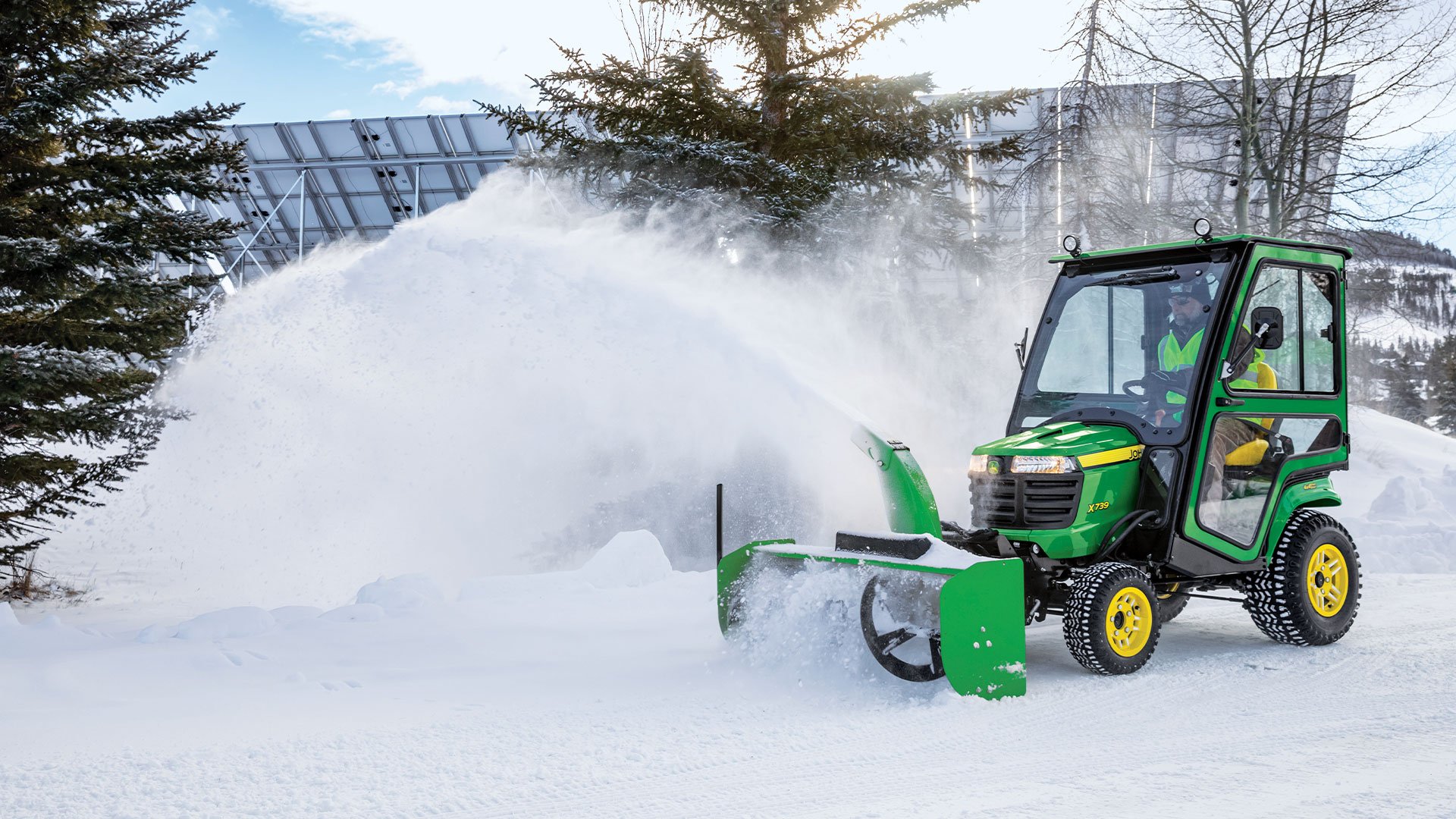
A front-mount snow blower sits ahead of the tractor, usually driven by a mid-PTO and mounted on a quick-attach frame. You drive forward into the snow and see exactly what you are clearing. On sub-compact and smaller compact tractors, front-mount is the most common setup, and for long straight drives it is the most comfortable way to move snow. The tradeoff is that it typically takes the place of your loader, so you are not running a bucket and a blower at the same time.
A rear-mount, three-point snow blower runs off the rear PTO. You either back into the snow or, on some models, drive forward with the blower pulling behind. Rear-mount units are often the value choice for compact and utility tractors, and they let you keep the loader on the front for stacking snow or clearing drifts. The tradeoff is operator comfort. Backing down a quarter-mile drive in January takes some getting used to, and a rotating seat or a good mirror setup helps.
Our honest rule of thumb: if the loader is a daily tool for you in winter, go rear-mount. If your drive is long and you would rather face forward in the cold, go front-mount and plan around the loader.
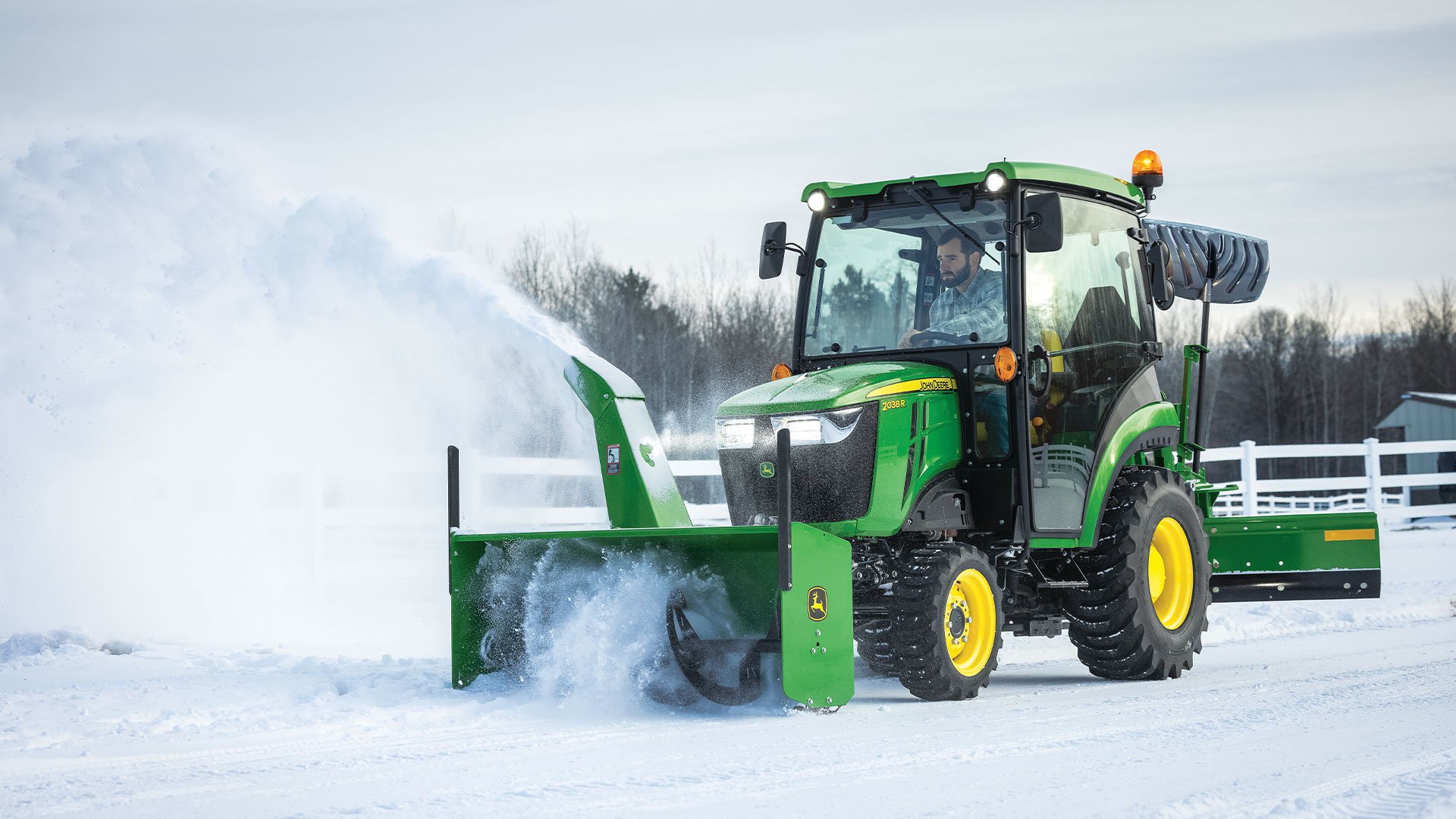
Snow blower or snow blade?
A blade is the simpler, lower-cost tool, and for a lot of properties it is enough. Rear blades mount on the three-point hitch and can be angled to push snow off to one side. Front blades mount to the loader or a dedicated frame and push snow ahead of you. Both work well for moderate snowfall, shorter drives, and places where you have room to pile snow along the edges.
A snow blower earns its cost when you have long drives, heavy drifting, limited room to stack snow, or wet, heavy lake-effect style snow that a blade just moves around. A blower throws the snow clear of the drive, which means you are not building walls along the edges that make every following storm harder.
Across our territory, we generally see blades on shorter residential drives and farm lots with open space, and blowers on long rural drives, subdivisions with tight lots, and properties where drifting is the real problem. If you are unsure, tell us your drive length, width, and what happened last winter. That usually answers it.
What size snow blower do I need for my tractor?
Two measurements matter: your tractor's width and its horsepower.
The blower should be at least as wide as the tractor's outside tire width, and preferably a few inches wider, so you are not driving over and packing down snow you have not cleared yet. Measure outside of tire to outside of tire on your widest axle before you call. That one number saves a lot of back and forth.
Horsepower determines how wide a blower the tractor can actually drive. A sub-compact tractor in the low 20s horsepower range pairs with a narrower front blower. Compact tractors in the 30 to 45 horsepower range can run wider front or rear units. Utility tractors can run the big rear-mount blowers that clear a full lane in one pass. Oversizing the blower on an underpowered tractor makes it bog down in heavy snow, which is exactly when you need it.
The other fitment questions we will ask: which mid-PTO or rear PTO your tractor has, whether you have a quick-attach loader frame, and what model year the tractor is. Mounting frames and drive shafts change between series and sometimes between model years, and getting the right mounting kit is as important as getting the right blower.
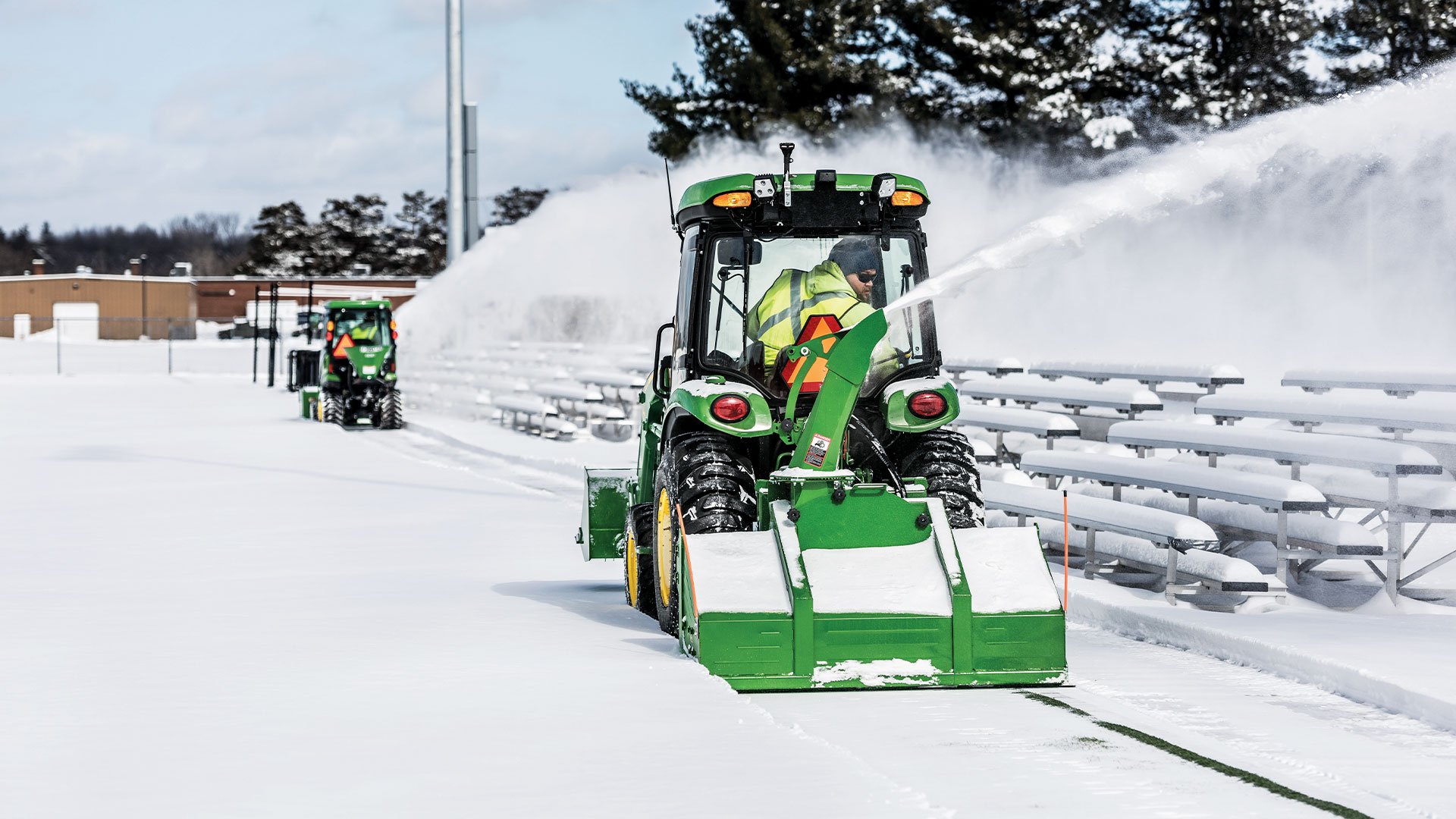
What about Ventrac snow attachments?
If you own a Ventrac, you already know the appeal. The same machine that mows your slopes all summer becomes a front-mount snow blower, broom, or blade in winter. Ventrac snow attachments are a common reason people buy the machine in the first place.
The same timing rules apply, maybe more so. Ventrac attachments are built for a specific platform, the supply is narrower, and the owners who already have a tractor tend to order early. If you read our August post on getting your Ventrac ready for fall, this is the follow-through: the tool-change plan only works if the snow attachment is actually in your shed.
Some residential lawn tractors also accept snow attachments, typically a front blade or a front-mount thrower on lawn tractors and dedicated snow kits. These are often the most overlooked option. If you already have a lawn tractor with an attachment-ready front hitch, a blade or thrower may be a smaller investment than a separate walk-behind snow blower. Fitment is specific, so bring your model and serial number.
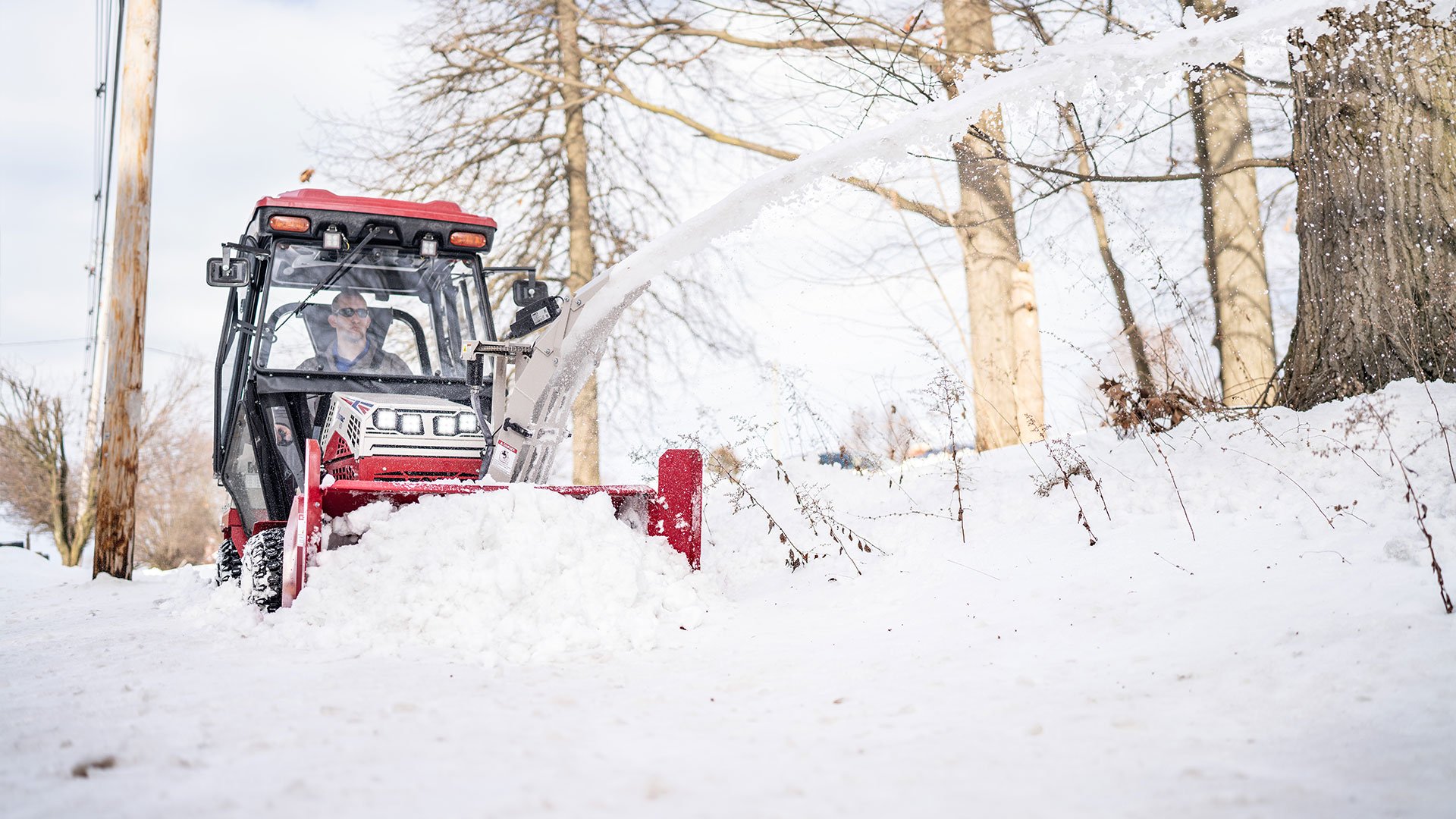
How long does it take to get a snow attachment installed?
Longer in November than in October, for the same reason the attachments themselves get scarce. Our service departments are also finishing fall mower storage work, harvest-season repairs, and pre-winter tractor inspections. Snow attachment installs stack on top of all of it.
Some attachments are simple enough for an owner to mount with a few pins and a PTO shaft. Others need a mounting frame, a subframe, a hydraulic kit for chute rotation, or a mid-PTO shaft routed under the tractor. The first install of a front-mount blower on a sub-compact is usually a job worth having a technician do, both to get the frame right and to show you how to swap the loader off and the blower on in your own driveway.
What we typically see: an order placed and installed in October is ready well before the first storm. An order placed after the first storm can wait weeks for both the attachment and the install slot. The difference is not the attachment. It is where you land in line.
Is there a deal on snow attachments right now?
Attachment pricing varies by size and brand, and snow equipment itself does not usually carry the big national incentives you see on tractors. But there are two current programs worth knowing about if you are putting together a winter setup.
John Deere is running multi-implement savings on compact utility tractors right now, with $250 off when you buy two new implements, $300 off for three, $350 off for four, and up to $400 off for five or more. If you are buying a tractor this fall, adding a snow blower or blade alongside a loader bucket or box blade is exactly the situation those programs are built for. Compact utility tractors themselves are carrying 0 percent financing on select models and up to $3,500 off with a cash purchase on others, depending on the model.
On the service side, there is also 15 percent off parts for 1 through 4 Series tractors. If your existing tractor needs belts, filters, or a PTO shaft before it goes into snow duty, that helps.
Ask about these when you call. They depend on model and configuration, and we would rather match the right one to your setup than have you guess.
What should you check before snow season?
Whether you are buying new or pulling last year's blower out of the corner of the shed, a few minutes now saves a cold morning later.
Check shear bolts. Snow blowers use shear bolts on the auger to protect the gearbox if you hit a rock or frozen newspaper. Keep a handful of spares in the tractor. Use the correct grade. A hardware store bolt that does not shear can turn a ten-cent fix into a gearbox repair.
Inspect the scraper bar and skid shoes. Both wear from contact with gravel and pavement. Worn skid shoes let the housing ride too low and pick up stones. Adjust them up for gravel drives.
Grease every fitting and check the gearbox oil. Blowers sit for eight months and then run hard. Fresh grease on the auger and impeller bearings and a gearbox oil check are cheap insurance.
Test the chute rotation and deflector before the first storm, not during it. Whether it is manual, cable, or hydraulic, you want to know it moves freely.
Check tires and consider ballast. Traction is everything in snow. Chains, filled tires, or rear wheel weights make a bigger difference than most owners expect, especially with a front-mount blower or blade.
And look at the tractor itself. Battery, block heater, fuel stabilizer or winter-blend fuel, and hydraulic fluid condition all matter more in January than they do in July.
What are the most common snow attachment mistakes?
Three show up every winter.
Waiting for the first snow to decide. By then you are choosing from what is left, not what fits best, and you are waiting in the install line with everyone else.
Buying the wrong width. Too narrow and you drive over uncleared snow on every pass. Too wide and the tractor bogs. Measure outside tire width and know your horsepower before you shop.
Forgetting the mounting kit. The blower is only half the purchase. The quick-attach frame, the mid-PTO shaft, the subframe, or the hydraulic kit is often what holds up the install. Confirm the full parts list for your specific tractor at the time you order.
When to call
Call now if you know you want a snow attachment this winter and you have not picked one out. Bring your tractor's model number, serial number, and outside tire width, and tell us about your drive and what last winter was like. Our parts and service teams at stores across Ohio and Indiana can confirm fitment, check what is on the floor, and get your install scheduled before the fall service rush turns into the winter one.
If you already own a snow attachment, this is also the right time to bring it in for a pre-season check. The best snow blower in the world does not help much if the shear bolt goes on the first pass and the spares are at the store.