Published: October 15, 2026
Updated: October 15, 2026
|
The short answer: bucket for a short drive, front blade for a long straight drive, rear blower for drifts and deep snow
If your drive is paved and short, the 120R loader bucket you already own is enough. You can scoop, carry, and stack snow exactly where you want it, which matters when the only open space is a corner by the garage. The trade-off is time. Once the drive gets long, you are making many trips with a small bucket, and a storm that drops snow all day turns into an all-day job.
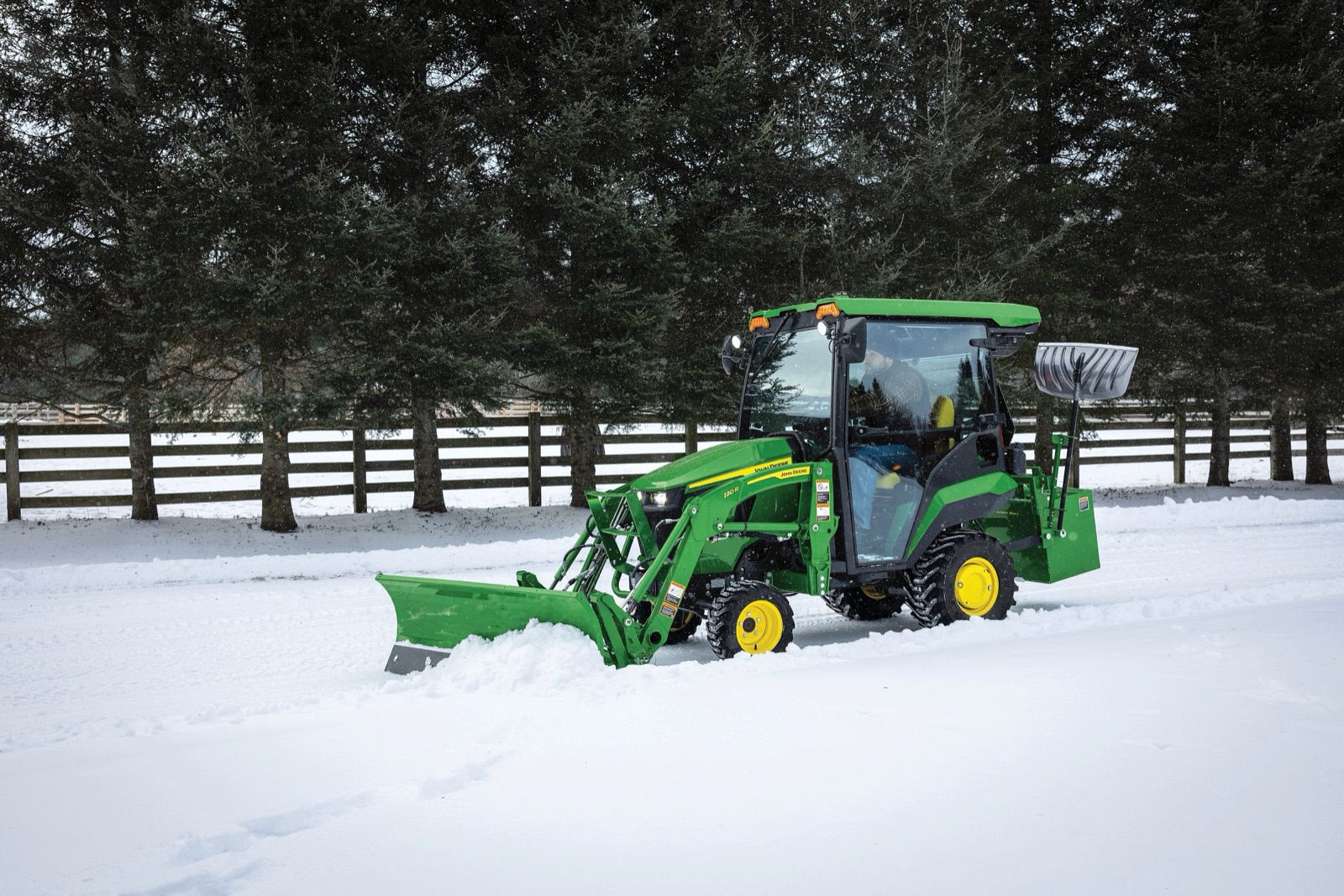
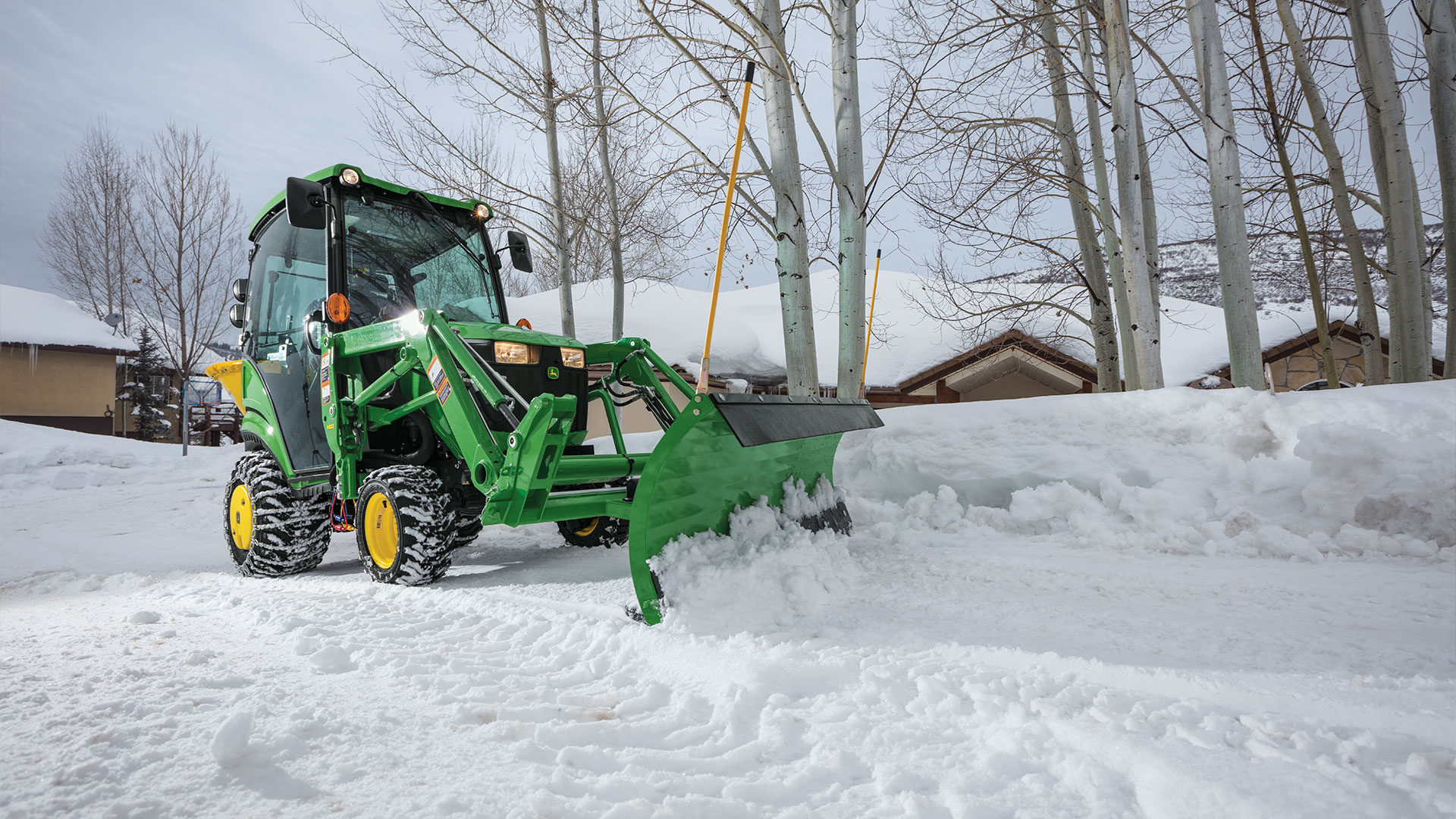
A front blade on the 1025R is the answer for a long, mostly straight gravel or paved drive. Set the angle, make two passes, and the snow rolls off to the side. The condition is that you need somewhere for that windrow to go. A drive lined by fence, trees, or a neighbor's yard fills in fast, and a blade cannot lift what it has already piled.
The rear-mounted snow blower is the only one of the three that handles deep snow, hard-packed drifts, and lake-effect weeks without leaving a wall at the end of the drive. It throws snow clear of the path instead of pushing it ahead. On 1 to 5 acres with paths to a barn, coop, or wood pile, this is the setup we recommend with the 1025R and 120R.
Match the setup to your driveway, your snow, and your storage space
Two driveway situations push you toward a blower even if the length alone would not. If you share a lane with a neighbor, or the drive runs well past the point where you can push snow off it, a blower is the only option that throws snow off the drive instead of building banks that creep inward every storm until you run out of room to push.
Then think about what falls here. Wet, late-winter slush in Ohio and Indiana sticks to a blade and rides up over it, but it packs and carries fine in a bucket. Dry midwinter powder throws cleanly, so a blower earns its keep in a heavy-snow year. For the ordinary storm most of us get, a blade is enough. On gravel, set the skid shoes on a blade or blower high so you are not scalping stone into the yard you will have to rake in April.
Storage decides it for some Customers. A front blade stores flat against a shop wall. A rear blower takes about as much floor as a small riding mower, which matters in a garage already holding the tractor. The bucket needs no extra space because it stays on the loader all winter. If you are already tight on room, that alone may settle the question before you weigh anything else.
What your 1025R needs to run each one (and what you give up with each)
The rear blower hangs on the 3-point hitch and runs off the rear PTO, so the 120R loader stays on the front as ballast and you can still scoop a pile with the bucket on the same trip. The cost is that you clear the whole drive in reverse, looking over your shoulder. On a straight drive that is tolerable. On a curved one with mailboxes and culverts, it gets old fast.
A front blade mounts on the loader or on its own frame, keeps you facing forward, and is the quickest of the three to hook up. What it cannot do is lift. By February the bank along your drive is taller than the blade, and every pass pushes snow into a wall that will not move. The bucket needs nothing extra to run, but if your drive has any grade, plan on rear ballast and chains or the right tire setup for traction, or you will spin where you need to push. Our parts team can confirm what fits your tractor.
Here is the honest trade-off: nobody clears a long drive and a barn path well with one tool. That is why our 1025R Snow Control Solution pairs the 1025R with the 120R loader and the snow blower for properties of 1 to 5 acres. The bucket does the stacking and the blower does the deep work, and you are not swapping attachments in a dark driveway at six in the morning.
Why October, not the first storm, is when to order
Demand for snow blowers and front blades jumps the week after the first real snow, because that is the week everyone in Indiana and Ohio decides they need one. Order in October and you are ahead of that rush, with time for the attachment to arrive and get installed before the ground is white. Order after the first storm and you are in line behind every other driveway in the region, and nobody can promise a date.
Install matters as much as supply. A rear-mount blower or a front blade on a 1025R is a scheduled shop job, not a parking-lot bolt-on, and shop schedules fill once the snow starts and equipment that was put away wet in the fall starts coming back in. An October install date is far easier to get than a December one.
October is also when to check offers. We usually have something running on new 1025R tractors, and the details change, so check the current offers page rather than guessing from a post. If you are still shopping the tractor itself, ask your nearest store what 1025R tractors are on the lot; many arrive with the loader already installed, which leaves only the snow attachment to add.
Next step: bring your driveway, not just your tractor, to Koenig
Before you visit, do three things: pace off or measure your drive, note whether it is gravel or paved, and count the walks and paths you clear after each snow. That is what our sales team needs to match a front blade, rear blower, or loader bucket to your layout instead of guessing. Stop by any of our stores across Indiana and Ohio, call, or get a quote online, and bring those numbers with you.
Ask about packages that bundle the 1025R with matched implements at one monthly payment. Package contents and pricing vary by store, so ask what is included before you compare it against buying each piece on its own. Then schedule the attachment install and an off-season inspection for the same visit, so the tractor gets looked over before the first storm and comes home snow-ready instead of making two trips.