Published: April 28, 2026
Updated: October 1, 2026
|
Buying used equipment is one of the smartest financial decisions a property owner or farmer can make. A well-maintained tractor, mower, or implement with a few hundred hours on it still has thousands of hours of useful life ahead, and you avoid the depreciation hit that comes with buying new. The question is not whether used equipment is a good idea. The question is where you buy it.
There are three main options: private sale (Facebook Marketplace, Craigslist, word of mouth), auction (online or in-person), and a dealership. Each has a place, but for most buyers in Ohio and Indiana, buying from a dealership offers advantages that the other two cannot match. This post explains why, what to look for, and how the process works at Koenig Equipment.
Why Buy Used Equipment from a Dealership Instead of Private Sale?
Private sale can work. If you know the seller personally, you have inspected the machine thoroughly, and you are comfortable taking on any risk, buying from an individual can save you money. But for most buyers, particularly those who are not mechanics, the risks are real.
Here is what a dealership provides that private sale does not:
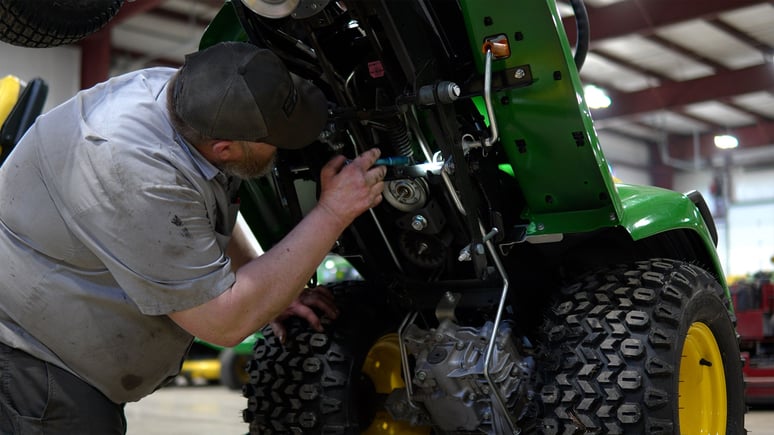
Inspection and reconditioning. When Koenig Equipment takes in a used machine, our technicians inspect it before it goes on the lot. That inspection covers the engine, hydraulics, electrical system, transmission, and the condition of wear items like belts, blades, and tires. Issues are identified and addressed before the machine is offered for sale. A private seller has no obligation to do any of this, and many do not.
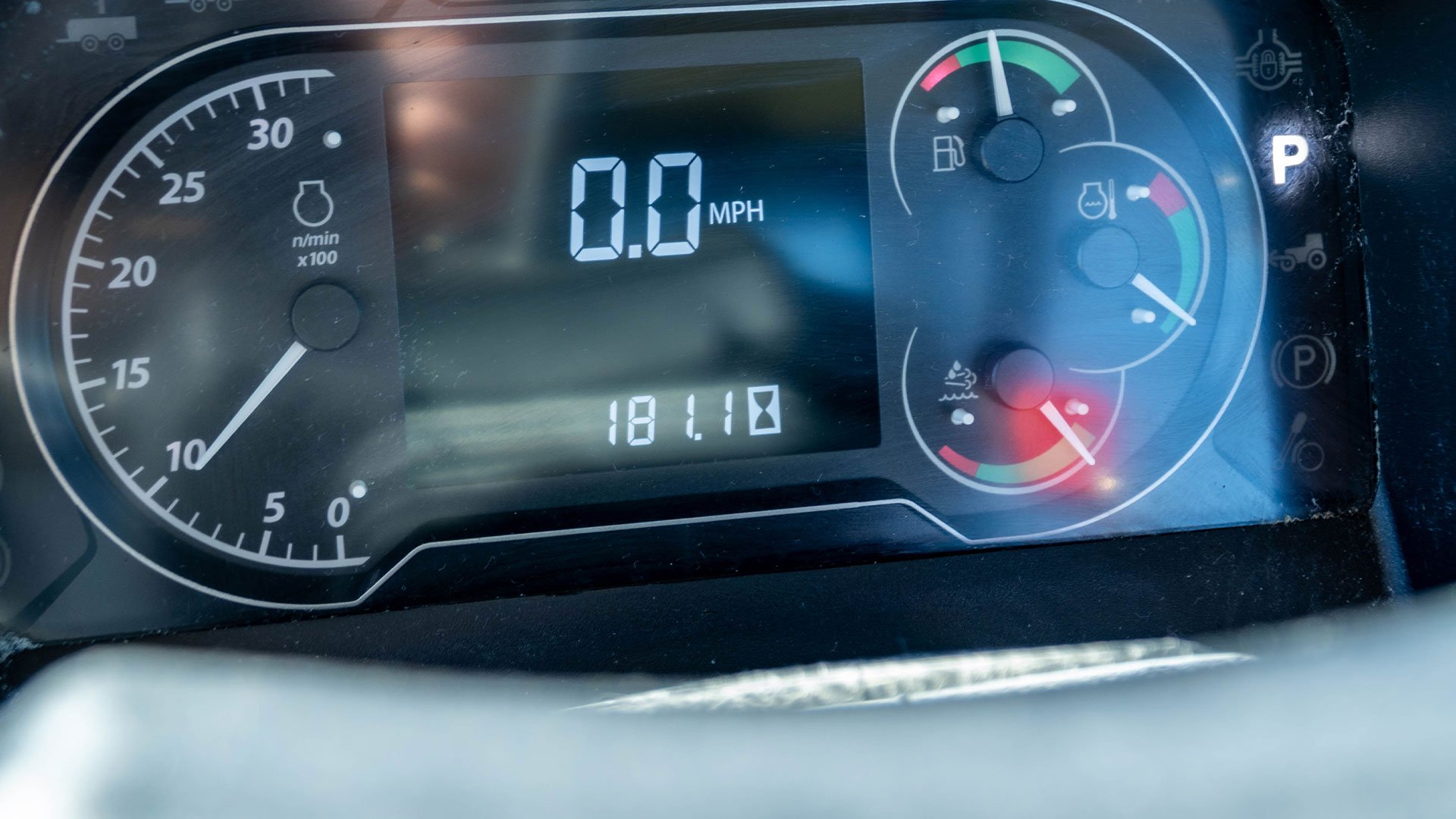
Transparency on hours and history. Dealerships pull service records when available and can verify hour meter readings against the machine's history. Hour meter tampering is a real problem in the used equipment market. A compact tractor with 300 "hours" that actually has 1,200 hours is a very different purchase, and that difference may not be obvious without dealer-level diagnostic tools.
Financing options. Dealerships can offer financing through John Deere Financial and other lenders. Private sellers require cash or personal loans, which often carry higher interest rates and less favorable terms. Financing through a dealership is straightforward and competitive, particularly for buyers who qualify for John Deere promotional rates.
Warranty and guarantee options. Depending on the machine and its condition, Koenig may offer warranty coverage on used equipment that a private seller simply cannot provide. This varies by machine, but the option exists at a dealership and does not exist in a private transaction.
Trade-in capability. If you are upgrading from an older machine, a dealership can apply your trade-in value directly to the purchase. Private sale requires you to sell your current machine separately, which adds time, effort, and risk to the process.
What About Buying at Auction?
Auctions can deliver good prices, particularly on older or higher-hour equipment where the market is less competitive. But auctions come with their own set of risks.
Most auction equipment is sold as-is with no warranty and no returns. You may have limited time to inspect the machine before bidding, and in online auctions you may not inspect it at all. The excitement of bidding can push prices past what the machine is actually worth, and you are responsible for transport from the auction site to your property.
For buyers who know exactly what they are looking at and are comfortable with the risk, auctions have a place. For a first-time tractor buyer or someone who does not have the mechanical knowledge to assess a machine's condition in 10 minutes, a dealership is the safer path.
What to Look for When Buying Used Equipment
Whether you buy from a dealer or anywhere else, these are the key items to evaluate. At a dealership, most of these will already be documented, but it is still worth understanding what matters.
Hours vs. Age
Hours are more important than years. A 2018 tractor with 200 hours has barely been broken in. A 2022 tractor with 3,000 hours has lived a full commercial life. For compact utility tractors in the sub-50 horsepower range, here is a general framework:
- Under 500 hours: Essentially like new. Expect pricing close to new minus normal depreciation.
- 500 to 1,500 hours: Well broken in, plenty of life left. This is the sweet spot for value.
- 1,500 to 3,000 hours: Getting into higher-wear territory. Price should reflect this.
- Over 3,000 hours: The machine has been worked hard. Not necessarily a bad buy, but maintenance history and condition matter a lot at this point.
For larger ag equipment like row-crop tractors and sprayers, the hour thresholds are higher because those machines are built for more sustained use. A row-crop tractor with 5,000 hours may still have significant life ahead if it was maintained properly.
Hydraulic System Condition
The hydraulic system is one of the most expensive components to repair. Check for leaks around cylinder seals, hose fittings, and the pump. Operate all hydraulic functions (loader, 3-point hitch, auxiliary ports) and listen for unusual noise or sluggish movement. Fluid that looks dark or smells burnt indicates the system has been run hot or neglected.
Tire Condition
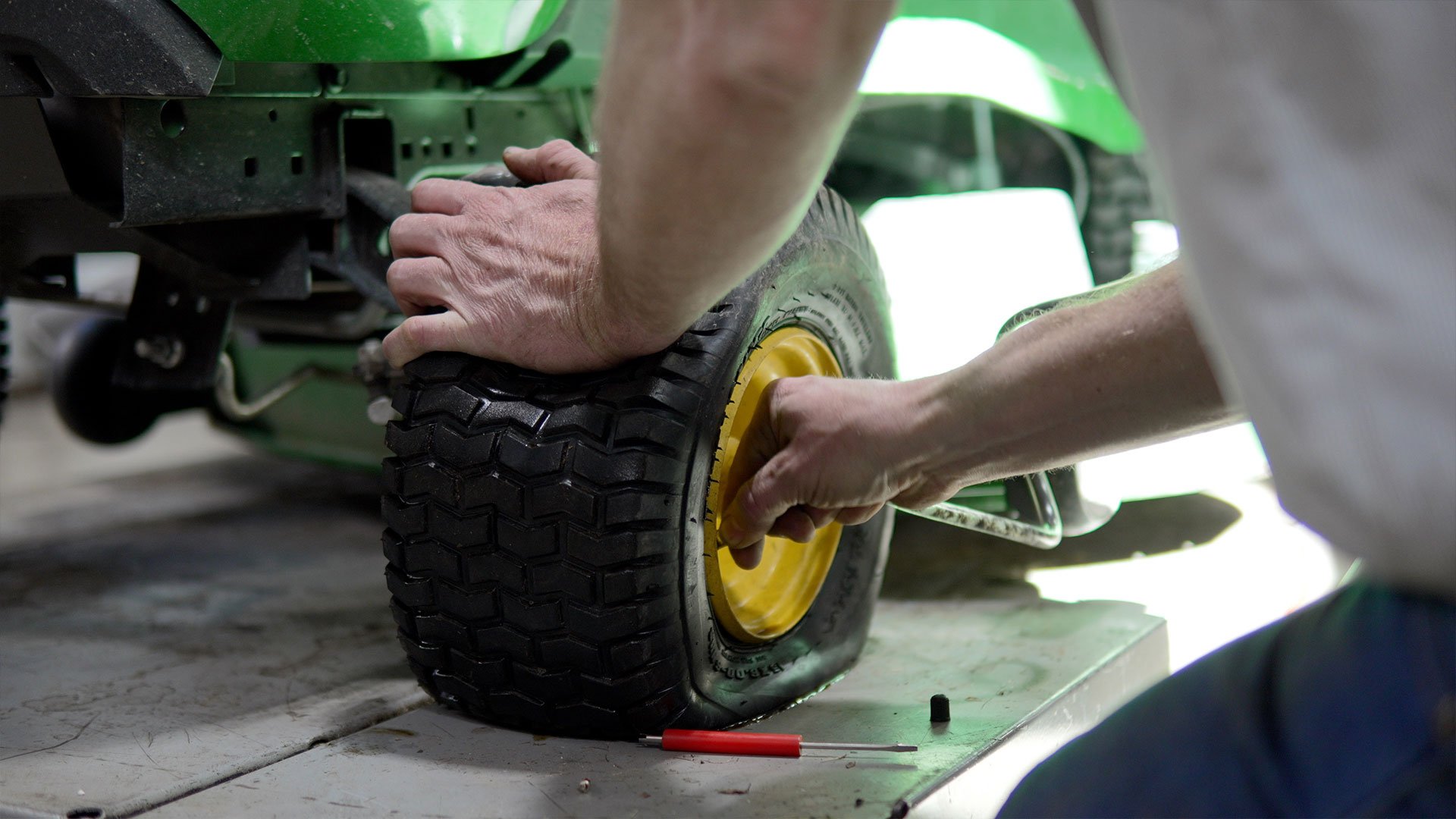
Tires on compact tractors and mowers are often overlooked but can be expensive to replace. Check tread depth, sidewall condition, and whether the tires hold air. Dry rot on older tires is common and means replacement is coming soon regardless of tread depth.
Engine and Drivetrain
Start the machine cold if possible. A cold start reveals issues that warm-start inspections hide: hard starting, smoke color, unusual knocking, and slow oil pressure buildup. Blue or white smoke on startup can indicate worn rings or valve seals. Black smoke under load suggests a fueling issue. Listen for steady idle without surging or miss-firing.
Check the transmission by operating the machine in both forward and reverse at varying speeds. The response should be smooth and immediate. Hesitation, jerking, or grinding sounds point to transmission wear that can be expensive to address.
Loader and Attachment Condition
If the machine comes with a loader, check the bucket cutting edge, the pin bores in the quick-attach, and the condition of the hydraulic cylinders. Sloppy pin bores mean the loader has been worked hard and the pivot points are worn. This is not a deal-breaker, but it should be reflected in the price.
How Does the Used Equipment Process Work at Koenig?
The process is straightforward. Here is what to expect when you buy used from Koenig Equipment.
Browse online or in person. Our used equipment inventory is listed on the website with photos, specifications, and pricing. Every listing includes the machine's hours, condition, and location. You can also visit any of our locations across Ohio and Indiana to see used equipment in person.
Ask questions and request details. Our sales team can pull additional information on any machine you are interested in, including service history (if available), any known issues or repairs, and what work was done during the reconditioning process.
Test before you buy. For tractors and mowers, we encourage you to operate the machine before committing. You want to feel how it drives, how the hydraulics respond, and whether anything feels off. A test run reveals things that photos and spec sheets cannot.
Financing and trade-in. If you are financing the purchase, the process works the same as a new equipment purchase. John Deere Financial offers competitive rates on used equipment, and your trade-in can be applied to the purchase price.
Delivery or pickup. Koenig can deliver the equipment to your property, or you can arrange pickup at the selling location. Delivery fees depend on distance.
What Used Equipment Sells the Fastest?
Based on what we see at Koenig Equipment, here are the categories that move the fastest:
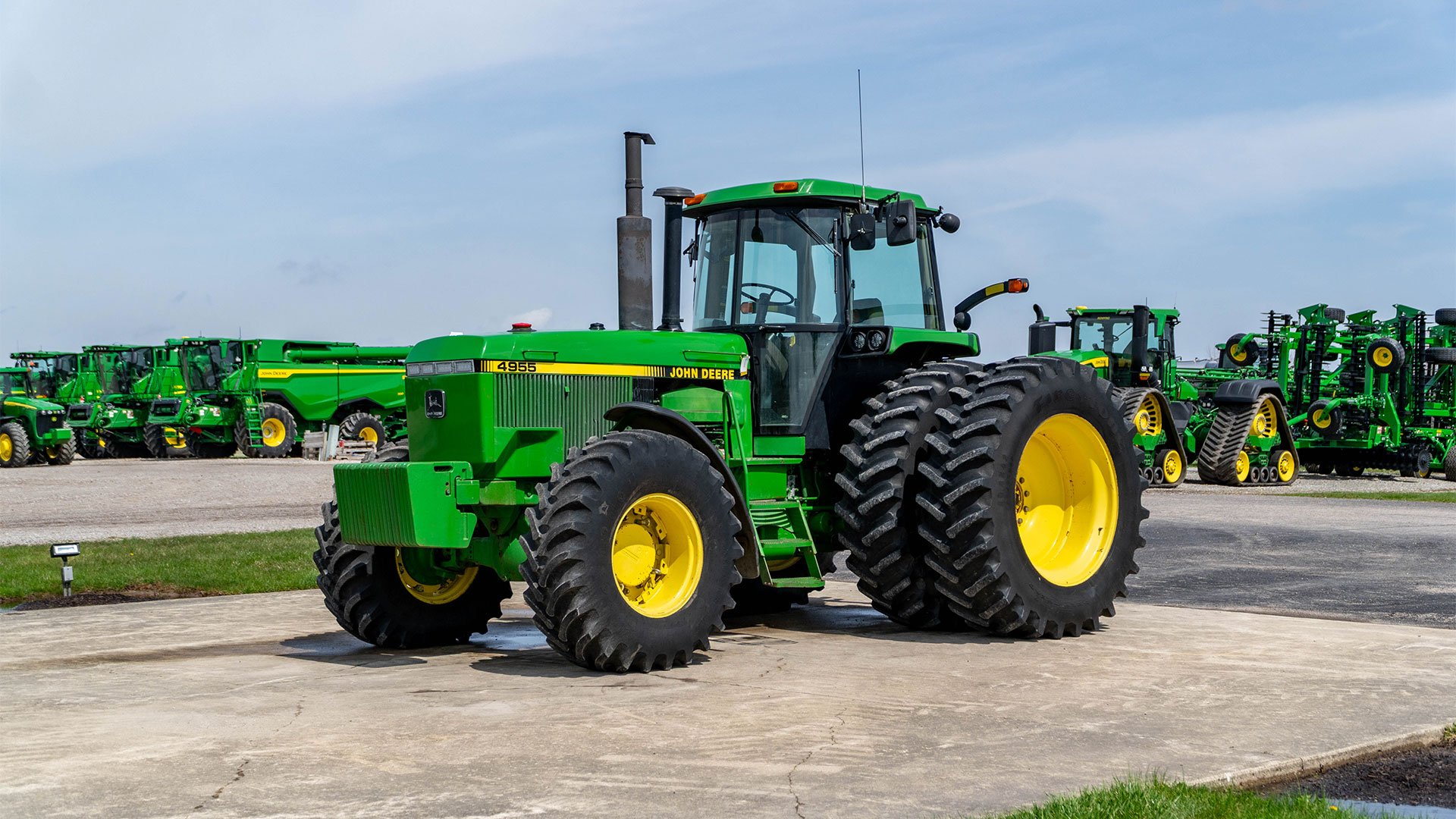
Compact utility tractors (1025R, 2025R, 3-Series). These are consistently the most in-demand used machines. Buyers who want a John Deere compact tractor but want to save on the purchase price look here first. Good-condition units with loaders sell within days.
Zero turn mowers. Used John Deere, Ferris, and Gravely zero turns are popular with homeowners who want a quality machine at a lower entry price. Mowers with lower hours and well-maintained decks go quickly, particularly in spring.
Gators and utility vehicles. Used Gators are among the most-searched items on our website. The combination of high demand and limited supply means well-priced Gators rarely stay in inventory for long.
Planters and sprayers. On the ag side, used planters and self-propelled sprayers draw significant buyer interest, particularly from operations looking to add capacity without the full investment of a new unit.
If you are looking for something specific, it is worth setting up a notification through our website so you are alerted when matching equipment comes in.
How Much Can You Save Buying Used?
The savings depend on the machine, its age, and its condition. As a general guideline:
A compact utility tractor with 500 to 1,000 hours typically sells for 20 to 35 percent less than the equivalent new model. A zero turn mower with one or two seasons of residential use might be 25 to 40 percent below new pricing. Larger ag equipment can vary more widely depending on condition, configuration, and current market demand.
The key factor is matching the machine's remaining useful life to your needs. If you need a tractor for 10 years and the used machine has 8 to 10 years of reliable service ahead of it, the savings are real and meaningful. If the machine is going to need a major repair within a year, the savings evaporate.
This is where buying from a dealership helps. A technician who has inspected the machine can give you an honest assessment of what to expect in terms of upcoming maintenance and remaining useful life. A private seller cannot offer that perspective with the same credibility.
Trade-In: Getting Value from Your Current Machine
If you already own equipment, trading it in at a dealership is the simplest path to upgrading. The trade-in value is applied directly to your purchase, reducing the amount you need to finance or pay out of pocket.
The trade-in process at Koenig starts with an evaluation. Our team looks at the machine's condition, hours, and market value for comparable equipment. The offer is based on what the machine will sell for after any reconditioning, minus the cost of that work.
Is the trade-in value always higher than what you could get selling it privately? Not always. Private sale can sometimes net more because there is no dealer margin in the middle. But the convenience of a trade-in, the avoided hassle of listing, showing, and negotiating with strangers, and the tax advantage (in many states, trade-in value reduces the taxable purchase price) make it the better option for most buyers.
Used Equipment Notifications: Do Not Miss What You Are Looking For
Koenig Equipment offers a notification system that alerts you when used equipment matching your criteria comes into our inventory. If you are looking for a specific model, year range, or equipment type, setting up a notification ensures you see it before it sells.
To set up equipment notifications first head over to our used equipment page and select a machine that fits the category you're interested in. Once on the machines page navigate down to the "Get Equipment Alerts" section to get set up.
Financing Used Equipment: What Are Your Options?
One of the advantages of buying used from a dealership is access to structured financing. John Deere Financial offers used equipment financing with competitive rates, and the application process is the same straightforward experience as financing a new machine.
Typical used equipment loans run 36 to 72 months depending on the machine's value and age. Interest rates vary based on the buyer's credit profile and any promotional programs currently available. John Deere periodically runs reduced-rate financing on certified pre-owned and select used equipment, which can make the monthly payment difference between new and used even more significant.
For buyers who prefer to pay cash, a dealership can still help structure the deal to include any trade-in value and ensure all paperwork, title transfer, and registration is handled properly. This is one more area where the dealership experience simplifies what can be a complicated process in a private transaction.
Spring is the busiest time of year for used equipment sales. Buyers are preparing for the season, and inventory turns over faster than at any other time. If you have been considering a used tractor, mower, sprayer, or utility vehicle, now is the time to start looking.
Find parts for your 1025R
Shop genuine John Deere parts that fit the 1025R and 2025R at Koenig Marketplace — search by your exact model to see what fits.
See how the 1025R compares
Weighing your options? Koenig has side-by-side spec comparisons for the equipment we sell:
Not sure which compact tractor is right for you?
Answer a few quick questions and Koenig will match you to the right John Deere compact tractor, based on how you work and what you need.