Published: September 19, 2024
Updated: October 12, 2026
|
A combine harvester (most farmers just say "combine") is the self-propelled machine that cuts a crop, threshes the grain from the plant, separates and cleans it, and holds it in a grain tank, all in one pass. It is not a tractor attachment; it drives itself, and the header on the front swaps out to match the crop. For most Indiana and Ohio operations growing corn, soybeans, and wheat, the choice comes down to two John Deere lineups: the S Series for small to mid-size acreage and the X Series for large operations that need to cover a lot of ground fast. Below is what we ask a Customer before recommending either one, and how the two lineups compare.
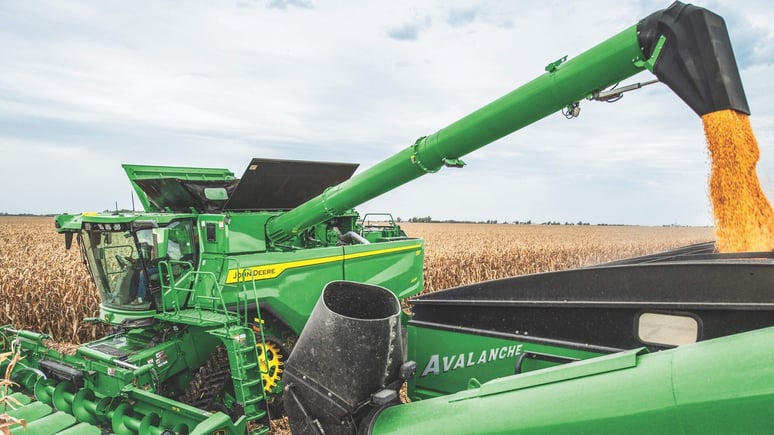
Factors To Consider
Farm Size and Terrain
Start with your land. How many acres do you harvest each fall, and is the ground firm or soft? Bigger fields call for more grain tank capacity and a wider header so you spend less time unloading and turning. The John Deere X Series is built for the largest operations, while the S Series covers small to mid-size farms without the extra machine you would not fully use.
Soil matters just as much. Larger, heavier combines do their best work on firm ground, so if you farm soft or wet-prone fields, a smaller machine can save you compaction and stuck-in-the-mud afternoons. And if your acreage is on the small end, a well-kept used combine often makes more sense than a new one. We will tell you that plainly if it fits your situation.
Power and Performance
The type of farm you run also determines how much power you need. More horsepower lets a combine keep its ground speed in dense, high-moisture corn or on hilly ground where a smaller machine would bog down. Pay just as much attention to the threshing and separating system, since that is where grain quality is made or lost. You want a system that threshes thoroughly and keeps a smooth, consistent crop flow so you are not leaving grain in the field or cracking it in the tank.
Crop Type
Different crops require different front-end equipment, and the header you choose matters as much as the combine behind it. Corn with tough stalks is harvested with corn heads, while draper platforms are the pick for wheat, soybeans, and canola. Auger platforms are a versatile option that handles corn, wheat, and soybeans. If you rotate corn and beans like most of our neighbors, budget for two headers, not one.
Technology
Modern combines come with precision ag features that automate settings, reduce grain loss, and improve grain quality. The ones our Customers use most are AutoTrac guidance for straight, overlap-free passes, ActiveVision cameras that let the operator watch grain quality and tailings from the cab, and MachineSync, which links your grain cart to the combine for unloading on the go.
One honest caveat: this technology only pays for itself if you will actually use the data and let the machine make its own adjustments. If you plan to run manual settings and ignore the yield maps, a simpler configuration will serve you just as well for less money.
Maintenance
Reliability is a key factor in any harvester decision. Downtime in October costs more than downtime any other month of the year, so your combine has to hold up through the whole season, and you need a service department that can get to you when it does not. Buy from a local dealer with certified technicians and parts on the shelf, and have the machine inspected in the off-season, when a worn part is a scheduled repair instead of a breakdown.
Our service teams at our stores across Indiana and Ohio handle both. Schedule a service appointment online, or ask your nearest store about an off-season combine inspection before harvest gets close.
Combine Harvester Options
John Deere S Series
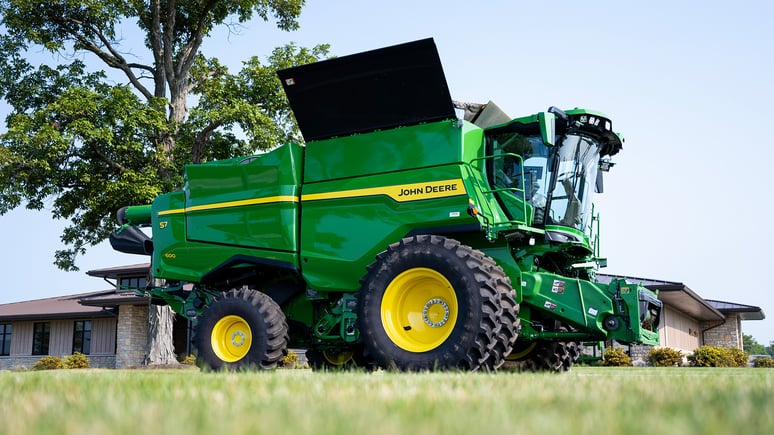
The S Series, which now includes the S7 Series, is the lineup we recommend most often to Indiana and Ohio farms. It offers a range of models so you can match horsepower and grain tank size to your acreage rather than paying for capacity you will not fill. The S Series is designed for consistent grain quality and strong grain retention, and the integrated G5 Plus Command Center display gives you clear visibility and control from the seat, while ActiveYield automates yield calibration so you can skip the manual weigh-ins.
Ideal Pick For: Corn, soybeans, canola, and cereal grains on small to mid-size operations
John Deere X Series
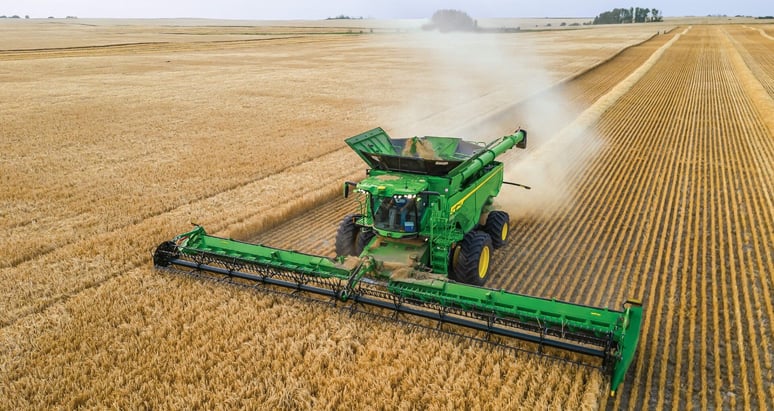
The X Series gives you the same reliability as the S Series with more horsepower, a larger grain tank, and fully integrated automation built for high-volume harvesting. The X9 1000 and X9 1100 are the two models, and both are meant for operations where covering acres per hour is the whole point. If you run a smaller farm, an X Series will sit idle more than it runs, and that is money better spent elsewhere. For large operations, the added capacity means fewer unloads and fewer long nights.
Ideal Pick For: Large operations with high-moisture corn, rice, and tough-threshing small grains
Frequently Asked Questions
What is a combine harvester?
A combine harvester is a self-propelled machine that cuts a crop, threshes the grain from the plant, separates and cleans it, and holds it in a grain tank, all in one pass. It is not a tractor attachment, and the header on the front swaps out to match the crop.
Which John Deere combine is best for a small to mid-size farm?
The S Series, which now includes the S7 Series. It offers a range of models so you can match horsepower and grain tank size to your acreage instead of paying for capacity you will not fill. On small acreage, a well-kept used combine is often the better buy.
What is the difference between the John Deere S Series and X Series combines?
The X Series (the X9 1000 and X9 1100) adds horsepower, a larger grain tank, and fully integrated automation for high-volume harvesting on large operations. The S Series offers the same reliability sized for small to mid-size farms.
What header do I need for corn and soybeans?
Corn is harvested with a corn head, and a draper platform is the pick for soybeans and wheat. If you rotate corn and beans, budget for two headers, not one.
When should I have my combine inspected?
In the off-season, when a worn part is a scheduled repair instead of a breakdown. Our service teams across Indiana and Ohio do off-season combine inspections before harvest gets close.
The best thing a farmer can have besides reliable equipment is a dealer they can trust. Koenig Equipment is a family-owned John Deere dealer with stores across Indiana and Ohio, and we have been serving Customers since 1904. Bring us your acreage, your crops, and your soil, and we will give you a straight recommendation, including when a used combine or your current machine is the better answer. Call or text your nearest store, or stop in and talk with our harvest team.