Published: May 30, 2025
Updated: October 12, 2026
|
A loader tractor is simply a tractor with a front-end loader mounted on it, and for most farms, small acreages and job sites across Indiana and Ohio it is the most useful single machine you can own. Which one is best depends on the work. For small acreage and landscaping, we point most Customers to the John Deere 3038E. For heavy compact work, the 4066M Heavy Duty. For serious farm loads, the 5075M. Below we cover what each one does well, which specs actually matter when you compare them, and when a different machine is the smarter buy.
What Can You Accomplish With a Loader Tractor?
Loader tractors are built to be multipurpose, so one machine covers jobs that would otherwise take two or three.
Farming
The most common use is around the farm: moving mulch and feed, lifting bales, cleaning out barns, and switching to rear implements for spraying, planting and mowing between loader jobs.
Construction
Loader tractors handle construction work well because they lift heavy loads and move them across uneven ground. That means rock, pipe, pallets and backfill, plus earthmoving tasks like digging, leveling and grading with the right attachment.
Landscaping
On a property that needs a few upgrades, a loader tractor keeps the crew moving. Because it runs a broad range of implements, from tillers and mowers to box blades, you can prep, grade and finish a site with one machine.
What to Compare When Shopping Tractor Loaders
- Horsepower: Horsepower sets how much work the tractor can handle. The more demanding your jobs, the more you need, but do not buy more than your work calls for.
- Lift Capacity/Breakout Force: These two numbers decide how much the loader can carry and how hard it can dig into a pile. Exceeding them strains the tractor, hurts performance and puts your safety at risk, so size the loader to your heaviest regular load, not your average one.
- Hydraulic System: Hydraulic flow powers the loader's lift and any attachments you add. A stronger system means faster cycle times and the ability to run grapples and other hydraulic tools.
- Weight: The tractor's base weight sets its stability. A heavier tractor stays planted with a full bucket and handles tough terrain more predictably. Ballast on the rear helps, but it cannot fully make up for a frame that is too light for the loads.
Our Top Picks for Best Loader Tractors
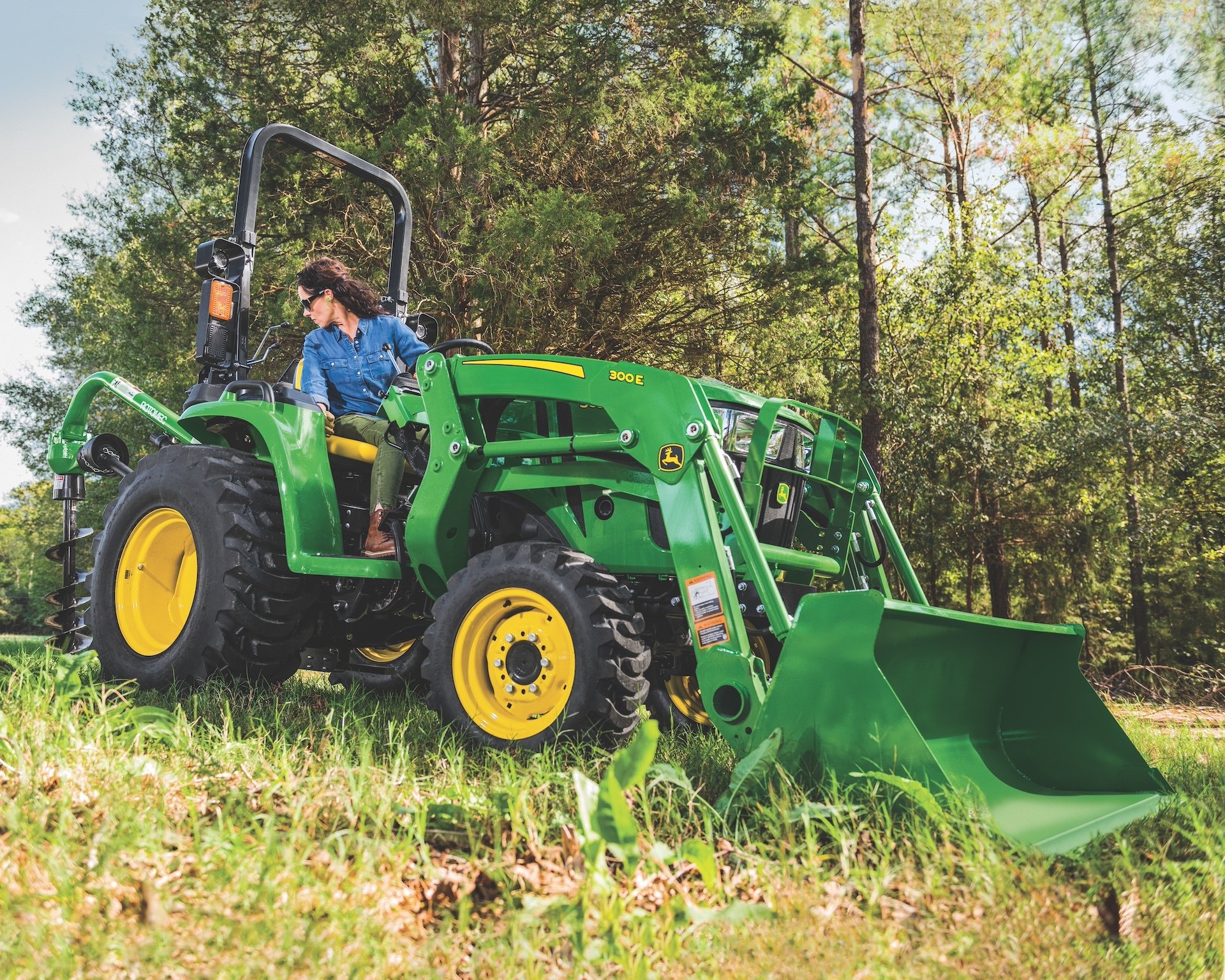
3038E
For farmers and landscapers working on small-scale projects, the 3038E is our go-to. Compact but diligent, it powers through heavy loads with its high-torque diesel engine and holds its own on uneven ground with standard 4WD. The optional two-spool rear selective control valve lets you run a variety of implements, and the optional iMatch Quick Hitch makes swapping implements between tasks a one-person job.
4066M Heavy Duty
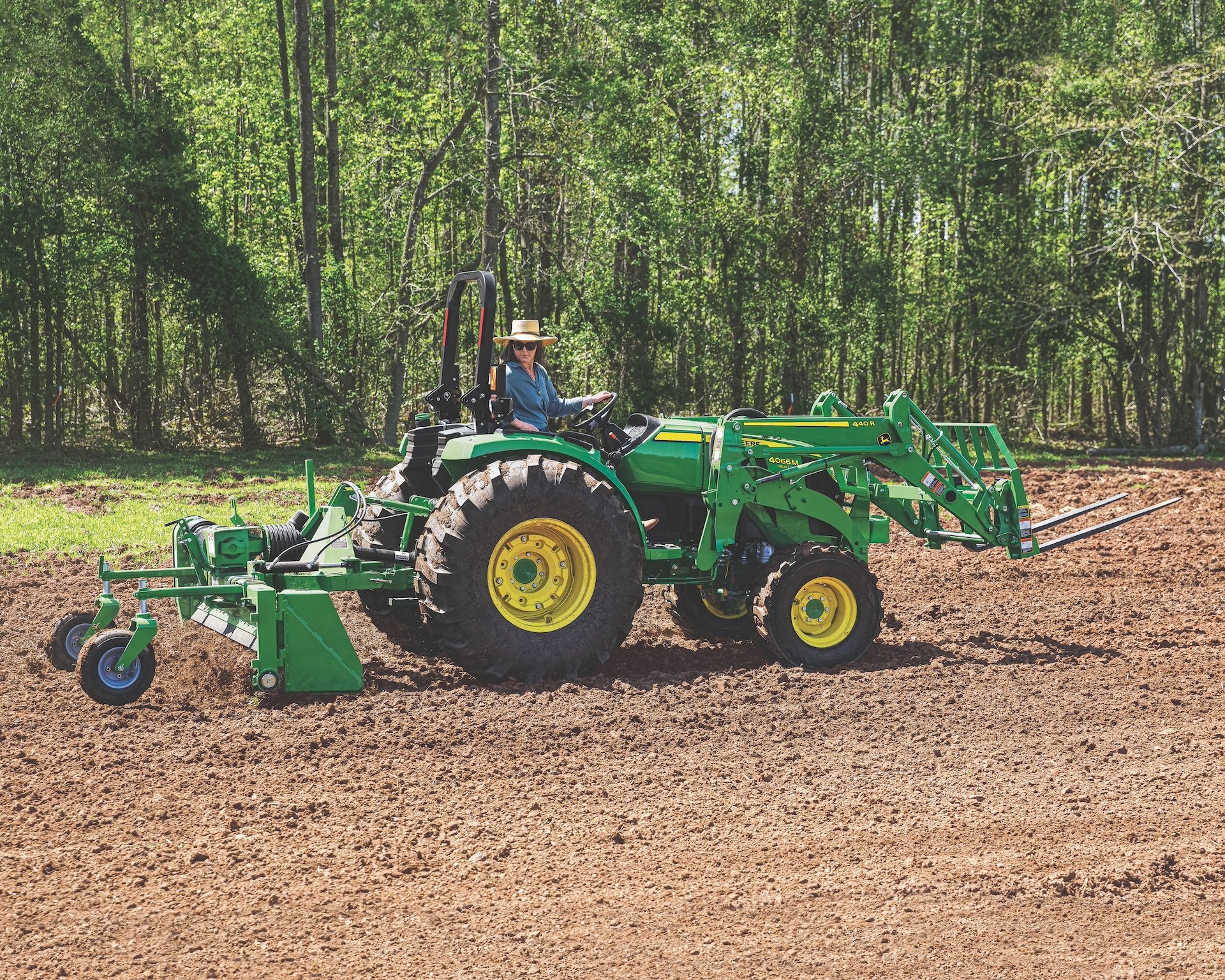
For maximum power in a compact frame, the 4066M steps up. It is maneuverable enough to work in tight or sensitive areas, while large industrial tires and 4WD let it push through muddy or rough conditions. Category 1 and Category 2 hitches open up a wider range of implements than the smaller compacts can run.
5075M
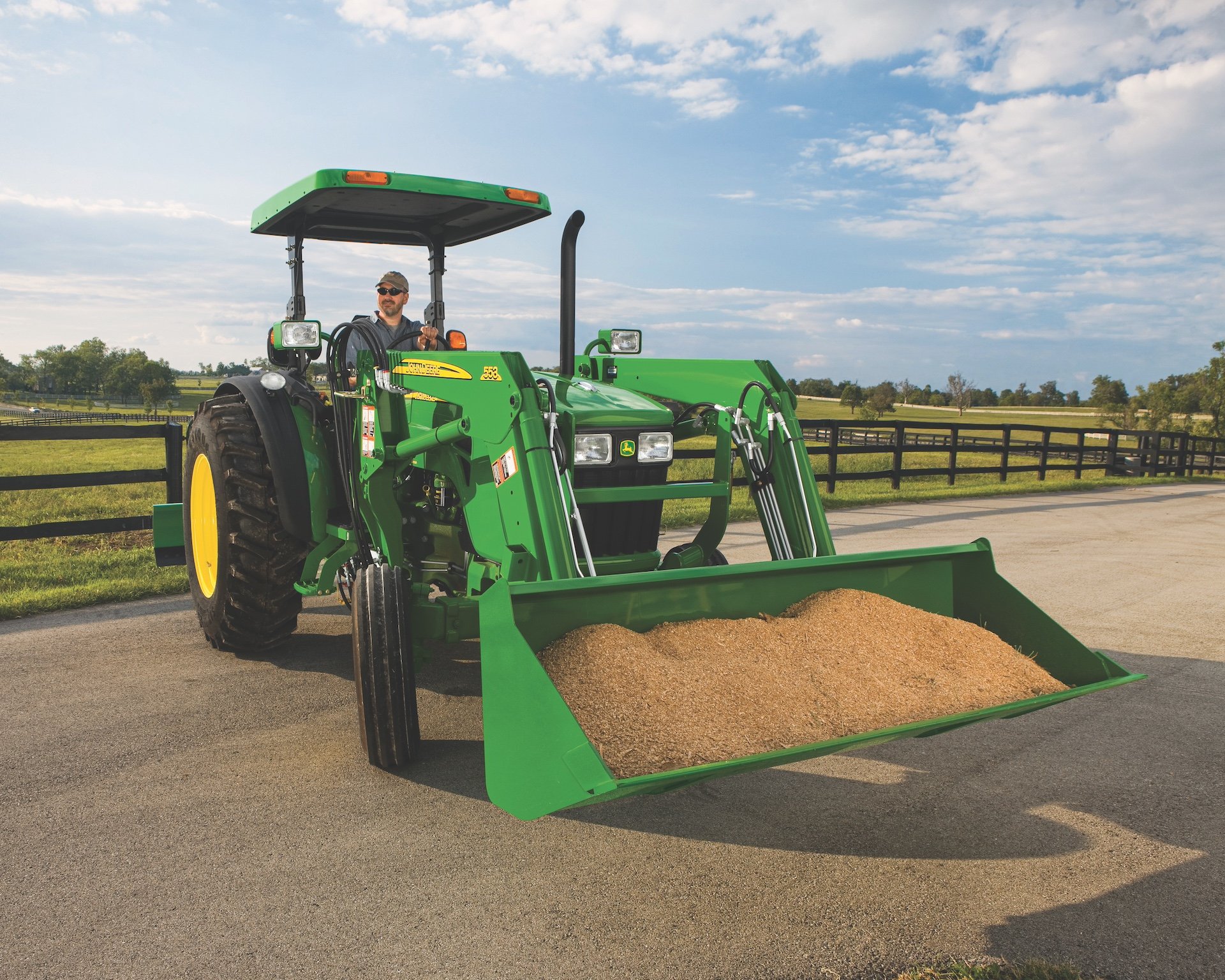
Farmers and producers who need a machine for serious loads can benefit from the 5075M. Its loader is rated well above the compact models and it is paired with mechanical hitch control, so it is built for day-in, day-out loader work. Ask us for the exact lift rating on the configuration you are considering, since it changes with the loader and ballast you spec. Two transmission options let you match ground speed to the job, and the premium cab, with a panorama roof, temperature control and Bluetooth, makes long days more comfortable.
When a Loader Tractor Is Not the Right Machine
A tractor with a loader is a generalist. If your work is almost entirely loader work, moving material all day on a tight job site with little or no implement use, a skid steer or compact track loader will usually outwork it and turn in a smaller space. On the other end, if you already own a tractor that handles your implements fine and only need to move a few loads a month, adding a loader to it is often a better use of money than buying a new unit. Bring us the actual list of jobs and we will tell you honestly which way to go.
The best loader tractors balance power, stability and versatility for the range of tasks you actually have, and the three above cover most of what we see across our stores in Indiana and Ohio. Start with the equipment finder to narrow the field, or call or text your nearest store and we will help you match a model and loader to your operation.
Running a farm that needs both a tractor and a loader machine? See our guide to John Deere ag and compact construction equipment for farms that need both.
Find parts for your 3038E
Shop genuine John Deere parts that fit the 3038E and 4066M at Koenig Marketplace — search by your exact model to see what fits.
See how the 3038E compares
Weighing your options? Koenig has side-by-side spec comparisons for the equipment we sell:
Not sure which ag tractor is right for you?
Answer a few quick questions and Koenig will match you to the right John Deere tractor for your operation, based on how you work and what you need.