Published: March 25, 2026
Updated: August 3, 2026
|
The planting window in Ohio and Indiana can close faster than most people expect. According to data from Ohio State University, farmers across the state average roughly 15 suitable field workdays between mid-April and mid-May. That is not a lot of room for error, and a broken hydraulic line or a planter that has not been calibrated since last fall can eat several of those days in a hurry.
The time to catch those problems is right now, while your equipment is still parked and the ground is still too cold to work. A thorough walk-through of every machine that will see the field this spring takes a day or two at most. Skipping it can cost you a week of downtime during the narrow window when every planted acre matters most.
This checklist covers the major systems and equipment types that Ohio and Indiana farmers will put to work this spring, from row-crop tractors and utility tractors to planters, drills, sprayers, and tillage equipment.
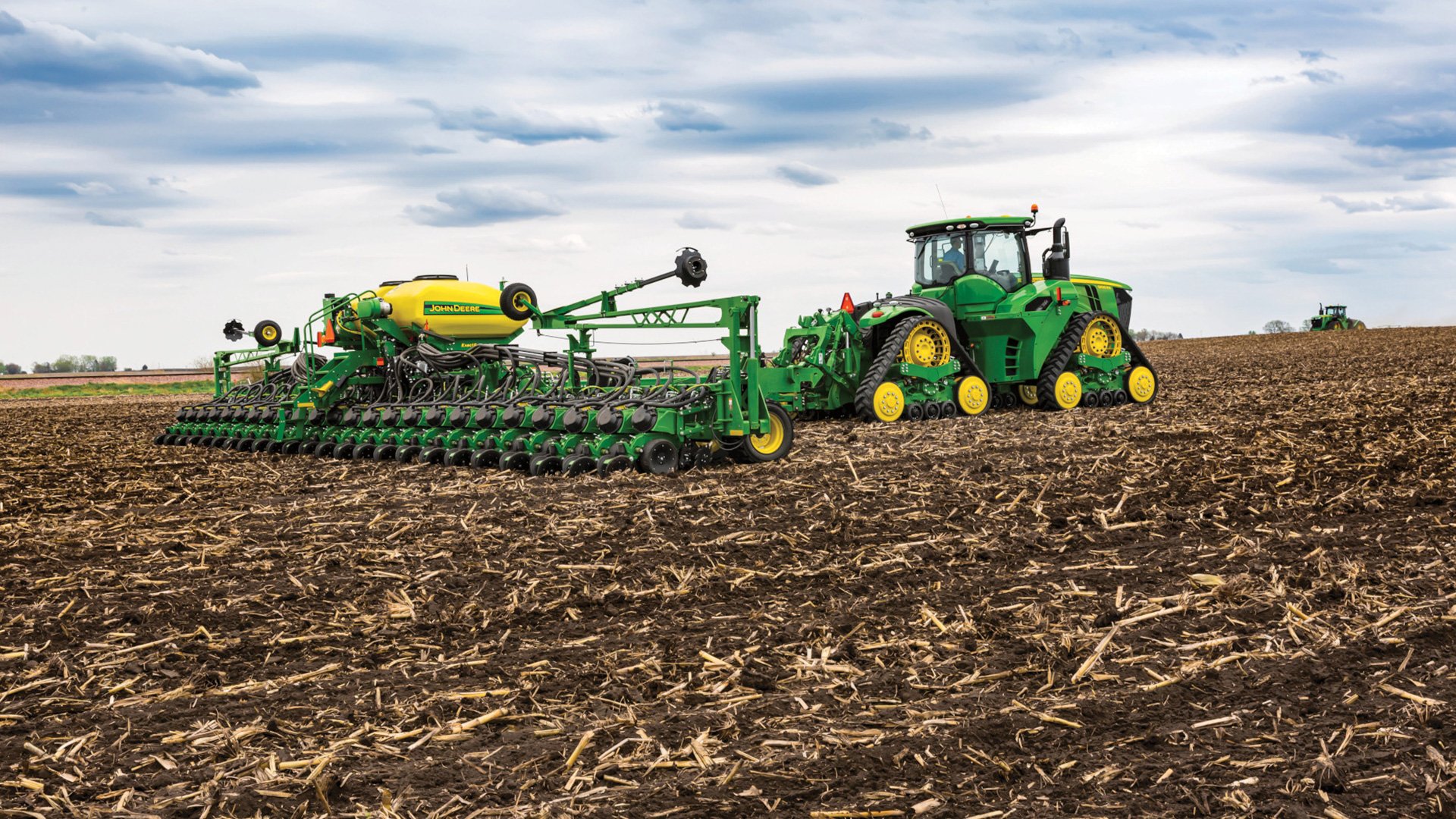
How Often Should You Perform Maintenance on Your Tractor?
The short answer is that your operator's manual has the definitive schedule, broken down by engine hours. But in practice, spring is the one time of year when every tractor on the farm needs a complete once-over regardless of the hour meter. Equipment that sat through the winter months can develop problems that would not show up during regular in-season service intervals.
Here is what to check on every tractor before it heads to the field this spring:
Engine oil and filters. Change the oil and filter even if the hour meter says you have time left. Oil that sat all winter collects condensation and loses viscosity. A fresh fill with the manufacturer-recommended grade gives you a clean start. On John Deere tractors, the Plus-50 II engine oil is the standard recommendation for most models.
Coolant system. Check the coolant level and condition. Look for discoloration or debris, which can indicate a failing water pump gasket or internal corrosion. Inspect all hoses for soft spots, cracks, or swelling. A hose that fails during planting is a full-day problem, not a 30-minute fix.
Hydraulic system. Check fluid levels in the reservoir and inspect every line, fitting, and cylinder for leaks. Pay close attention to lines that run underneath the tractor where road debris and dirt can cause wear over the winter. Pinhole leaks in hydraulic lines are a safety hazard and a leading cause of in-field downtime.
Air filtration. Pull the primary air filter and inspect it. If you are running in dusty conditions during spring tillage, consider starting the season with a new filter rather than trying to clean and reuse the old one. A restricted air filter costs you fuel efficiency and power before it triggers a warning.
Belts and electrical. Inspect all drive belts for cracks, glazing, or fraying. Check battery terminals for corrosion and test the voltage. If the tractor sat without a maintainer over the winter, the battery may hold a charge under no load but fail under the draw of a starter motor. Replacing a $150 battery now is better than diagnosing a no-start in the field.
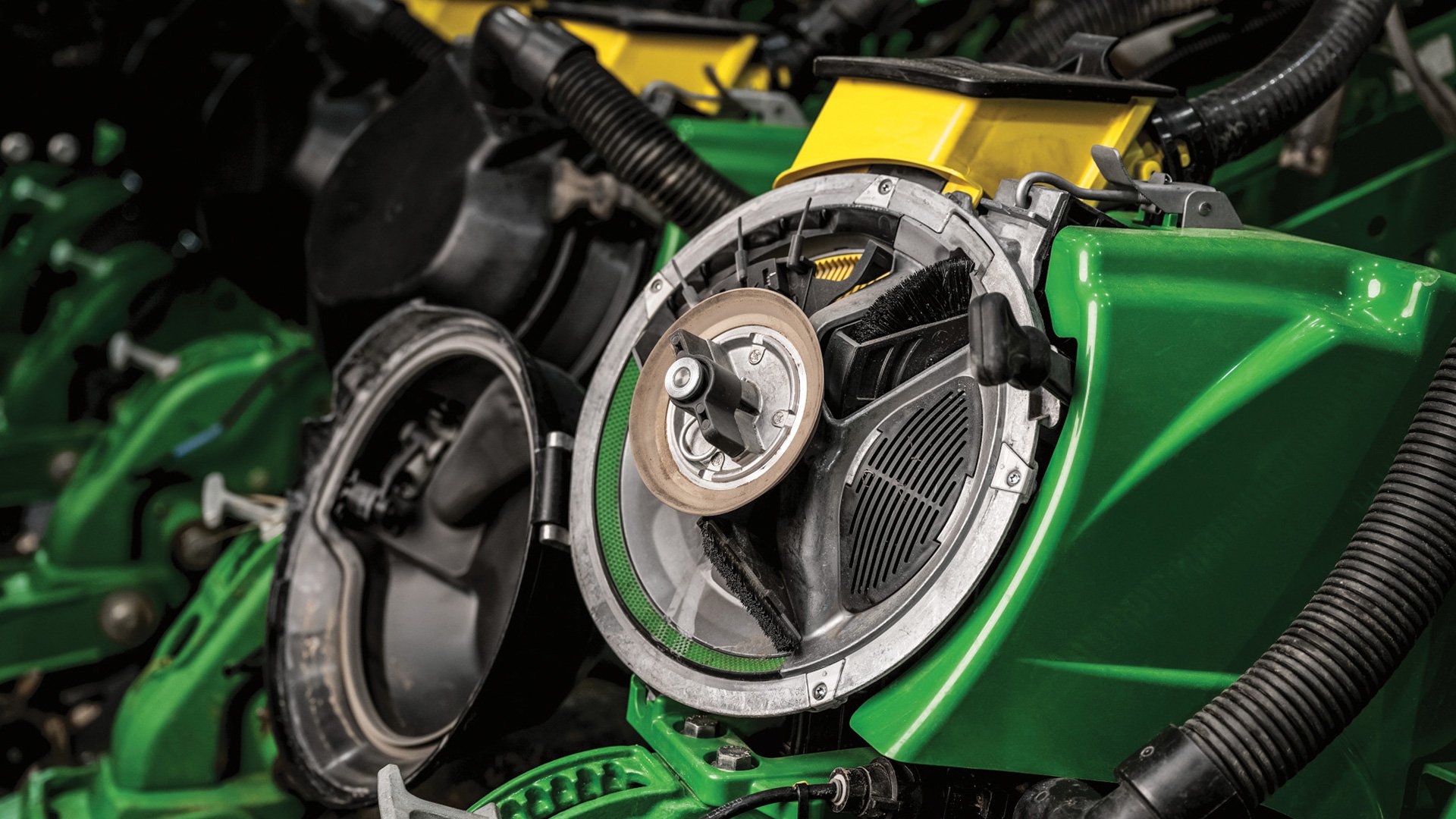
2026 Planter Maintenance: Where Precision Starts
The planter is arguably the most important machine on the farm during spring. Every seed that lands in the wrong spot, at the wrong depth, or without proper soil contact is a yield hit you carry all the way to harvest.
Iowa State University published a helpful framework that organizes planter maintenance around four pillars: moisture (planting depth), spacing (seed singulation), temperature (residue management), and closing (seed-to-soil contact). That structure is a practical way to think through your pre-season inspection.
Seed openers. Check blade diameter. A standard 15-inch blade should be replaced once it wears down to 14.5 inches. If the blades are not shimmed correctly, you will get a W-shaped furrow that leaves the seed sitting in an air pocket instead of snug against moist soil at the bottom of the trench. Air pockets delay germination and create uneven emergence.
Seed meters and tubes. These are responsible for singulating individual seeds from the hopper. Clean each meter thoroughly and inspect for worn components. Even small amounts of buildup can cause doubles (two seeds in one spot) or skips. Doubles waste seed. Skips hurt yield the most because the neighboring plants cannot fully compensate for the gap.
Row cleaners. Set them to clear residue from the seed path without moving too much soil. Heavy residue left in the furrow reflects sunlight and keeps the soil colder. Corn needs 90 to 120 Growing Degree Units to germinate, and the first 48 hours in the soil are critical for establishing good root-to-soil contact.
Closing wheels and down-force. Inspect closing wheel springs for wear or breakage. Check for worn bushings in the spring casting. The closing system needs to press the seed trench shut firmly enough for seed-to-soil contact without creating a compacted sidewall that roots cannot penetrate.
Calibration. Run a depth calibration on a level surface before heading to the field. Set the T-handle to your expected planting depth and verify that each row unit is actually delivering that depth consistently. A few minutes of calibration work in the shop eliminates inconsistencies that compound across hundreds of acres.
Driveline and chains. Check chains and sprockets for proper tension and lubrication. On older mechanical-drive planters, worn chains are a common cause of erratic seed spacing that can be hard to diagnose in the field. Lubricate all pivot points, parallel arms, and gauge wheel bearings while you are at it.
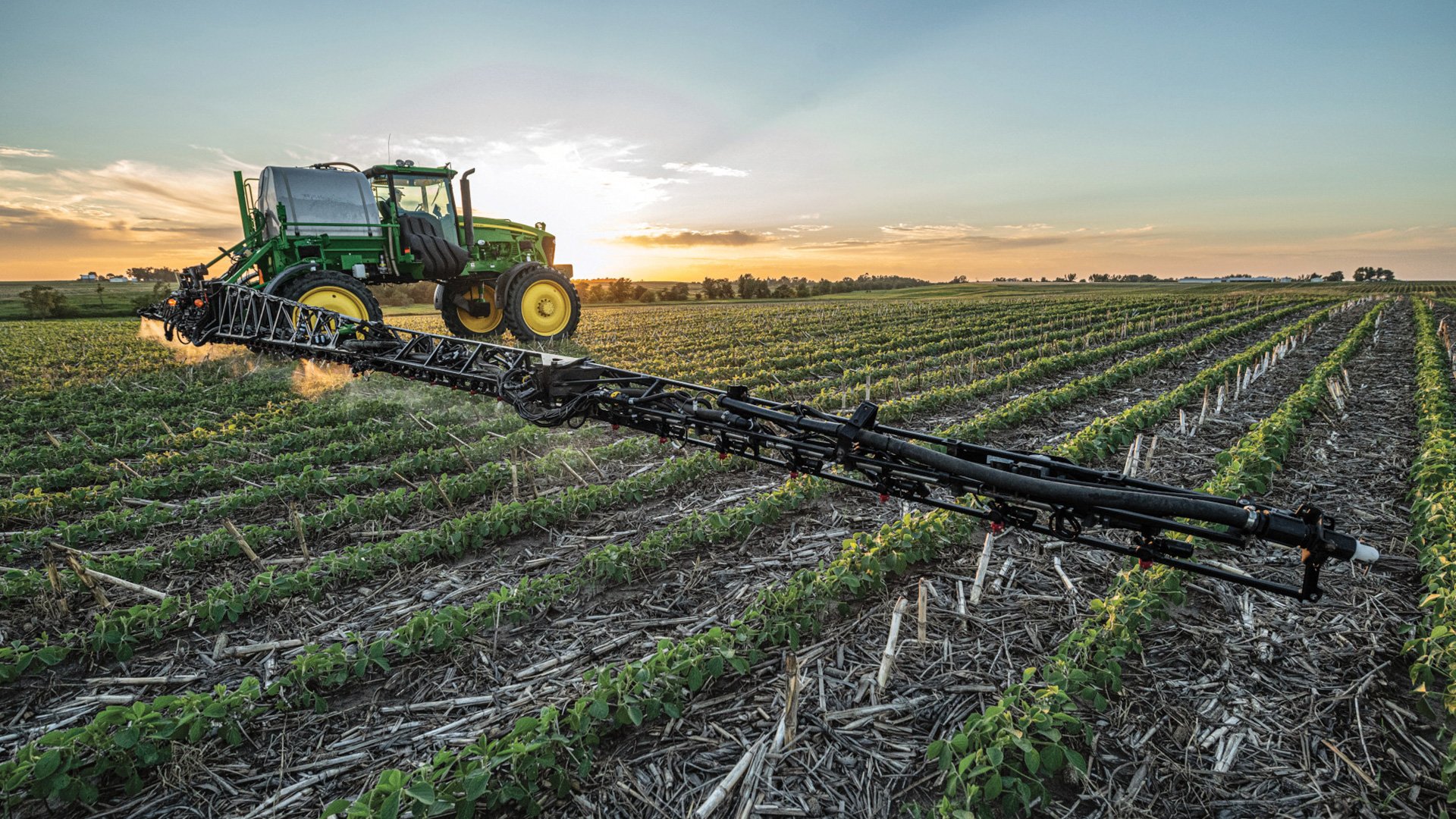
Getting Your Sprayer Ready for the Season
Sprayers sit idle longer than most other equipment, and the combination of chemicals, pressure, and water makes them prone to problems that are not always obvious until you are in the field.
Flush the entire system. Run clean water through all lines, booms, nozzles, and the tank. If any product residue was left in the system over winter, it can crystallize and clog nozzles or corrode fittings. This is especially important if you switched between herbicide and fungicide products last season.
Inspect nozzles. Worn nozzles deliver inconsistent spray patterns, which means uneven coverage and wasted product. Check each nozzle against the manufacturer's flow rate spec. Nozzle wear is gradual, so it is easy to miss unless you actually measure output. Replace any nozzle that is more than 10 percent above its rated flow.
Test the pump. Check pump seals, diaphragms, and pressure output. A pump that cannot maintain consistent pressure will give you streaky application even with new nozzles. Run the system at operating pressure and watch for fluctuations.
Boom condition. Walk the full length of the boom and check for bent sections, loose fittings, and cracked breakaway joints. Boom damage from last season has a way of hiding until the sprayer is fully loaded and pressurized.
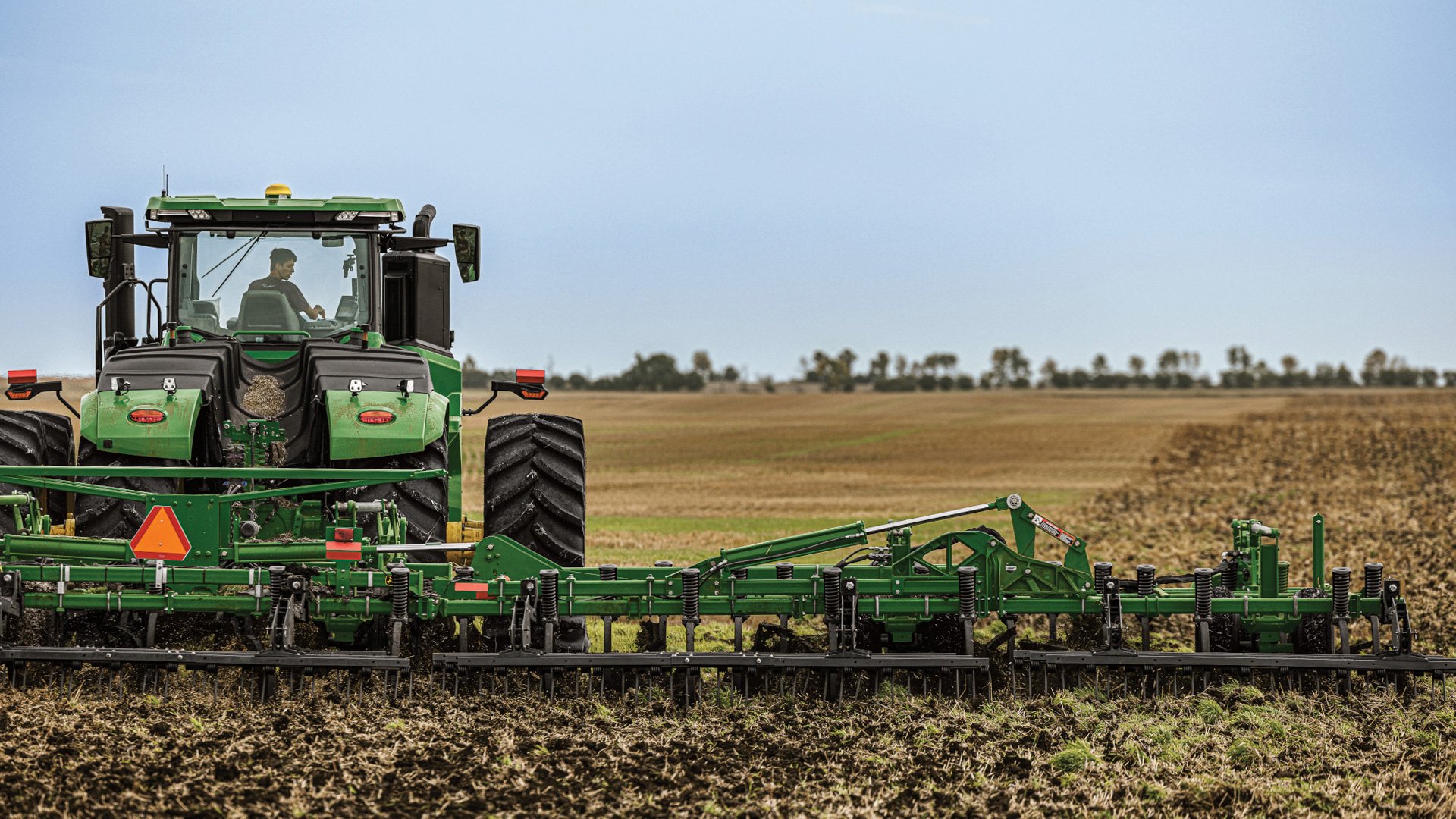
Tillage Equipment: Check It Before the Ground Thaws
If you are running a field cultivator, disk, or vertical tillage tool ahead of planting, inspect it now while you can still get parts without overnight shipping.
Disks and blades. Check for wear, chips, and correct blade angle. Worn blades require more horsepower to pull through the soil and leave a rougher finish. On tandem disks, check gang bolt torque and bearing condition. A seized bearing can take an entire gang out of service mid-pass.
Shanks and sweeps. On field cultivators and chisel plows, inspect each shank for cracks and each sweep for wear. Sweeps are a wear item and many farmers keep spares on hand, but it is worth verifying you have the right sizes in stock before the season starts.
Frames and hitches. Look for cracks in the frame, particularly around weld joints and hitch connection points. Check hydraulic cylinders for leaks and verify that folding mechanisms operate smoothly. A tillage tool that will not fold for transport is a problem you want to discover in the shop, not on the road.
Leveling and depth settings. If your tillage tool has adjustable working depth, set it now and verify the settings are consistent across the full width. Running a disk or cultivator even half an inch deeper than intended on one side creates uneven seedbed preparation that shows up as inconsistent emergence later.
Precision Ag Technology: The Pre-Season System Check
Modern planting and application equipment relies on GPS guidance, rate controllers, and data management systems that need their own pre-season attention.
Update firmware and software. Check for updates on your displays, receivers, and any connected apps like John Deere Operations Center. Manufacturers often release updates over the winter that fix bugs or add features for the coming season. Running outdated firmware can cause communication errors between the tractor and implement.
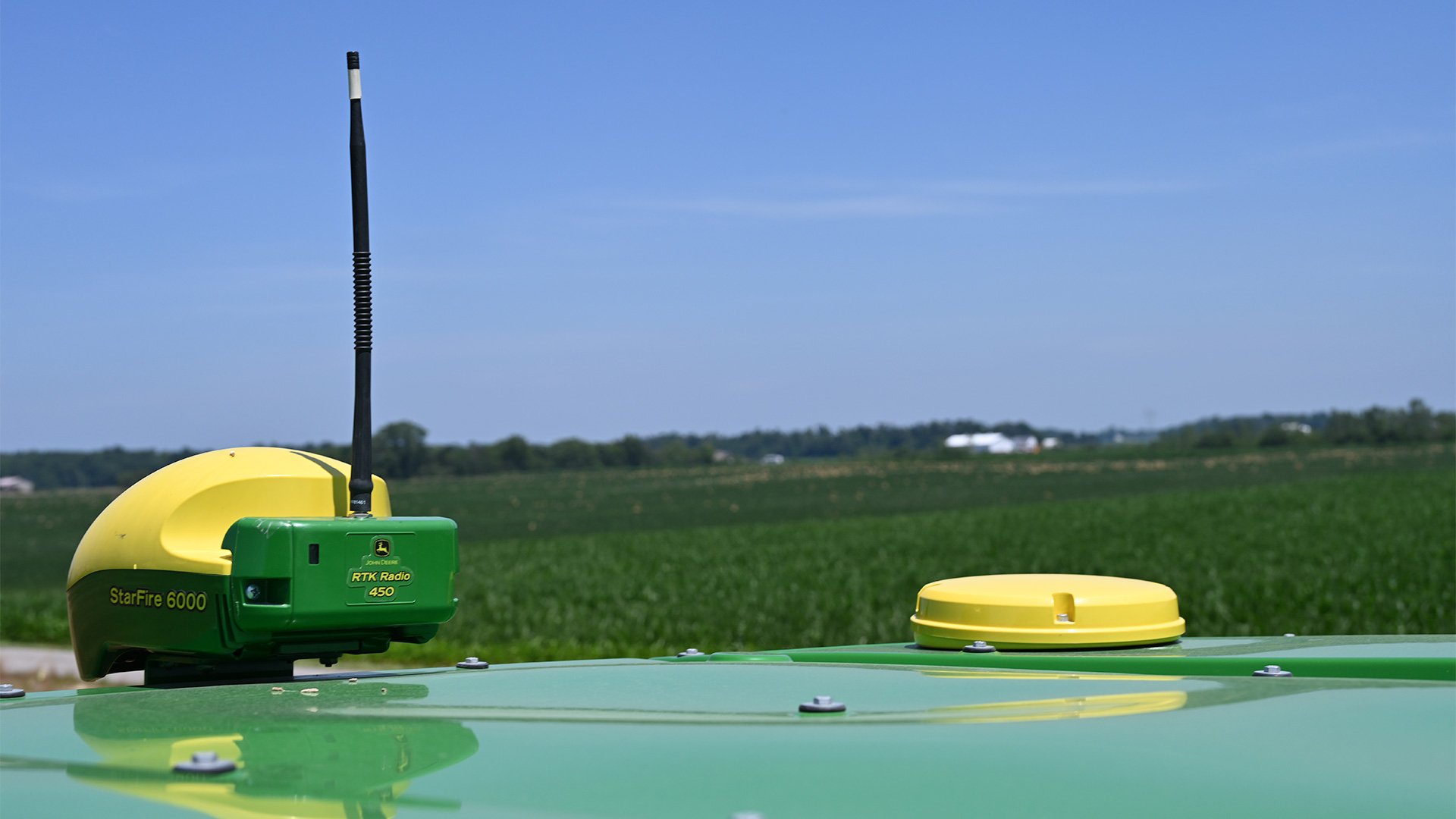
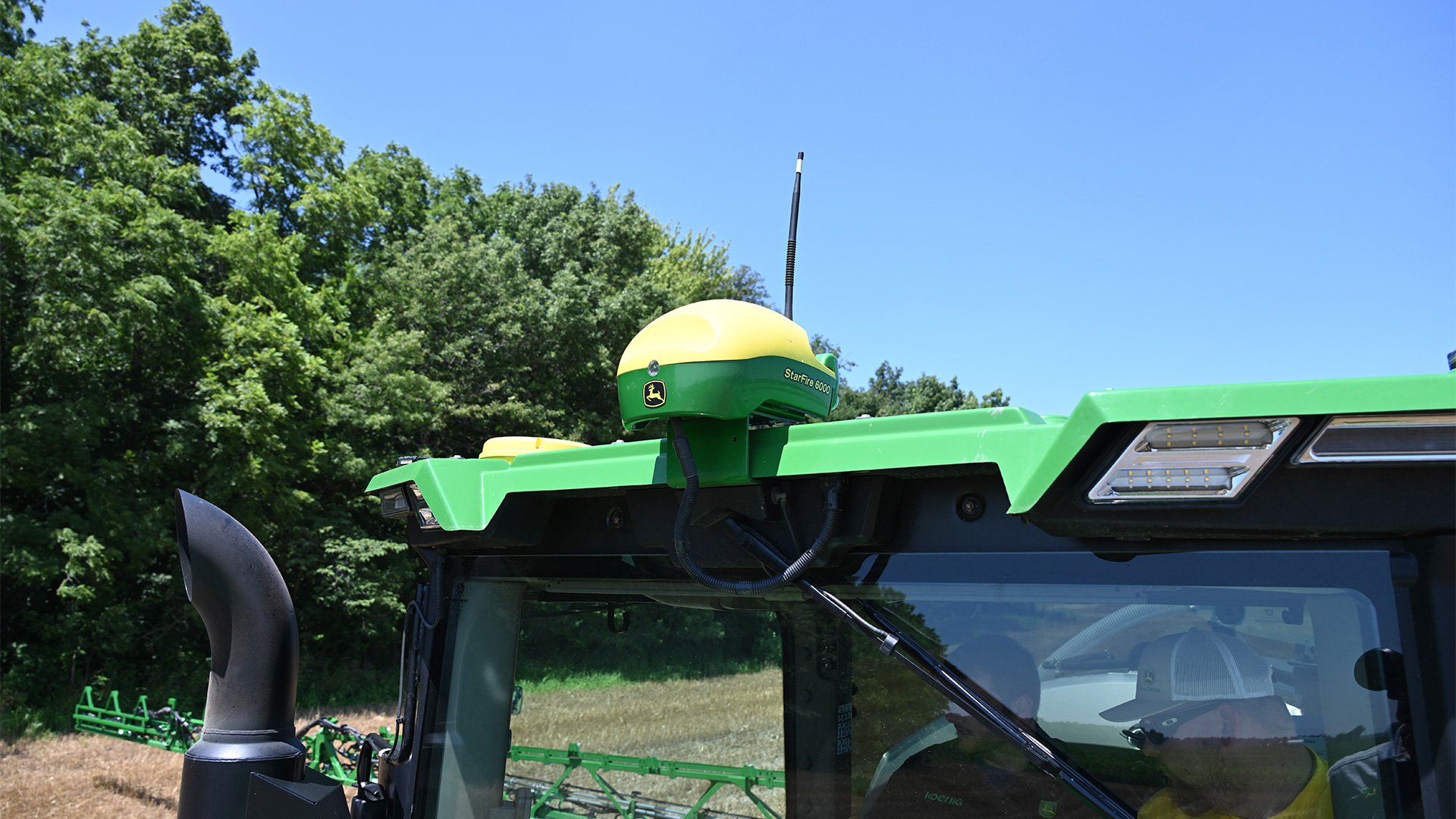
Verify GPS signal and correction source. Power up your guidance system and let it acquire a signal. Confirm that your correction source (SF1, SF3, RTK) is active and delivering the expected accuracy. If you are using RTK, verify your base station or mobile RTK subscription is current.
Test rate controllers. If you are running variable-rate seeding or application, load a test prescription and verify the controller responds correctly. Check sensor calibrations on seed monitors and yield monitors. A sensor that drifted over the winter will give you bad data all season.
Back up your data. Before the season starts, make sure last year's yield maps, prescription files, and boundary files are backed up. A display failure mid-season should not mean losing a year of agronomic data.
Ohio and Indiana Planting Windows: Timing Matters
For farmers in our area, the calendar pressure is real.
Here are the general planting windows to keep in mind:
Corn: In southern Ohio and Indiana, planting can begin as early as April 5 to April 10, depending on soil conditions and crop insurance dates. In northern Ohio and Indiana, the window opens around April 10 to April 15. The yield penalty for planting corn after late April averages about 1.75 bushels per acre per day, according to Ohio State research.
Soybeans: Soybeans are more tolerant of early planting stress than corn, but the same basic principle applies. Planting by the end of April gives you the best shot at full yield potential. The loss for late-planted soybeans is roughly half a bushel per acre per day after April.
That math is what makes pre-season maintenance so important. Every day you lose to a breakdown during the optimal planting window has a direct cost in bushels at harvest.
The Important Basics
A few items that do not fit neatly into a single equipment category but are always worth checking before the season:
- Tire pressure on every machine. Incorrect tire pressure affects traction, fuel efficiency, and soil compaction. Check and set pressures to spec on tractors, planters, grain carts, and tillage tools.
- Grease fittings. Hit every grease point on every implement. This takes an hour and prevents bearing failures that take a day.
- Lights and SMV signs. Spring planting means more road travel between fields. Make sure all lights work and Slow Moving Vehicle signs are visible and in good condition.
- Fire extinguishers. Check that every tractor and combine has a charged, accessible fire extinguisher. Dry conditions and hot exhaust systems are a combination that demands preparation.
Your Koenig Equipment Service Team Is Ready
If your spring maintenance list is longer than your available shop time, the service team at Koenig Equipment can help. Our technicians across Ohio and Indiana handle everything from routine oil changes and filter replacements to full planter rebuilds and precision ag system diagnostics. We also offer mobile maintenance for operations that cannot afford to bring equipment to the shop during the busy season.
If you need parts for your spring prep, our parts departments stock filters, belts, hoses, planter wear parts, and fluids for John Deere equipment.
Spring planting season will be here before the soil thermometer says it is. The work you put in now, while the equipment is still parked, is the cheapest insurance you can buy against lost days in the field.
Not sure which ag tractor is right for you?
Answer a few quick questions and Koenig will match you to the right John Deere tractor for your operation, based on how you work and what you need.