Published: July 16, 2026
Updated: August 3, 2026
|
If you cut first-cutting hay in May, this is the moment you have been waiting for. Second cutting is drier, lighter, and often better feed, but the window is narrower and the machine has to be set up for what the field is actually giving you. A baler that ran perfectly on heavy first-cutting alfalfa-grass mix will drop bales too loose, run the pickup too fast, and eat mesh wrap it should not have needed on second-cutting timothy or alfalfa regrowth.
This is the post we would talk through at the counter in Greensburg or Bloomington with a customer who is standing there holding a cup of coffee at 8 in the morning, wondering whether to cut today or wait 24 hours. The mid-July weather window is the whole game. Everything else is downstream of it.
Reading the July weather window
Second cutting comes off differently than first. The stems are finer, the leaves are more valuable to hold onto, and the plant is putting less water through the system per hour of drying. That combination means the field dries faster on any given day, and it also means the field is more sensitive to a single dew or a passing shower.
The working framework we use at the counter is a 48-to-72-hour clear window. Three consecutive days with no rain, relative humidity dropping below 60 percent during the peak drying hours, and dew points that let the crop dry down overnight. If the forecast delivers that, cut on day one, ted or rake on day two, bale on day two afternoon or day three morning. If any of those conditions look shaky, you are better off waiting than trying to force the schedule.
Two seasonal traps to watch for in Ohio and Indiana specifically:
- The false clear day. Late July often gives you a picture-perfect morning that hides a 30 percent chance of pop-up thunderstorms by 3 pm. Cutting first thing that day and racing to get everything wrapped by lunch is how you end up baling wet hay at 22 percent moisture.
- Heavy morning dew. Even on a clear day, dew heavier than typical can push your bale start time from 10 am to noon or later. Feel the top of a windrow with your bare hand at your planned start time. If it is still noticeably damp, wait another hour.
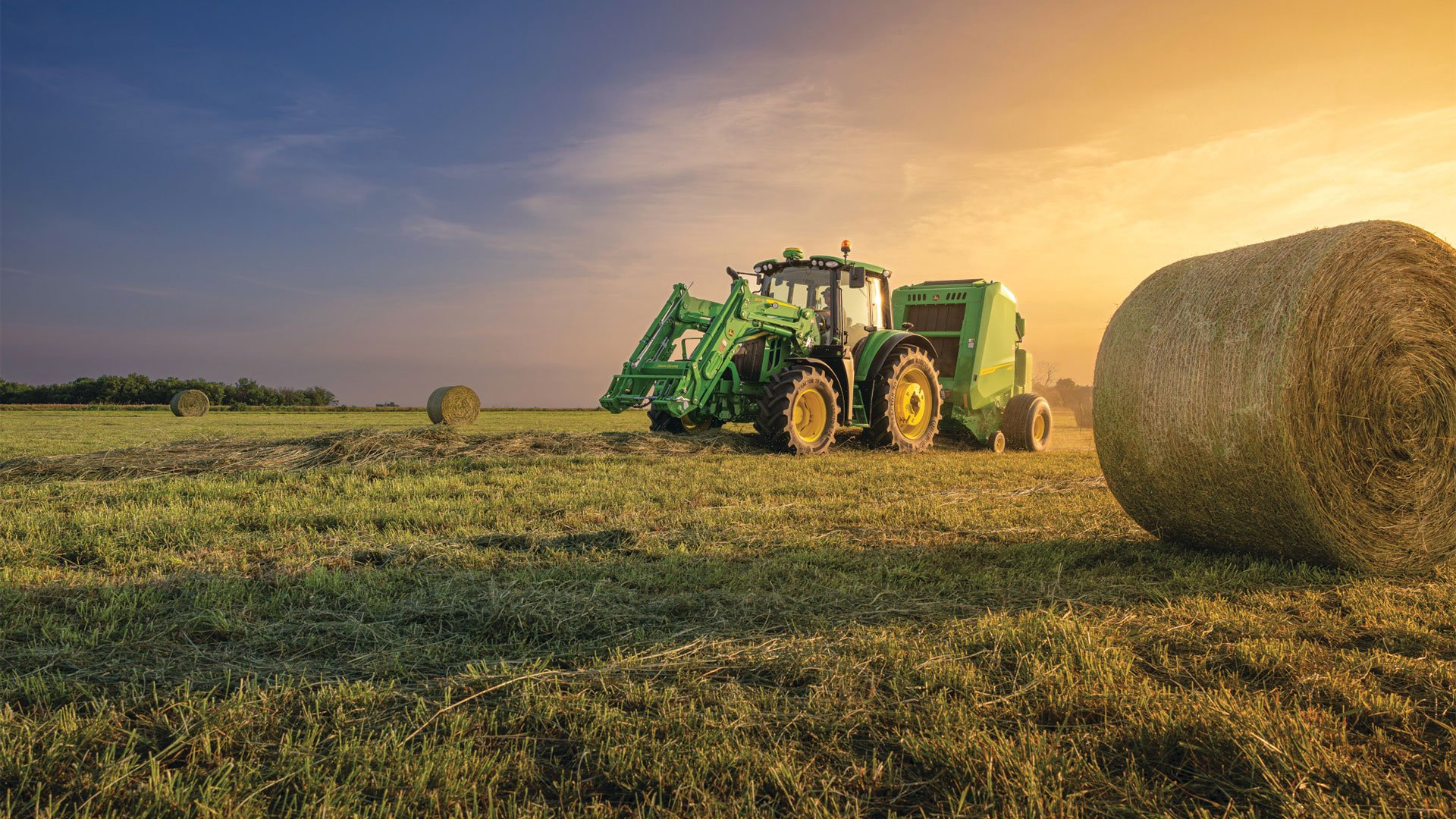
The single biggest cause of trouble in second cutting is starting the baler too early. Dew that has not fully burned off adds moisture the crop did not have when it was cut, and that moisture is what causes overheating in a wrapped bale two weeks later.
What moisture number to actually target
The number we tell every customer is 18 percent or lower for dry-baled round bales, and 40 to 60 percent for baleage. Everything in between is a problem. The 20 to 30 percent zone especially is a heat and mold risk that will show up two to three weeks after you stack.
The reliable way to check is with a hay probe, not with a feel test. On second cutting the crop is finer and the "feel" between 15 percent and 21 percent is genuinely hard to tell apart until you have made the mistake a few times. A digital moisture meter and a probe long enough to reach the center of a completed bale is a $200 to $350 investment that pays for itself the first time it saves you from a bad stack.
If you are running one of the newer JD balers, the 451M/451R/461M/461R/551M/561M/561R generation ships with in-cab moisture and weight sensing that captures near real-time data. The reason that matters is not just the display. It is that the data flows into John Deere Operations Center, so you can look back at a week of baling data and see which fields, which times of day, and which windrows ran outside your target range. On a second-cutting season, being able to prove to yourself where your process leaked is worth more than most operators expect until they have it.
We talked about the harvest-data side of Operations Center in our June 18 pre-harvest combine inspection post and the same principle applies here. If your baler is not talking to your account yet, the July window is a good excuse to get it connected.
Fixed chamber, variable chamber, or baler-wrapper: what fits your operation
If you are shopping or evaluating for the first time, the platform decision matters more than any individual setting. John Deere's current round baler lineup breaks into three families.
Fixed chamber (451M/451R, 461M/461R, 551M, 561M/561R). These balers form bales at a fixed diameter. The bale starts loose in the middle and fills the chamber to full density near the outside. Fixed chamber is the classic choice for medium to large operations that value speed, mechanical simplicity, and consistent bale size. The 451 numbers reference the 4-foot-diameter class. 461 and 551 step up to different width and pickup configurations. 561 is the largest fixed-chamber option in the lineup and covers larger operations.
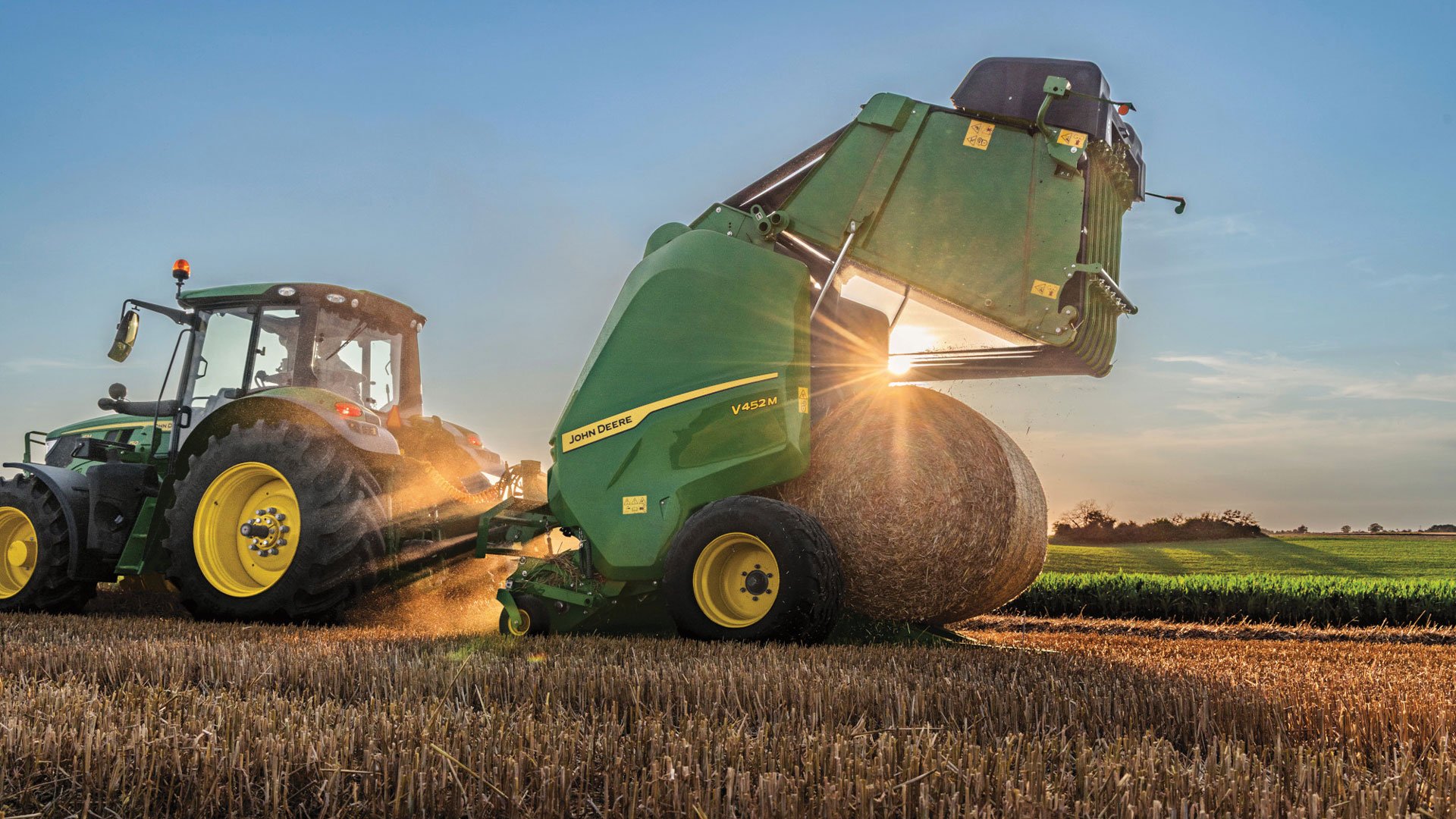
Variable chamber (V452M/V452R, V462R). These balers form bales that are dense from the core out. Density is more uniform, which matters for storage stacking, for handling with a squeeze grapple, and for weight-per-bale on the trailer. The V462R specifically brings a new Weave Automation feature that improves productivity per hour. Variable chamber typically costs more up front and gives back a denser, more consistent bale.
Baler-wrapper combos (C452R, C462R). These are baleage machines. The bale is formed and then wrapped in the same pass. If second cutting in your operation means baleage more often than dry hay, the one-pass workflow saves handling time, reduces the exposure window, and keeps the crop closer to the moisture it needs for good fermentation.
For most Ohio and Indiana producers running mixed grass or alfalfa-grass second cutting, a 461M or 551M is the platform we see move most often. The V-series makes sense if bale density and stacking matter enough to justify the premium. The C-series makes sense if the operation is baleage-heavy.
If you are thinking about a platform change or trade this season, our sales teams can walk you through what programs are currently active on ag equipment. John Deere Financial rotates parts, service, and equipment programs quarterly, and the mid-summer window sometimes carries harvest terms or extended financing on ag balers specifically. Worth a phone call to confirm what is live at the time you are ready to move.
Net wrap versus mesh wrap on second cutting
On second cutting, the wrap decision matters more than on first because the crop is lighter and the wrap has less bale to work with. The general framework:
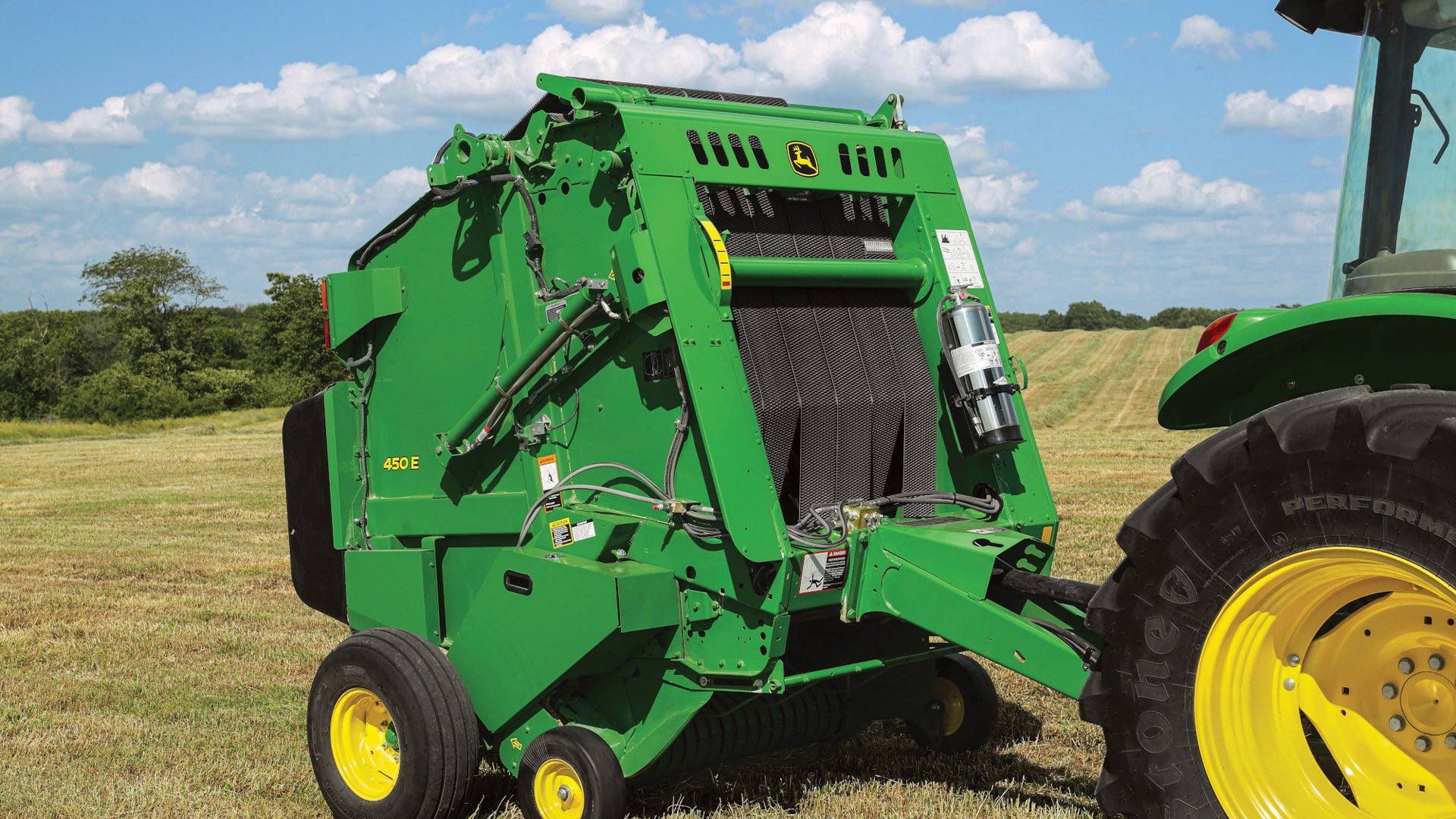
Net wrap is faster, cleaner, and gives the bale better shape and shedding of rain. It uses more wrap per bale than twine but less than mesh, and on lighter second-cutting crops the density is usually good enough that a standard 2 to 3 wraps of net does the job.
Mesh wrap adds cost per bale but improves rain shedding significantly and holds shape longer in outdoor storage. On second-cutting hay that will sit outside into fall, mesh is worth the extra $2 to $3 per bale if outdoor storage is your reality. If your bales go to a shed within a few days, standard net is fine.
The mistake we see most often on second cutting is under-wrapping. If your baler settings are still on first-cutting configuration and second-cutting is lighter, the wrap count may not be enough to hold the bale shape through the loader cycle. Two extra wraps of net add 30 seconds and a few cents. A bale that falls apart on the loader costs you the whole bale.
Baler settings that change between first and second cutting
Here is what we adjust at the shop when a customer brings a baler in between cuttings. Some of it you can do in the field, some benefits from a pit stop.
- Pickup speed. Second cutting is lighter, which means the pickup can and often should run slightly slower relative to ground speed. A pickup running too fast on light crop throws leaves forward and loses feed value.
- Bale density setpoint. Newer JD balers let you dial density from the cab. On lighter second-cutting crop you can typically push density slightly higher than first without straining the driveline, because the total tonnage per bale is lower even at higher density. The bale weight ends up similar or lower.
- Cut-and-wrap timing. If you added or increased the wrap count for mesh, the timing between net-off and gate-open matters. Verify with a couple of test bales before you commit to a full field.
- Rotor and pickup teeth. Between cuttings is the moment to inspect for bent or missing teeth. Second-cutting stems are finer and forgiving up to a point. A missing tooth on a heavy first cutting was a minor irritation. On light second cutting, the same missing tooth creates a hole in the intake pattern and shows up as inconsistent bale shape.
- Knife condition (on premium and Ultra HC models). If you are chopping second cutting for baleage or higher-quality dry hay, sharp knives are non-negotiable. Dull knives tear rather than cut, which reduces palatability and increases mold risk.
Tractor pairing: horsepower, weights, and hydraulics
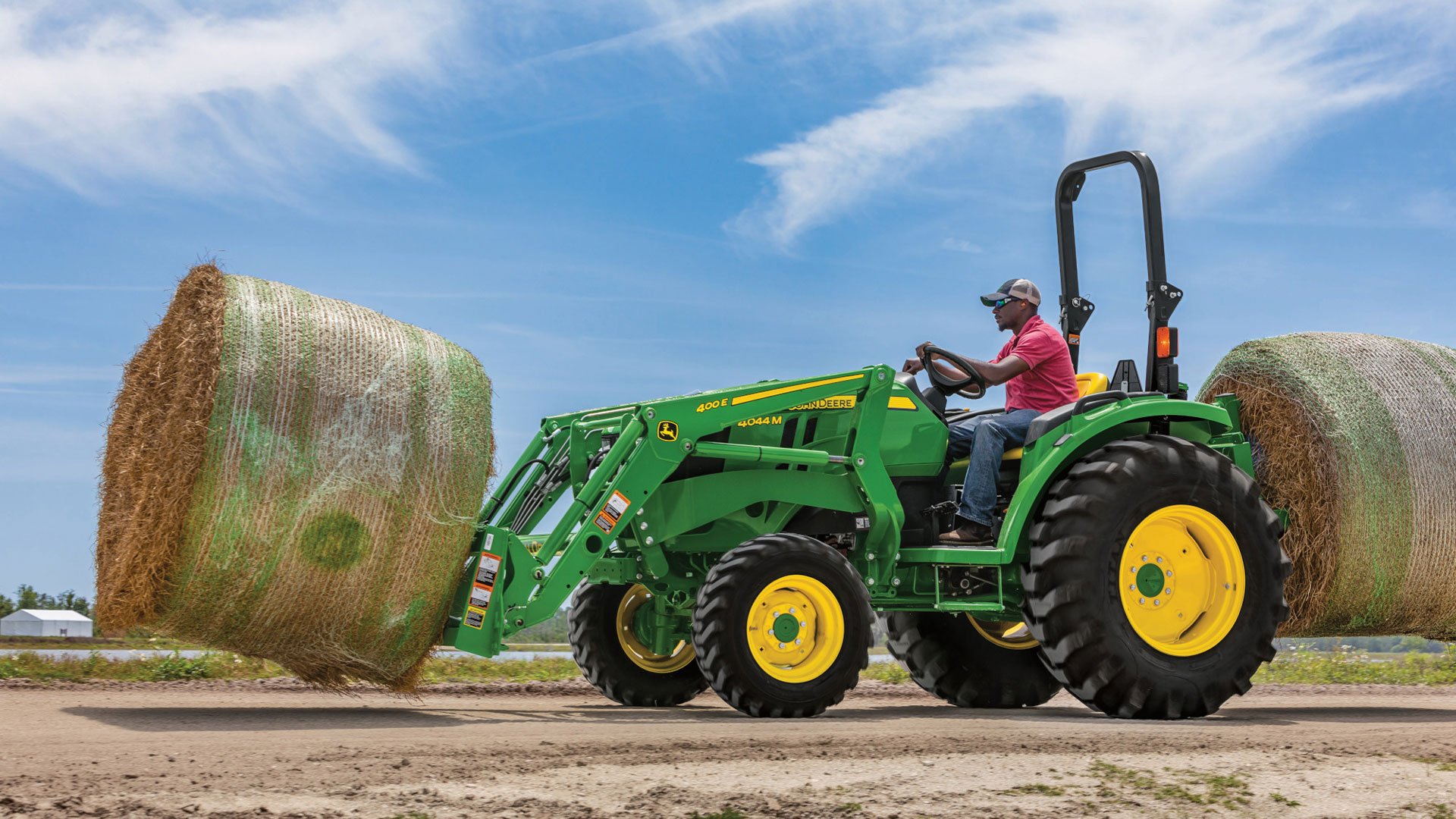
Second cutting is easier on the tractor than first, but the pairing rules still hold. Fixed chamber balers in the 451/461 class typically want 65 to 85 PTO hp. The 551 and 561 stepping up to 85 to 100. Variable chamber balers in the V-series often want more than the sticker says once you factor in higher density and wrap load, so we usually recommend the upper end of the spec range.
Two practical notes:
- Front weights. A baler working hard behind a mid-size 5- or 6-series can lift the front of the tractor on a hard stop or downhill run. If your tractor is not carrying front weights, second-cutting season is the moment to add them. There is currently a truckload buy program on JD W6 tractor front weights that runs periodically and gives real savings versus buying them one at a time; ask when you check on parts.
- Hydraulic remote count. Balers with hydraulic pickup lift, hydraulic density controls, and hydraulic gate open need enough remotes. If your tractor is short a remote and you have been living with a bungee-cord workaround, second cutting is the right window to add a diverter valve properly.
What to look at when a bale is not right
A quick shop-counter list for second cutting specifically, because most calls this month look like this:
- Loose or barrel-shaped bales. Usually a density-setpoint or belt-tension issue. Check the tension gauge before you start rebuilding anything.
- Cone-shaped bales. Usually a windrow feeding issue. Uneven feed into the chamber makes a lopsided bale. Adjust ground speed, look at the windrow uniformity behind the rake, and consider a tedder pass on the next field.
- Bales that fall apart on the loader. Under-wrap. Add one or two wraps and re-test.
- Baler chain skipping or jumping. Not something to power through. Second cutting is the season to catch a chain that first cutting stretched. A shop visit is faster than a field failure at 3 pm on the last dry day of the week.
If you are seeing any of these in the field this week, our parts counters have the common wear items in stock, and service can typically fit a second-cutting-window baler check into the schedule with a day or two of notice.
When to call us
Second cutting is one of the busier windows for the service department, and it is also one of the windows where a small mechanical hold-up costs the most. If your baler has not been through a between-cuttings check, the first hour is more useful than any troubleshooting call from the field.
Our teams across our locations in Ohio and Indiana are set up for the summer-hay window specifically, with common belt, chain, pickup, and wrap-carrier parts on the shelf. If you would rather have us come to you, roadside service is available in most of our territory and July calls are the priority calls this month.
If you want the pre-season companion piece, our May 28 first-cutting baler inspection guide covers the once-a-year setup work that this post assumes you have already done.
Find parts for your 451M
Shop genuine John Deere parts that fit the 451M and 451R at Koenig Marketplace — search by your exact model to see what fits.
Not sure which hay & forage tool is right for you?
Answer a few quick questions and Koenig will match you to the right John Deere hay & forage equipment, based on how you work and what you need.