Published: April 10, 2026
Updated: August 3, 2026
|
The John Deere 3-Series compact utility tractor lineup is one of the most popular in our region, and for good reason. These tractors sit in a practical middle ground: they are bigger and more capable than the sub-compact 1025R and 2025R, but they are not as large or expensive as a full 4-Series. For property owners stepping up from a smaller tractor, or farmers who need a capable utility machine without a massive footprint, the 3-Series is often exactly what they are looking for.
The challenge is that the lineup includes six models across two sub-series (the E-series and the R-series), and the differences between them are not always obvious. This post focuses specifically on the three E-series models: the 3025E, 3032E, and 3038E. These are the value-oriented options in the 3-Series, and they are the ones most buyers in Ohio and Indiana consider first.
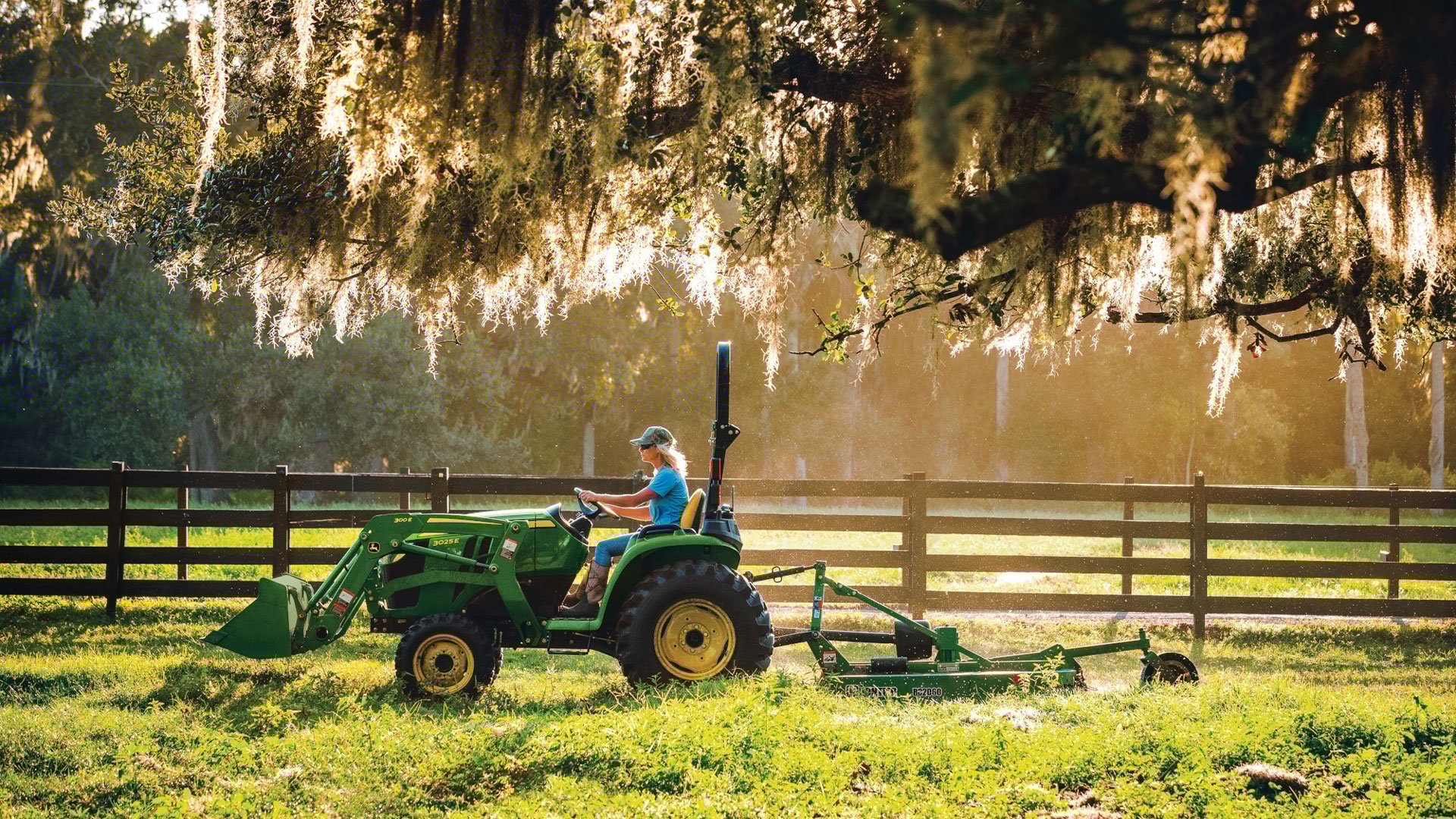
What Is the Difference Between the 3025E, 3032E, and 3038E?
All three tractors share the same basic platform and are built around the same frame design. The primary difference is engine horsepower and loader capacity. Here is the breakdown:
The horsepower difference between the 3025E and the 3038E is about 13 hp, which translates to a meaningful difference in how the tractors handle demanding work. The loader lift capacity difference is smaller, roughly 125 pounds more from bottom to top of the E-series lineup.
Beyond horsepower, all three models come with:
- A 3-point hitch rated at 1,093 lbs (3025E) to 1,477 lbs (3038E)
- Front-loader compatibility with the 300E series loader
- Open station cab as standard (enclosed cab is available on the 3032E and 3038E as a dealer-installed option)
- Hydrostatic transmission with twin-touch pedal operation
- 4WD as standard
The transmission and 4WD experience is the same across all three models, which is a point worth emphasizing. If you test-drive one, you will feel immediately comfortable on any of them.
One specification that does not always get enough attention is 3-point hitch category. The 3025E operates with a Category 1 hitch, while the 3032E and 3038E support both Category 1 and Category 1N implements. This matters when you start adding rear implements to your setup, particularly if you have existing equipment from a different tractor or plan to buy implements from multiple sources. Category 1 is the most common standard for compact and sub-compact tractors, so compatibility issues are rare, but it is worth confirming before you purchase an implement.
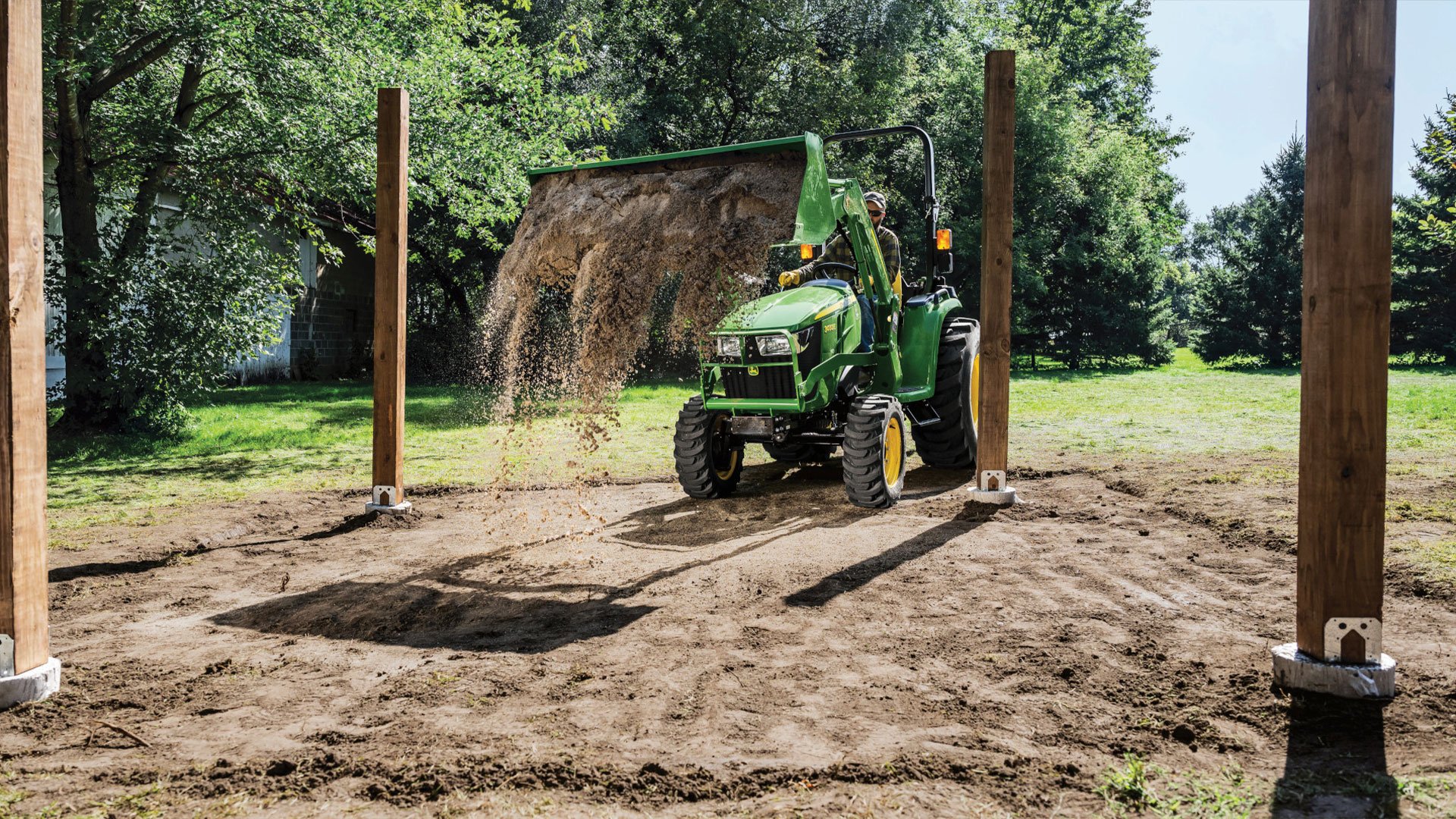
Is the John Deere 3025E Underpowered?
This is one of the most common questions we hear, and the honest answer is: it depends on what you are asking it to do.
For most residential property owners with 2 to 10 acres who need to mow, move material with a front loader, and handle light tillage or landscaping, the 3025E is not underpowered. The 24.2 hp engine handles a belly mower, a rear blade, a box blade, or a loader without complaint under normal conditions.
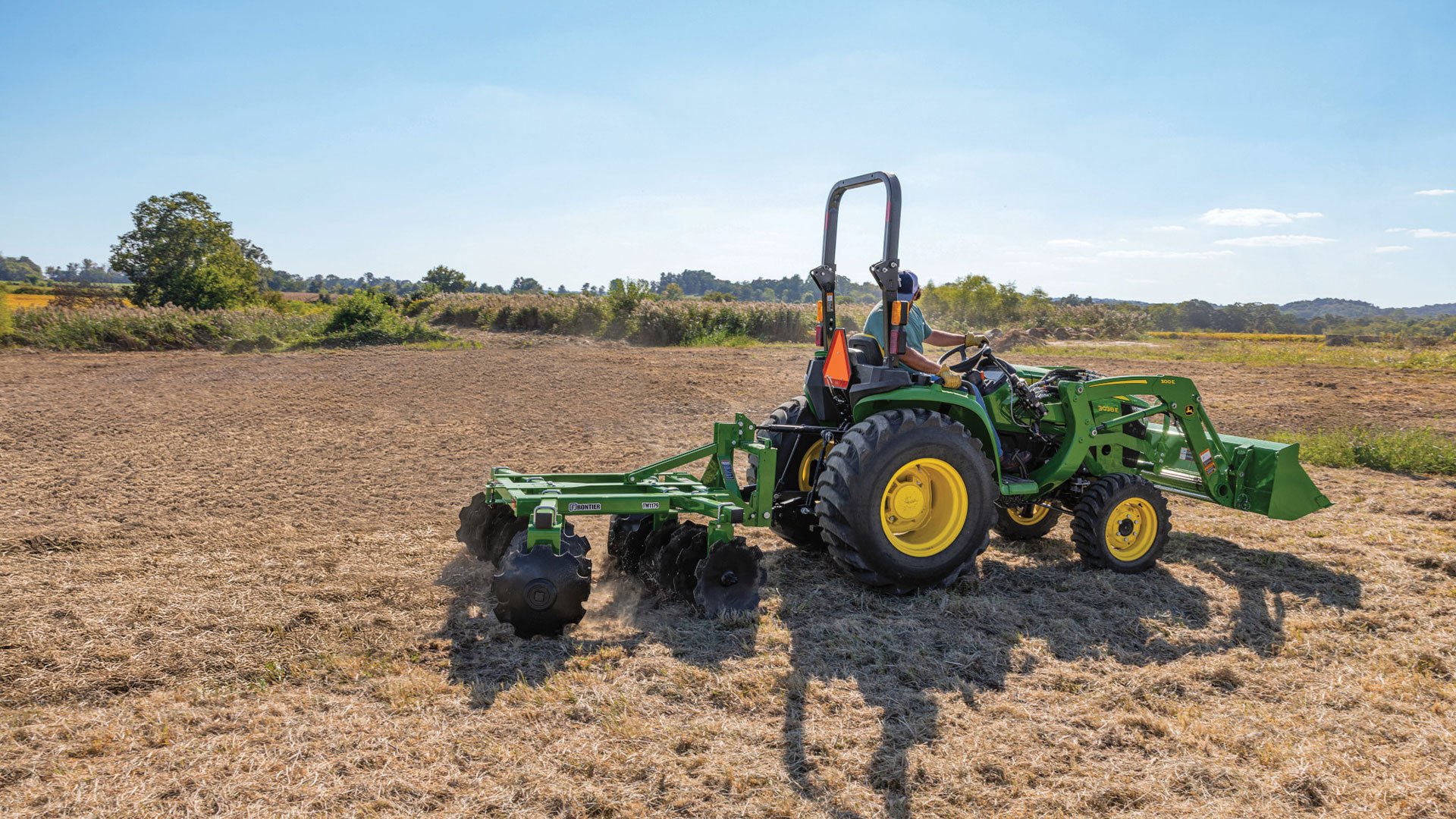
Where the 3025E starts to feel the limit is in sustained heavy work. Running a 5-foot or 6-foot tiller in dense soil, pulling a heavy rotary cutter through thick brush, or working steep hillsides in 4WD for extended periods will push the 3025E harder than it prefers. In those situations, the tractor will not break down, but it will bog and work harder than the same job would ask of a 3038E.
The practical advice: if your primary uses are loader work, mowing, and occasional light tillage on manageable terrain, the 3025E will serve you well and save you money. If you are planning to regularly run large implements, work heavy material, or push the machine hard for several hours a day, step up to the 3032E or 3038E.
How Much Does the John Deere 3025E Cost?
The 3025E starts around $24,000 to $26,000 for the base tractor, depending on configuration and any current promotions. Adding the 300E loader brings the total to roughly $28,000 to $31,000. A complete package with loader and a mid-mount mower deck typically runs $32,000 to $36,000.
For comparison:
- 3032E with loader: Approximately $31,000 to $35,000
- 3038E with loader: Approximately $34,000 to $39,000
The price gap between the 3025E and the 3032E is usually $3,000 to $5,000 for a similarly configured setup. The gap between the 3025E and the 3038E is typically $6,000 to $10,000.
Koenig Equipment offers John Deere financing options that can make these price differences easier to manage on a monthly payment basis. It is worth running the numbers, because the monthly payment difference between a 3025E and a 3032E on a 60-month term may be smaller than you expect.
3025E vs 3032E: Which Should You Choose?
This is the comparison most buyers land on. The 3025E and 3032E are very close in size and capability, and the right choice comes down to your specific work profile.
Choose the 3025E if:
- Your primary work is loader tasks, mowing, and light property maintenance
- You are working mostly flat to gently rolling terrain
- Your implement needs are in the lighter range: belly mowers, box blades, small tillers, rear blades
- Budget is a meaningful factor and you want to stay under $30,000 for a complete setup
Choose the 3032E if:
- You regularly run implements that demand more PTO power (rotary cutters, larger tillers, finish mowers on bigger areas)
- You want the option to add an enclosed cab in the future (the enclosed cab is more practical on the 3032E and 3038E due to HVAC compatibility)
- You plan to use the tractor commercially or for more hours per week than a typical residential owner
- The extra headroom in horsepower makes you more comfortable for future tasks you have not thought of yet
The 3032E is the most popular model in the 3-Series E lineup for a reason. It is the sweet spot for buyers who want meaningful capability without going all the way to the 3038E.
3032E vs 3038E: When Does the Extra Horsepower Matter?
The jump from the 3032E to the 3038E adds about 6 more engine horsepower and 5.6 more PTO horsepower. In some situations, that additional power makes a real difference. In others, it is not worth the premium.
The 3038E pulls ahead of the 3032E in these scenarios:
Larger rotary cutters and brush mowers. A 6-foot or 7-foot rotary cutter runs more comfortably behind the 3038E, particularly in heavy or wet vegetation. The 3032E can handle a 5- or 6-foot cutter, but the 3038E gives you more margin in tough conditions.
Heavy tillage or subsoiling. If you are breaking new ground, running a chisel plow, or working compacted soil, the 3038E's extra torque is put to use.
Regular commercial use. If you are running the tractor daily for a landscaping operation or rural property management business, the 3038E is built to handle higher hours more comfortably.
Larger properties with more varied terrain. For properties over 15 to 20 acres with hills, rough ground, or varied implement needs, the 3038E gives you a machine that is not working at the edge of its capability.
For a residential property owner with 5 to 10 acres of mixed use, the 3032E will handle the work. The 3038E becomes the better answer when the demands on the machine push regularly into that upper range.
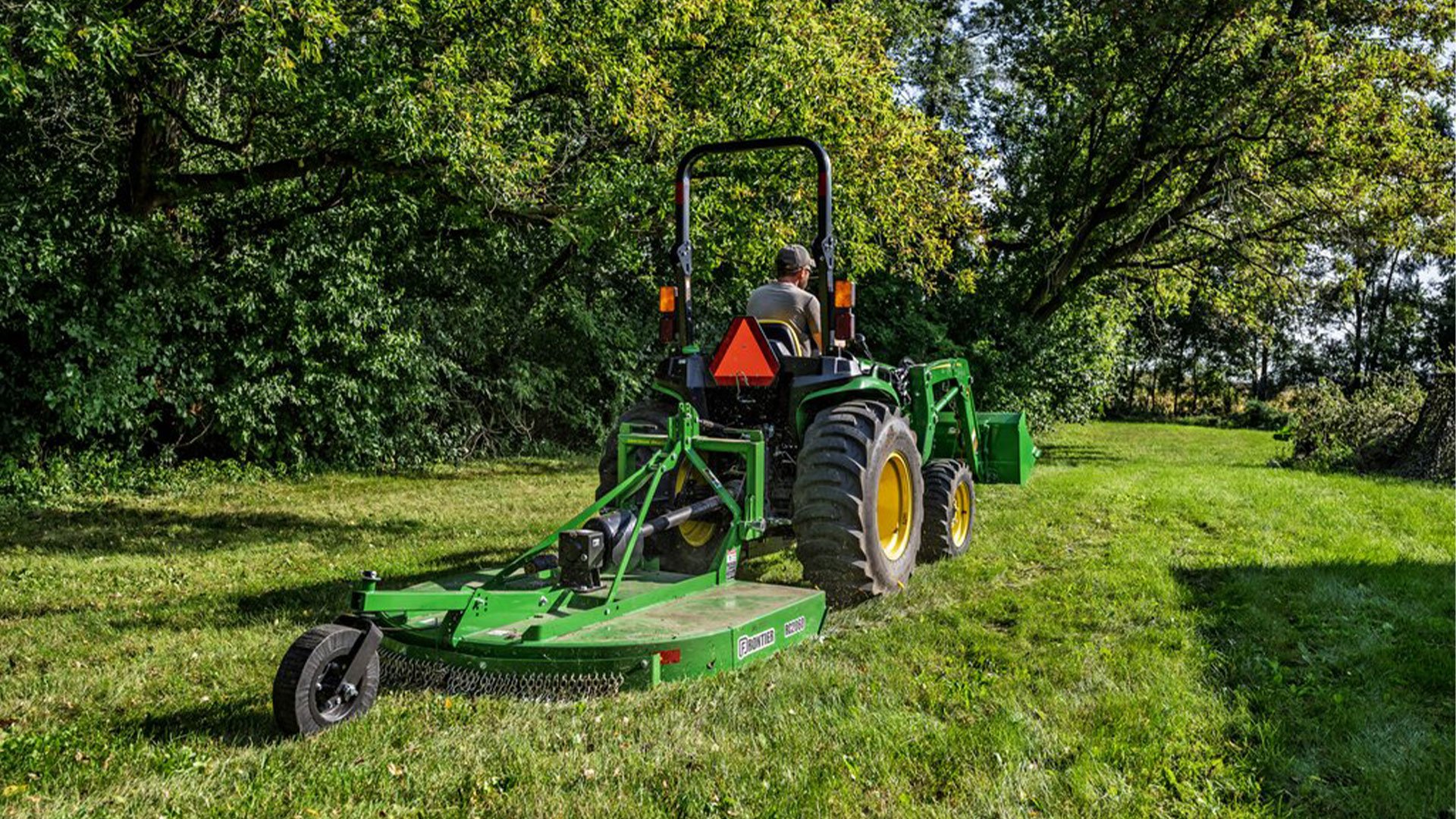
What Attachments and Implements Work Best with Each Model?
One of the reasons buyers gravitate to the 3-Series is the broad range of compatible John Deere attachments. The 300E loader is the standard front loader across all three E-models and is available in autoconnect configuration, which allows you to attach and detach the loader without getting off the tractor seat. This is more convenient than it sounds when you are switching between loader work and a rear implement multiple times in a day.
For rear implements, here are the common options and where each model fits best:
Rotary tillers: The 3025E handles a 48- to 54-inch tiller well. The 3032E and 3038E can comfortably run a 60-inch or 72-inch tiller in most soil conditions.
Rotary cutters and brush hogs: The 3025E can handle a 48- to 54-inch cutter. The 3032E can reliably run a 60-inch cutter. The 3038E handles a 72-inch cutter comfortably in heavy vegetation.
Rear blades and box blades: All three models handle these well. The heavier lifting and grading work comes down more to weight and traction than horsepower, and all three are adequate.
Finish mowers: For a mid-mount finish mower or a rear-mounted finish mower deck up to 60 inches, all three models perform well. The difference in mowing performance between them is minimal.
Post hole diggers and augers: These are primarily hydraulic implements and work well on all three models. The R-series would be the step up if you are running large-diameter auger bits in hard ground repeatedly.
If you are planning a specific implement combination, the sales team at Koenig Equipment can confirm compatibility and help you avoid buying implements that push any model outside its intended operating range.
The 3-Series E vs the 3-Series R: Should You Consider the R Models?
The 3033R and 3039R sit in the 3-Series lineup alongside the E-models, and they are worth understanding even if the E-series is where most buyers start.
The R-series tractors cost more, and they offer these differences: a more powerful hydrostatic transmission (rated for higher loads), a higher 3-point hitch capacity, a more refined hydraulic system with higher flow rates, and in some configurations, factory-ready cab options with better HVAC integration.
For a buyer who needs the tractor to run a grapple, a hydraulic post driver, or other hydraulically demanding implements, the R-series makes more sense. For standard loader, mowing, and tillage work, the E-series models are more than adequate and meaningfully less expensive.
If you are unsure which side of that line your use case falls on, the team at Koenig Equipment can help you think through the attachments you are planning to run and whether the E-series hydraulic system will handle them.
Tractor Packages: A Faster Way to Get a Complete Setup
Koenig Equipment offers pre-configured tractor packages for the 3032E and 3038E that bundle the tractor, loader, and an implement together at a price that typically represents better value than buying each component separately.
The 3032E Liberty Package and the 3038E Patriot Package are designed for buyers who want a ready-to-work setup without having to configure everything from scratch. If you are buying your first tractor in this class, a package purchase simplifies the process and often saves money compared to building out the same combination a la carte.
Which 3-Series Tractor Should You Buy?
Here is the summary that most buyers find useful:
If you are a property owner with 2 to 10 acres who needs a reliable utility tractor for loader work, mowing, and occasional light implement use, the 3025E is the right starting point. It is capable, well-built, and less expensive than the alternatives.
If you are regularly working harder ground, running bigger implements, or want the confidence of meaningful power reserves, the 3032E is the most versatile choice in the lineup. It is the most popular 3-Series model for a reason.
If you have a large property, plan to run demanding implements on a regular basis, or use the machine for more commercial-style work, the 3038E gives you room to grow without stepping into a 4-Series.
The best way to confirm which model is right for your situation is to have a conversation with our team. We work with property owners and farmers across Ohio and Indiana every day, and we have seen most of the common use cases. Stop by any of our locations and we can walk you through the options based on your specific property and what you are planning to do with the machine.
Find parts for your 3025E
Shop genuine John Deere parts that fit the 3025E and 3032E at Koenig Marketplace — search by your exact model to see what fits.
See how the 3025E compares
Weighing your options? Koenig has side-by-side spec comparisons for the equipment we sell:
Not sure which compact tractor is right for you?
Answer a few quick questions and Koenig will match you to the right John Deere compact tractor, based on how you work and what you need.