Published: July 17, 2026
Updated: October 1, 2026
|
There are two versions of the compact track loader conversation. The first version happens in a showroom, next to a machine that has never touched dirt, and it is mostly about horsepower and lift capacity numbers. The second version happens at 7 in the morning on a job site with a customer standing next to their crew, looking at what came off the trailer, and asking a very different question. What is this machine actually going to do on the properties we run this year, over the next 4,000 hours.
If you are a landscape contractor in Ohio or Indiana getting ready to add a track loader or replace an aging one, this is the second version of that conversation, in writing. We have talked with enough crews at our locations in Greensburg, Lebanon, Bloomington, and across the region to know the answer is never just the spec sheet.
What "ground pressure" actually means when the tires would tear the yard
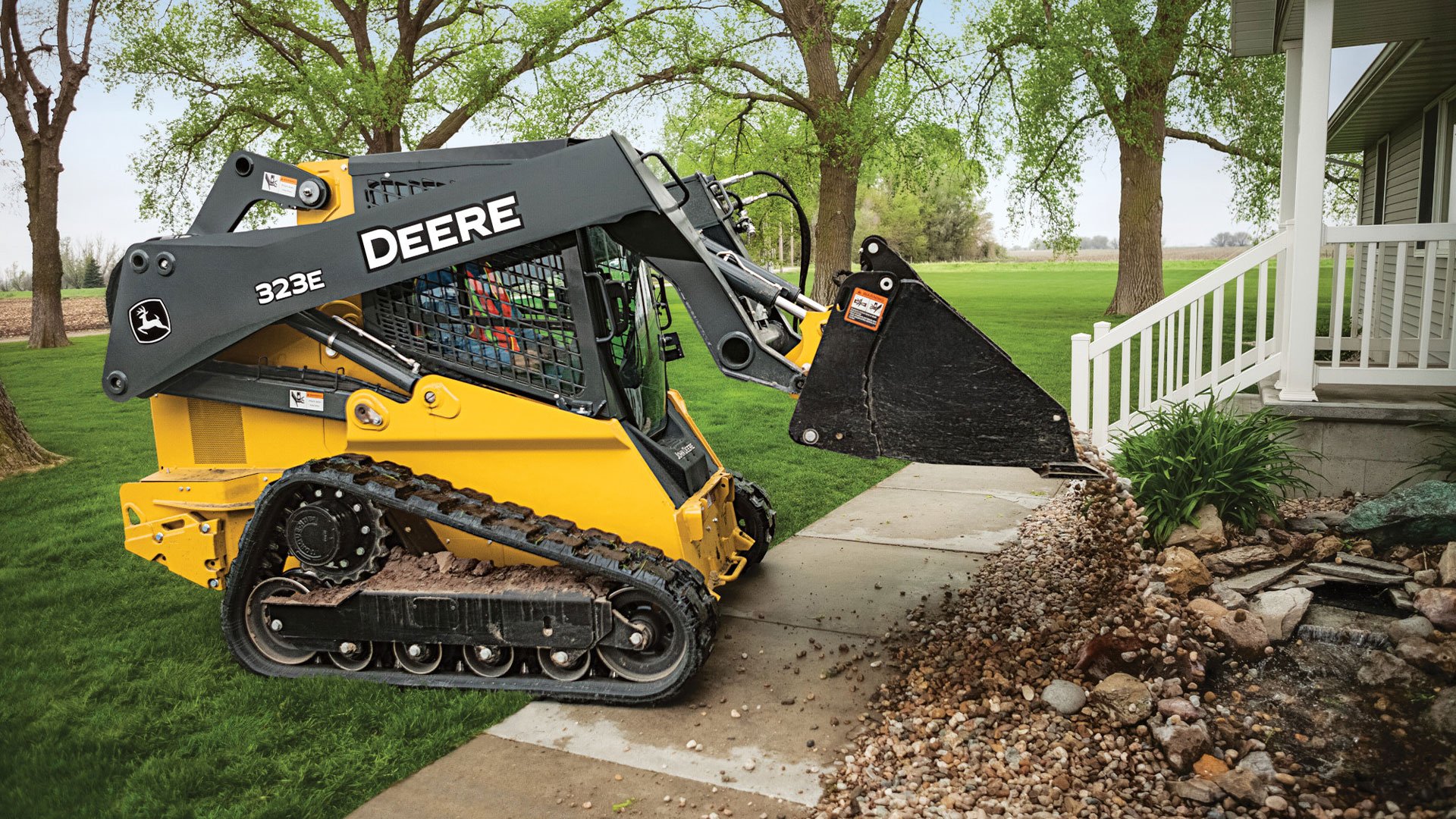
The whole reason you spec a track machine over a skid steer for landscape work is ground pressure. Track loaders in the 5 psi range spread the machine's weight over the entire footprint of both tracks. A wheeled skid steer concentrates the same weight onto four small tire contact patches, which is closer to 25 to 35 psi.
For a landscape contractor, that difference is not academic. It is the difference between showing up on a finished lawn to move flagstone and leaving the lawn intact, versus showing up and leaving four ruts that you now have to repair before final walk-through. On soft ground, on saturated soil after a July rain, on turf that the homeowner just paid to have installed, the CTL leaves the site the way you found it. The skid steer often does not.
The trade-off is real. Tracks cost more up front, wear faster than tires, and are more expensive to replace when they do wear. But for a business built on repeat referrals from customers who care about their lawn, the ground pressure math is usually the deciding factor.
Undercarriage life is the hidden cost that decides total ownership
The single biggest ownership cost surprise on a compact track loader is the undercarriage. Tracks, rollers, sprockets, idlers, and the frame they run on together represent the largest wear item on the machine. A hard-run CTL that lives on abrasive material (crushed stone, concrete pads, sandy soil) can burn through a set of tracks in 1,200 to 1,800 hours. The same machine on cleaner landscape soil and grass can go 2,500 to 3,500 hours.
A full set of tracks and mid-rollers at retail is a significant expense, often in the $6,000 to $10,000 range depending on the machine class and whether you go OEM or aftermarket. This is where thinking about your job mix matters more than horsepower.
Two operational habits that meaningfully extend undercarriage life:
- Turn radius discipline. Every zero-radius spin on hard surface loads the outer track like a slip clutch. Teaching operators to make wider turns on concrete and asphalt saves real hours.
- Track tension checks. Loose tracks throw and de-tension. Overly tight tracks accelerate roller wear. A weekly check with the machine on level ground is a five-minute habit that returns hundreds of hours.
For contractors who want to plan ahead on wear parts, John Deere is currently running a Track Belt Program that offers 10 percent off track and mid-roller parts. Worth knowing about when you are budgeting a replacement cycle.
Hydraulic flow: standard versus high-flow and what your attachments actually need
Hydraulic flow determines what attachments your machine can effectively run. Standard-flow hydraulics on the current John Deere CTL lineup deliver in the 22 to 25 GPM range at the auxiliary couplers. High-flow options step that up to 34 to 40 GPM depending on machine.
For landscape work, the flow you need depends on what you actually run:
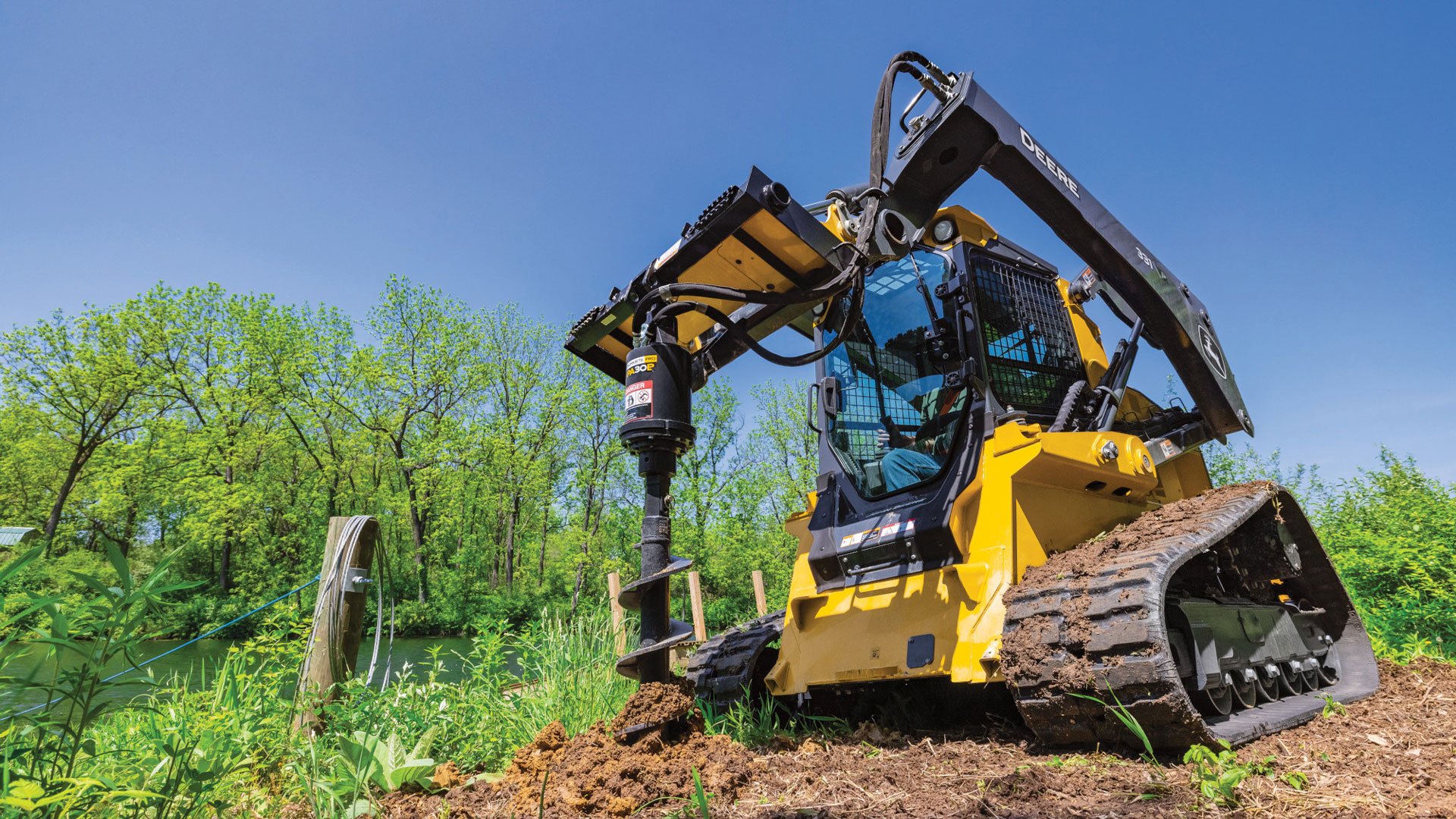
- Buckets, forks, grapples, augers, dozer blades: Standard flow is plenty. These are typically direct-drive or low-flow-hydraulic tools that do not benefit from the added pump capacity.
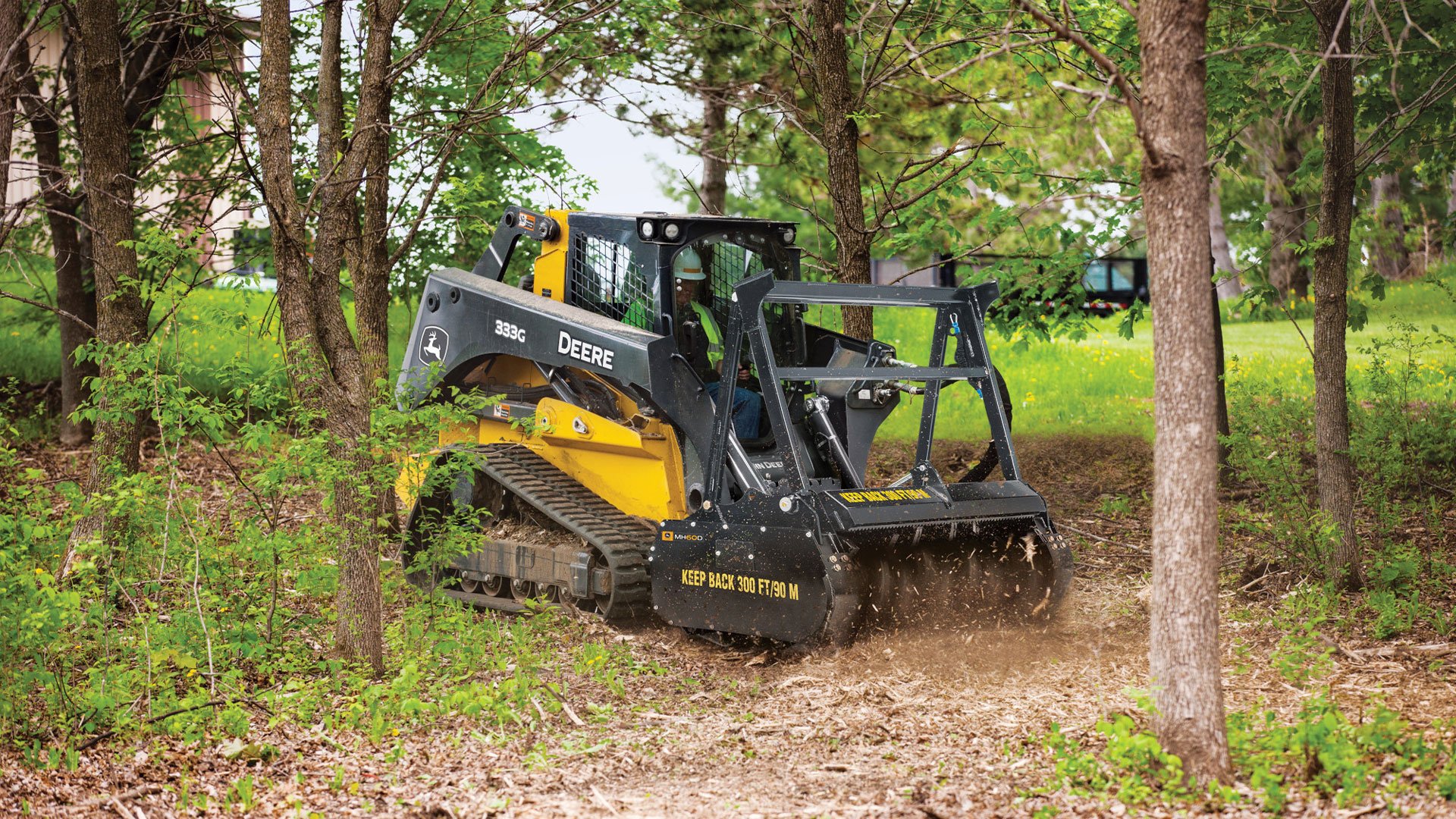
- Cold planers, stump grinders, mulchers, snow blowers: High-flow is either required or dramatically improves performance. A mulcher that needs 32 GPM will not perform on 22 GPM. It will run, but slowly and with heat issues.
- Trenchers, cold planers with wide drums, harley rakes: High-flow makes the machine noticeably more productive. Standard flow works but leaves productivity on the table.
The honest question for a landscape contractor is what mix of attachments your crew will actually run in a typical season. If the answer is buckets, grapples, pallet forks, and an occasional auger, standard flow saves money and does the job. If you are doing forestry mulching, hardscape prep with a cold planer, or running large-flow attachments regularly, high-flow is worth the premium.
The other question is whether you want case drain plumbed to the auxiliary system, which some higher-end attachments require. All P-Tier compact track loaders can be ordered or field-added with case drain. If you know a specific attachment needs it, spec the machine that way from the start.
The current John Deere CTL lineup
John Deere restructured the compact track loader lineup around the P-Tier family. Here is how each fits in real landscape contractor terms.
317 P-Tier. The entry into the P-Tier family. Smooth electrohydraulic control, compact maneuverability, real premium operator environment for the size class. Right for small crews, tight residential work, and contractors who want the P-Tier features in a smaller footprint.
325 P-Tier. 70 net horsepower, excellent visibility, all-day cab comfort. The workhorse of the lineup for landscape crews that need serious daily productivity without the premium of the biggest machines. This is the most common landscape contractor pick we see move off the lot.
331 P-Tier. Big-machine capability in a compact package. Powerful lifting, premium operator environment, excellent attachment versatility. Right for contractors doing hardscape, larger residential builds, and mixed commercial jobs.
333 P-Tier. Industry-leading lift capacity in the class, SmartGrade-ready, premium operator comfort. This is the machine for contractors doing serious grading, large-scale hardscape, or precision earthwork where grade management pays back the up-front cost.
335 P-Tier. Maximum power, advanced grade-management technology, premium comfort. Built for high-production commercial work. Overkill for many landscape crews, exactly right for the ones running large sites.
For most landscape contractors, the working answer is 325 P-Tier for a first machine and 331 or 333 P-Tier for an upgrade or a second machine dedicated to grading and hardscape.
Attachment matching: the couplers, quick-attach, and case drain that decide productivity
The productivity of a track loader is decided at the coupler. Three practical things to spec correctly from the start:
- Auxiliary hydraulic couplers. Flat-face couplers with dust caps that actually work. Any coupler on a landscape machine will see mud, grit, and pressure cycling. Cheap couplers gall, leak, and eventually cause tool failures. All P-Tier machines ship with quality couplers, but if a machine has been rebuilt or the couplers have been swapped for aftermarket, verify condition before the first job.
- Quick-attach and 14-pin electrical. John Deere's Universal Quick-Attach lets you run OEM attachments plus most aftermarket attachments that follow the industry standard. The 14-pin electrical connector is what enables in-cab control of hydraulic and electrical attachments (angle adjust on plows, in-cab tilt on grading blades, and so on). If your fleet plan includes attachments with in-cab controls, verify 14-pin at spec time.
- Case drain routing. If you run mulchers, cold planers, or high-flow attachments with internal motors, case drain is not optional. Better to have it and not need it than the other direction.
The final piece of attachment thinking is what you already own. If you are trading up from a skid steer with a small library of standard-flow attachments, most of those attachments will run on the new CTL without issue. If you have high-flow attachments, verify the new machine's flow rating matches or exceeds what the attachments expect.
Cab, controls, and the operator who sits in it for 10 hours
The best track loader in the class is the wrong machine if your operator cannot run it comfortably all day. This is worth taking seriously.
Two control patterns dominate the market. ISO control (also called excavator pattern) has the left joystick controlling boom and swing, right joystick controlling bucket. H pattern (also called skid steer pattern) uses foot pedals for boom and bucket, hand levers for drive.
John Deere P-Tier machines offer switchable EH (electrohydraulic) controls that let the operator choose ISO or H pattern from a menu. This matters more than it sounds. If your crew runs multiple machines from multiple manufacturers, being able to switch control patterns on the same machine is a real productivity win.
Cab features to actually value in landscape work:
- AC that actually works in August. Everyone lists it. Not every machine keeps a working AC through a July or August week. Sealed cabs and pressurized ventilation are the pattern that lasts.
- Visibility to the bucket and to the ground behind the machine. More important than most operators realize until they have run a machine without it.
- Seat suspension. For an operator running the machine 40+ hours a week, a mechanical suspension seat is a real long-term back investment.
- Bluetooth audio and a real HVAC. Small factors. Show up in operator retention.
What a contractor purchase looks like this summer
If you are seriously evaluating a track loader purchase between now and Labor Day, the timing is favorable. John Deere is currently running a promotion of 0 percent APR for 60 months on qualifying track skid loaders and skid steers for commercial contractor accounts, available July 1 through September 30, 2026. The offer applies across most of the current P-Tier and G-Tier lineup and requires approved commercial credit through John Deere Financial, with an average 10 percent down payment. Zero percent for five years on this class of machine has a real effect on payment math, and it is the kind of program that does not always come around at this cadence.
There are also alternative structures if the 60-month term is longer than your fleet cycle prefers. A 48-month zero percent option runs in parallel, and various cash-discount alternatives are available if outright purchase makes more sense for your operation. Your salesperson can pencil the actual payment on a specific configuration in a few minutes.
If you are thinking about a machine that is not new, our used inventory rotates aggressively through the summer as trade-ins come in from customers upgrading. Used CTLs from working landscape fleets often carry the exact wear pattern you want to see: 1,500 to 2,500 hours of professional use, maintained on schedule, undercarriage still in the middle of its life.
Companion reading
If you have not yet made the underlying decision between wheels and tracks, our May 2026 skid steer versus compact track loader comparison walks through that decision in more detail. And later this month, we will publish a follow-up post specifically on attachment selection for skid steers and CTLs, which will pick up the attachment section of this post and go significantly deeper.
The track loader you buy this summer will be with your crew for 4,000 to 6,000 hours over the next four to six years. The 20 minutes of extra thought on ground pressure, hydraulic flow, and undercarriage life at spec time returns itself in the first six months of ownership.
Not sure which compact machine is right for you?
Answer a few quick questions and Koenig will match you to the right John Deere machine for your jobsite, based on how you work and what you need.