Published: March 18, 2026
Updated: August 3, 2026
|
You have been running the same skid steer for years. It has paid for itself ten times over, and now you are shopping for your next one. Or maybe you are buying your first machine and trying to figure out which brand is worth the money. Either way, the question comes up fast: Bobcat or John Deere?
Both brands build serious machines. Both have loyal operators who will argue their case until the sun goes down. And both have real strengths that matter depending on what kind of work you do and where you do it.
This is not a post designed to tell you one brand is better than the other. As a John Deere dealership that works with contractors across Ohio and Indiana every day, we have a clear perspective, but we also believe you deserve honest information to make the right call for your business. So here is what we actually see in the field.
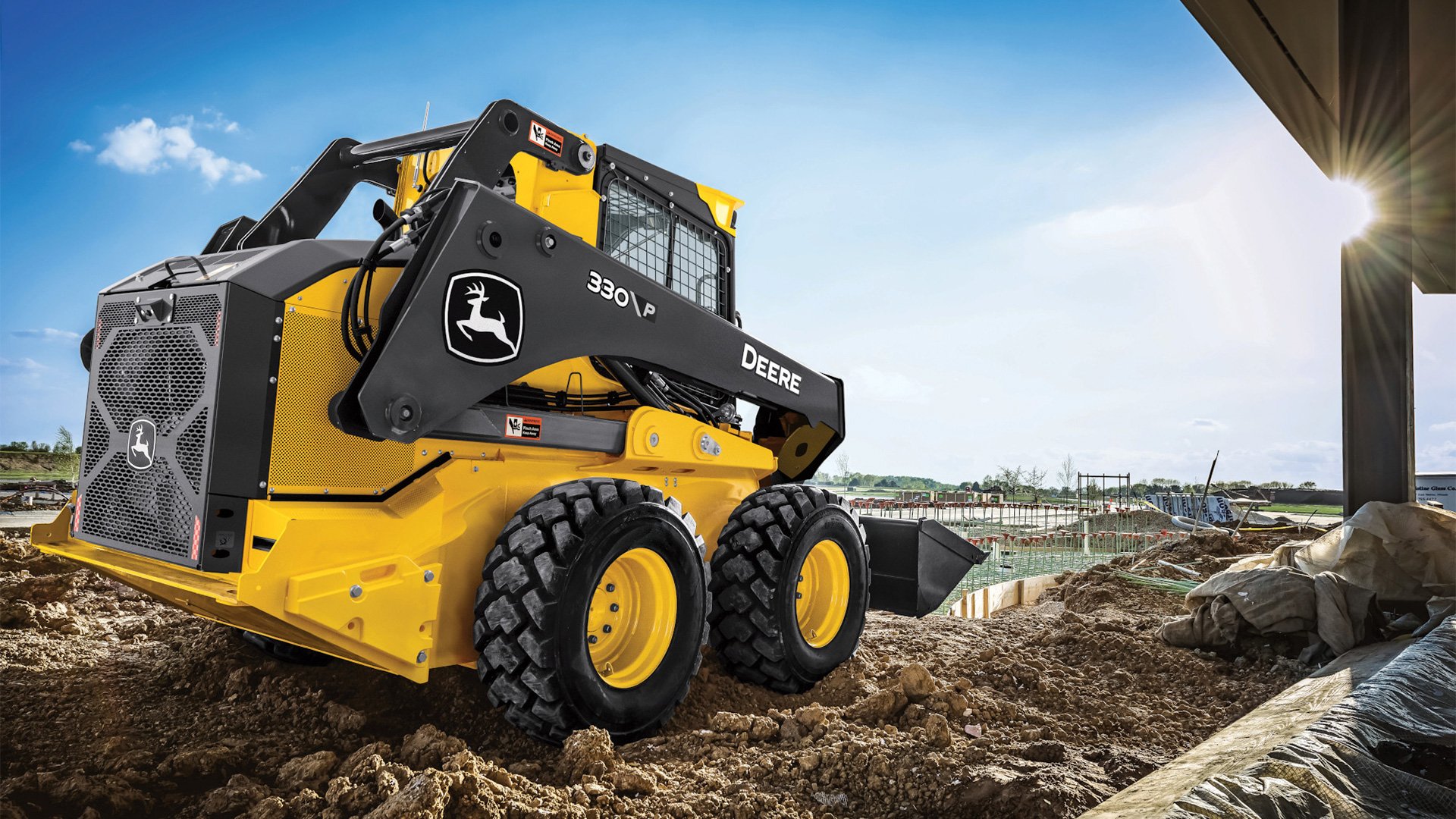
How Do Bobcat and John Deere Skid Steers Compare on Power and Lifting Capacity?
The first thing most contractors want to know is how much machine they are getting for their money. Here is a direct comparison of the most commonly cross-shopped models:
| Spec | John Deere 324G | Bobcat S66 | John Deere 330 P-Tier | Bobcat S770 | John Deere 334 P-Tier | Bobcat S850 |
|---|---|---|---|---|---|---|
| Rated Operating Capacity | 2,690 lbs | 2,400 lbs | 2,950 lbs | 2,780 lbs | 4,000 lbs | 3,695 lbs |
| Engine HP (gross) | 74 hp | 74 hp | 98 hp | 92 hp | 118 hp | 100 hp |
| Operating Weight | 7,700 lbs | 7,154 lbs | 9,930 lbs | 9,545 lbs | 10,264 lbs | 10,150 lbs |
| Width | 67 in | 67 in | 78.5 in | 72 in | 78.5 in | 78 in |
A few things stand out from those numbers. In the mid-size class, the 324G and S66 are closely matched on horsepower, but the Deere carries a higher rated operating capacity. Move into the large-frame machines and the gap widens. The 334 P-Tier lifts 4,000 pounds at 50% tipping load. That is 305 pounds more than the S850, which matters when you are handling loaded pallets of block or full concrete buckets.
Bobcat builds narrower machines across most of their lineup. The S770 is 72 inches wide compared to the 330 P-Tier at 78.5 inches. If you regularly work in tight residential lots or urban infill sites, that 6.5-inch difference can be the factor that lets you get between structures without tearing up landscaping.
John Deere's wider stance provides a more stable platform, especially when you are lifting at full height with a loaded bucket or working on uneven terrain. Stability is not something you think about until you need it.
Is a Bobcat or John Deere Easier to Maintain in the Field?
For contractors running a machine 8 to 10 hours a day, maintenance access is not a luxury. It is the difference between a 20-minute service and a 2-hour headache.
John Deere P-Tier and G-Series:
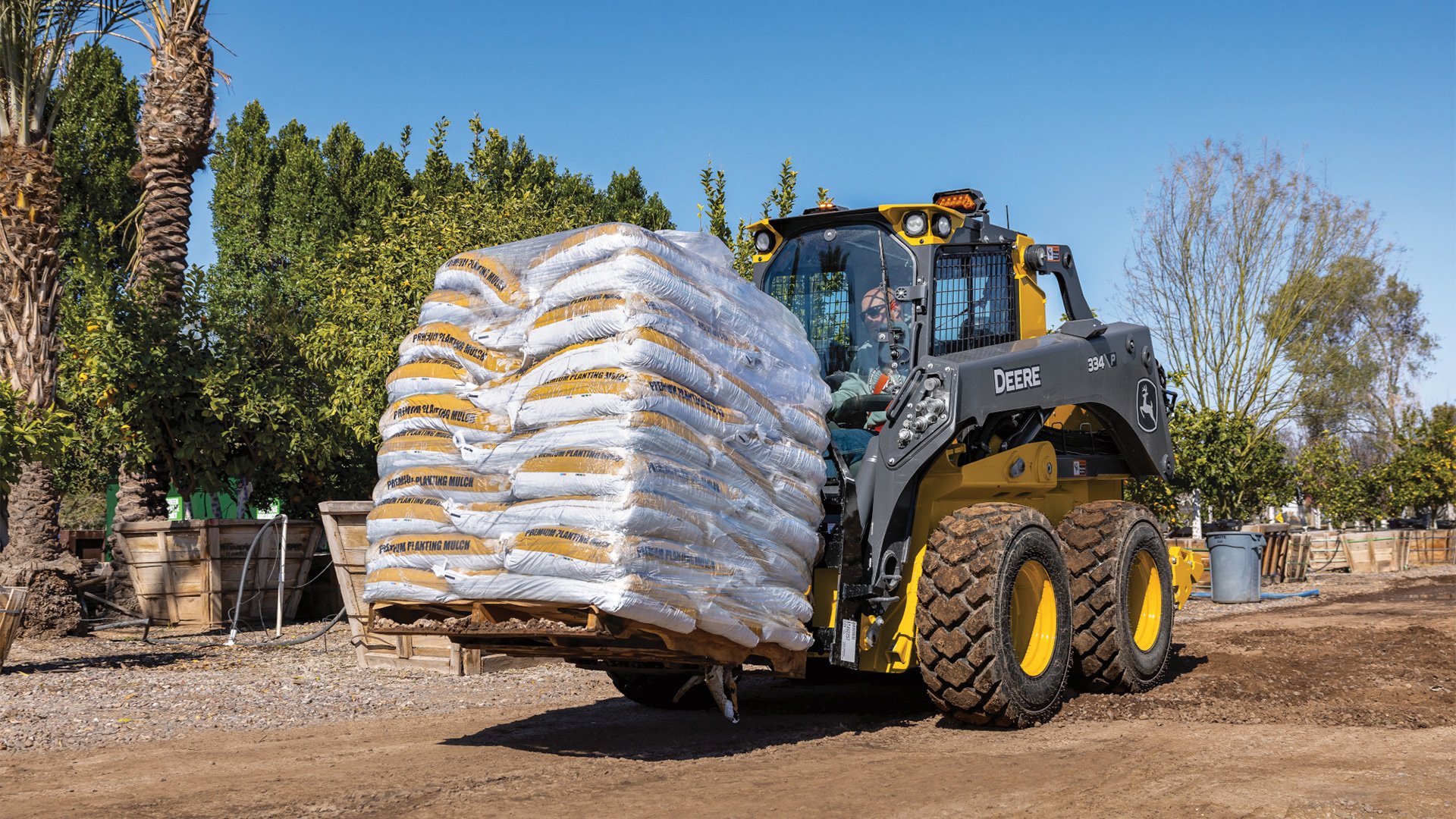
One of the standout features across the Deere skid steer lineup is the tilt-up cab. On the 330 P-Tier and 334 P-Tier, the entire cab tilts forward on six bolts, giving you full access to the hydraulic pumps, drive motors, and every hose on the machine. The floor pan lifts out so you can wash out mud and debris. If you have ever tried to diagnose a hydraulic leak from the outside, you know how much time this saves.
Deere also equips the P-Tier models with a safety lockout for the loader arms. A lever behind the right shoulder drops a pin that locks the arms in the raised position, so one person can safely perform maintenance without needing a second operator.
Bobcat R-Series and M3-Series:
Bobcat machines use a rear-access design where the tailgate swings open for engine and cooling system access. The layout is clean and filters are easy to reach. On the M3-Series models, Bobcat improved daily maintenance access points significantly over the older M2 machines.
Both brands have engineered their machines with field maintenance in mind. The real difference comes down to how much of the machine you can expose without removing panels. The Deere tilt-up cab approach opens the entire front end of the machine in a way that Bobcat's tailgate design does not replicate.
What About Technology and Fleet Management?
This is where the two brands take noticeably different paths.
John Deere Operations Center:
Every new John Deere skid steer connects to John Deere's Operations Center, a cloud-based fleet management platform. For contractors running multiple machines across job sites, this means real-time location tracking, fuel consumption monitoring, service alert scheduling, and utilization reporting from a single dashboard.
The P-Tier models also introduced two technologies that raised the bar for this class of machine. Attachment Manager applies preprogrammed hydraulic flow and pressure settings for specific John Deere attachments, so when you swap from a bucket to a grapple, the machine adjusts automatically. Surround View uses two boom-mounted cameras and the rearview camera to stitch together a 270-degree view on a dedicated in-cab monitor.
Bobcat Machine IQ:
Bobcat offers Machine IQ as their telematics solution, providing location tracking, service reminders, and basic utilization data. It covers the essentials, and for smaller operations running one or two machines, it does the job.
Where Deere pulls ahead is in the depth of the data and how it integrates across a mixed fleet. If you are running skid steers alongside excavators, compact track loaders, and tractors, everything feeds into the same Operations Center dashboard. Bobcat's system works within their own product family but does not extend to equipment from other manufacturers.
For a single-machine owner-operator, the technology difference may not change your decision. For a contractor managing a fleet of five or more machines, the data integration becomes a meaningful advantage.
How Much Does a John Deere Skid Steer Cost Compared to Bobcat?
Pricing is always local and always negotiable, so take any published numbers as general guidance. That said, here is what the market typically looks like for new machines:
Small-frame models (1,750 to 2,200 lb ROC):
Both the Deere 318G and comparable Bobcat S590 typically fall in the low to mid $40,000 range, depending on configuration and options.
Mid-frame models (2,200 to 2,700 lb ROC):
The Deere 324G and Bobcat S66/S76 generally land in the mid $40,000 to low $50,000 range. Adding a cab with heat and air, high-flow hydraulics, and two-speed can push either brand toward $55,000 to $60,000.
Large-frame models (2,700+ lb ROC):
The Deere 330 P-Tier and 334 P-Tier, along with the Bobcat S770 and S850, typically start in the low $60,000 range and can reach $80,000 or more with full option packages.
John Deere machines tend to carry a slight price premium at the point of sale. That gap narrows when you factor in resale value. Deere equipment holds its value well in the Ohio and Indiana market, partly because the dealer network provides strong parts and service support throughout the life of the machine. A well-maintained Deere skid steer at 3,000 hours typically retains 55% to 65% of its original price.
Bobcat also holds value well, generally in the 60% to 70% range for comparable hours and condition. Both brands are safe investments from a depreciation standpoint.
Should You Consider a Compact Track Loader Instead?
This is a question that comes up in almost every skid steer conversation, and it is worth addressing directly. A compact track loader (CTL) gives you tracks instead of wheels, which changes the equation for certain types of work.
Tracks distribute the machine's weight over a larger surface area, which means less ground pressure and less damage to turf. If you work on finished landscapes, soft soil, or wet conditions regularly, a CTL will perform in situations where a wheeled skid steer would tear up the site.
The tradeoff is cost and maintenance. Tracks are more expensive to replace than tires, and the undercarriage adds complexity. On hard surfaces like concrete and asphalt, tires are more maneuverable and cause less wear on the machine.
For Ohio and Indiana contractors who work across a mix of conditions, the decision often comes down to where you spend most of your hours. Primarily on hard surfaces and roads? A skid steer is the better fit. Primarily on soft ground, grade work, and residential sites? A compact track loader is worth the investment.
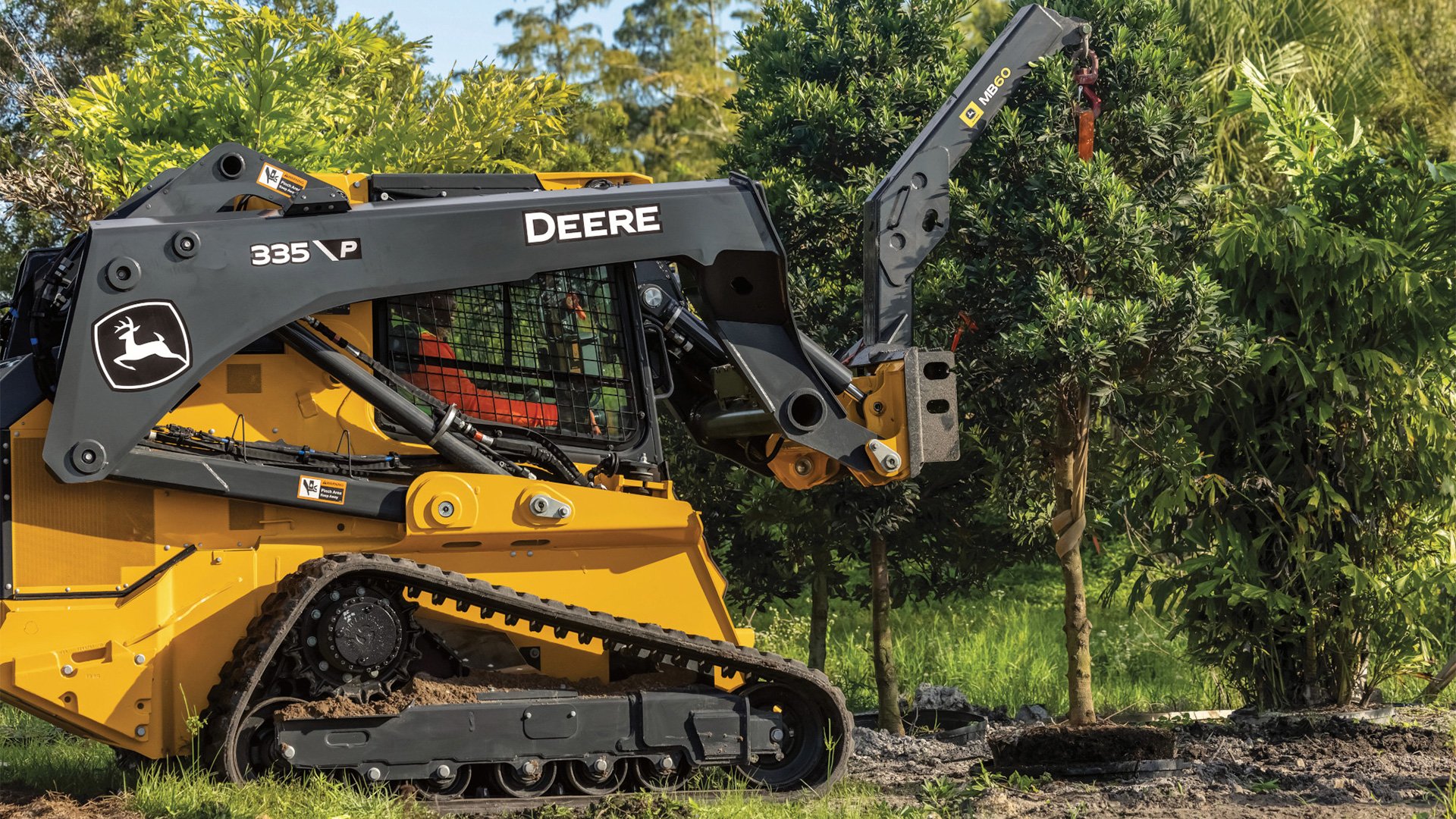
John Deere's compact track loader lineup (317 P-Tier through 335 P-Tier) shares the same cab, controls, and technology platform as their skid steers, so if you start with a skid steer and later add a CTL, operators can move between machines without retraining.
What About Other Brands Like JCB, CASE, and Cat?
Bobcat and John Deere get most of the attention, but they are not the only options.
Here is a quick take on other brands you may be considering:
Caterpillar: Cat builds excellent machines with strong hydraulics and operator comfort. The 272D3 XE is a serious large-frame skid steer. The main consideration is dealer access. In parts of Ohio and Indiana, John Deere and Bobcat dealers are more common, which affects how quickly you can get parts and service during critical periods.
CASE: The CASE B-Series skid steers are solid mid-range machines with good visibility and a clean maintenance layout. They compete well on price in the small to mid-frame classes.
JCB: JCB takes a different approach with a side-entry door and telescoping boom option on some models. For certain applications like reach-over work, the JCB design has a real advantage. Dealer coverage in our region is more limited.
Kubota: Kubota entered the skid steer market more recently with the SSV series. They are capable machines, particularly at the smaller end of the lineup, and Kubota's engine reliability is well established.
The common thread across all of these is dealer support. In Ohio and Indiana, having a dealer within reasonable driving distance who stocks parts and has trained technicians makes a real difference in uptime. Downtime costs money, and the fastest path back to work is usually through your closest dealer relationship.
Which Skid Steer Attachments Matter Most for Your Work?
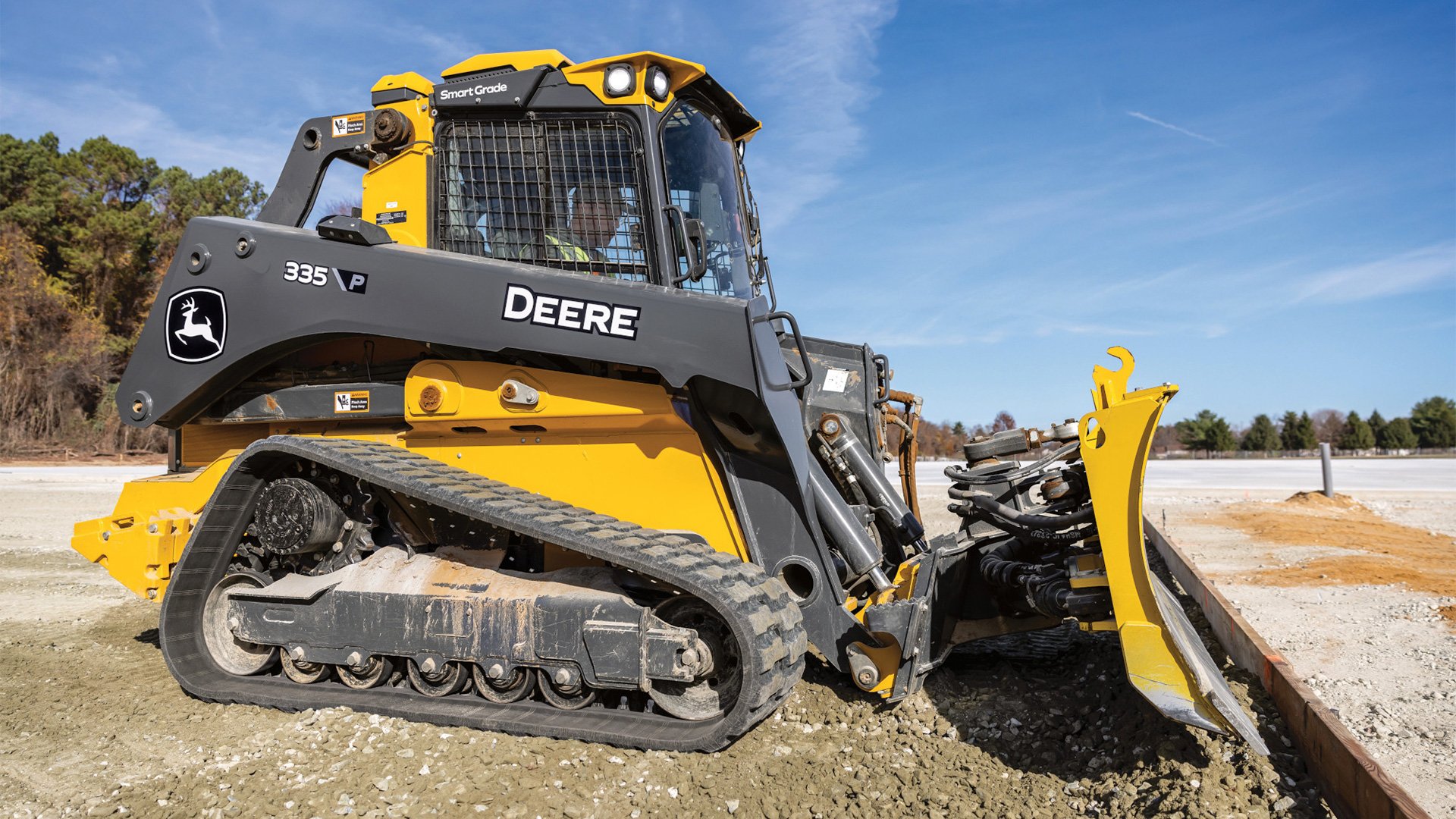
One factor that does not get enough attention in brand comparisons is attachment compatibility. A skid steer is only as versatile as the attachments you can run on it.
Both Bobcat and John Deere use the standard universal quick-attach plate, so most third-party attachments fit either brand. The difference shows up in hydraulic flow and pressure.
John Deere's large-frame P-Tier models deliver up to 44 GPM at 4,000 PSI with high-flow hydraulics. The 334 P-Tier with the new PCLS (pressure-compensated, load-sensing) hydraulic system provides consistent performance regardless of how many hydraulic functions are running simultaneously. This matters when you are running a mulching head, a cold planer, or any attachment that demands sustained high flow.
Bobcat's comparable S850 delivers 40 GPM at 3,500 PSI. That is still strong, but the gap in operating pressure means Deere can push hydraulic-intensive attachments harder without bogging down.
Koenig carries a full line of John Deere CCE attachments, including buckets, grapples, augers, trenchers, brooms, and forks. All are designed to integrate with the Attachment Manager system on P-Tier machines for optimal performance.
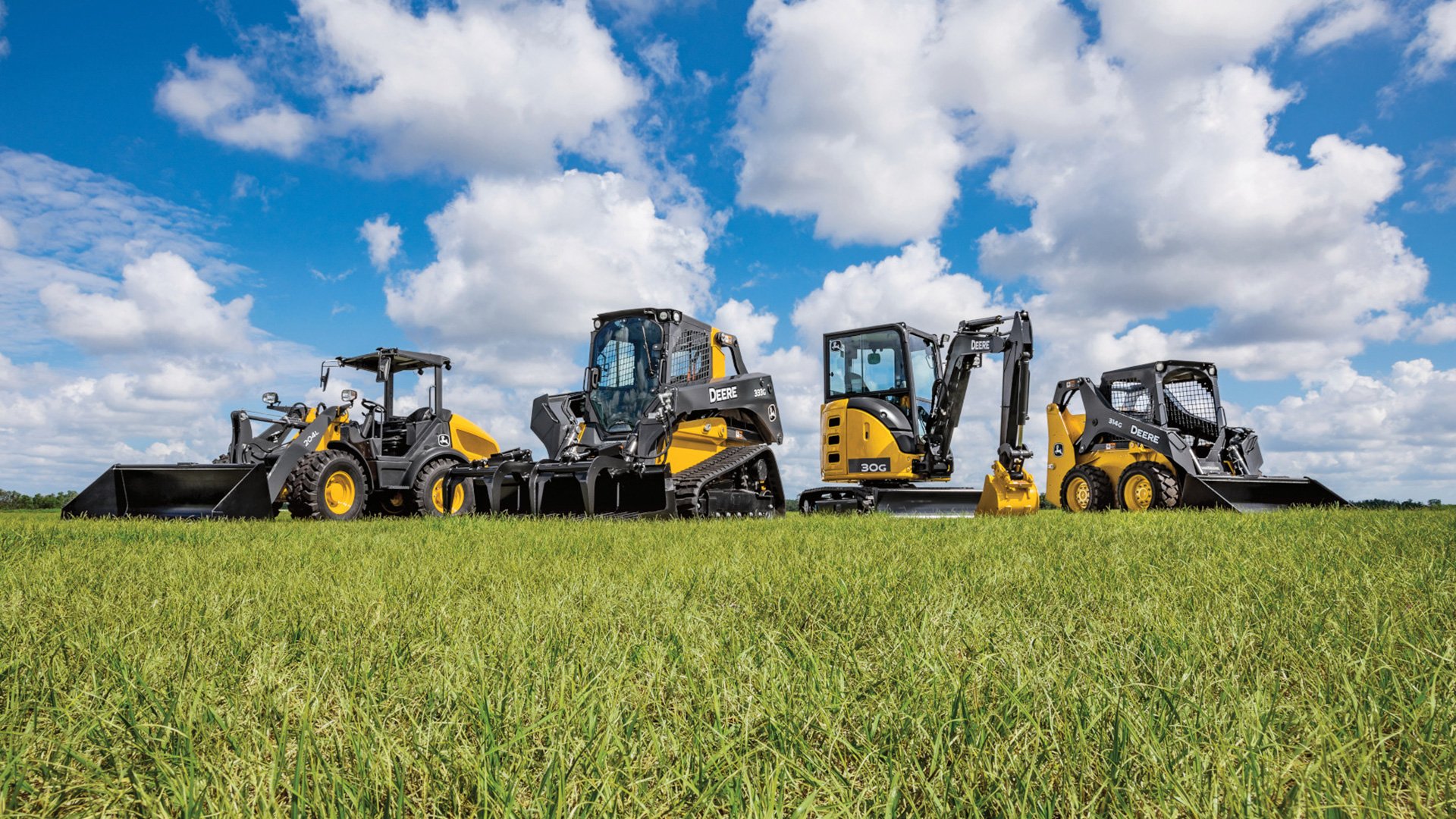
Protecting Your Investment in Deere
Regardless of which brand you choose, protecting a $50,000 to $80,000 investment makes sense. John Deere offers PowerGard Protection Plans specifically designed for compact construction equipment. These plans cover major components beyond the standard warranty period and can be structured to match how long you plan to keep the machine.
For contractors who run high hours, a protection plan can turn an unexpected $8,000 repair into a predictable monthly cost. It is worth pricing out when you are putting together your purchase numbers.
Making the Right Call for Your Operation
At the end of the day...
Bobcat builds excellent, compact, maneuverable machines with a long track record and strong resale value. If you need a narrow machine for tight residential or urban work, Bobcat has options that John Deere does not match at the smallest frame sizes.
John Deere builds machines with higher lifting capacity in the mid-to-large frame classes, more advanced technology integration, and a maintenance design (the tilt-up cab) that saves real time in the field. For contractors managing multiple machines or running high-demand attachments, the Deere platform provides tools that reduce operating costs over time.
The right choice depends on the work you do, the size of your operation, and how much value you place on technology and dealer support. It's now our job to help you deeply understand the benefits of Deere and show you we'll be there for you throughout the entire experience — beyond the sale.
If you are in Ohio or Indiana and want to compare machines in person, the best next step is to schedule a demo or visit one of our locations. Our compact construction specialists can walk you through specific models side by side and help you spec a machine that fits your work and your budget.
Find parts for your 324G
Shop genuine John Deere parts that fit the 324G and S770 at Koenig Marketplace — search by your exact model to see what fits.
Not sure which compact machine is right for you?
Answer a few quick questions and Koenig will match you to the right John Deere machine for your jobsite, based on how you work and what you need.