Published: March 17, 2026
Updated: October 10, 2026
|
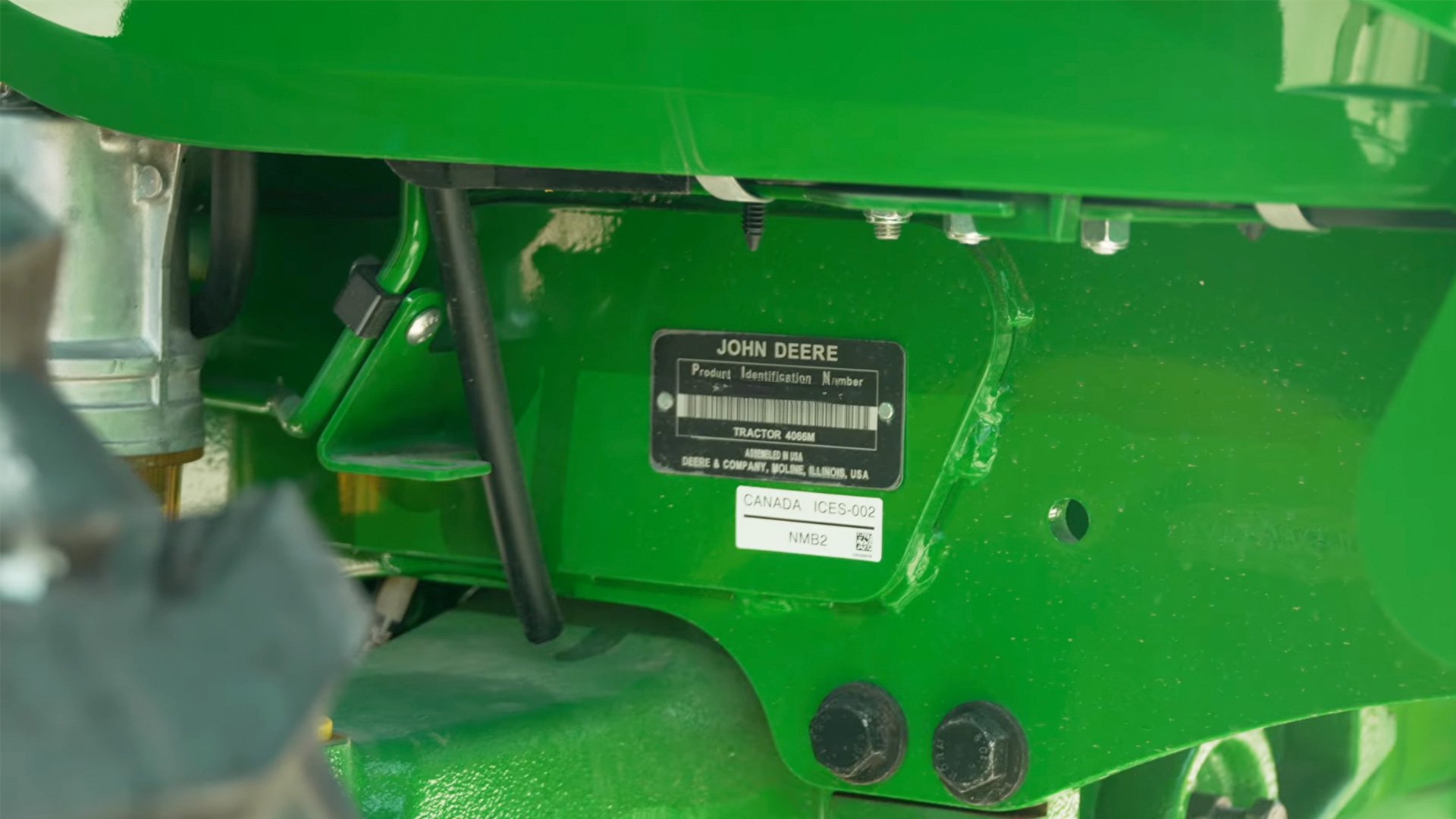
Your John Deere serial number (John Deere also calls it the product identification number, or PIN) is stamped on a metal identification tag on the machine's frame. On compact tractors it is on the right side of the frame above the front axle. On riding mowers it is under the seat or on the frame near the engine. On Gators it is at the rear of the frame, right next to the hitch receiver. On most current equipment it is a 17-character code like 1M0Z235AHCM130002, and the 10th character tells you the year the machine was built. Older machines carry a shorter number that follows a different pattern, and our parts team can decode those for you.
This is one of the most common questions our parts teams hear at Koenig stores across Ohio and Indiana. Your serial number is the single most important piece of information for getting the right parts, scheduling accurate service, and knowing exactly what machine you own.
This guide covers where to find the serial number on every major type of John Deere equipment, how to decode what those numbers and letters mean, and why it matters more than the model number.
Where Is the Serial Number on a John Deere Tractor?
The location of your serial number plate depends on the type of tractor you own. John Deere places identification plates in consistent spots across their product lines, but those spots vary by machine category.
Compact utility tractors (1 Series, 2 Series, 3 Series, & 4 Series):
The serial number plate is typically located on the right-hand side of the tractor frame, just above the front axle. On most sub-compact and compact utility tractors, you can find it by standing at the front-right corner of the machine and looking at the frame rail between the front tire and the engine compartment.
Large Ag Tractors (5 Series and up)
Larger John Deere tractors usually have the serial number plate on the right side of the frame as well, though the exact position can shift depending on the model. On some newer models, the plate is behind a panel or near the steps on the right side.
Lawn tractors and zero-turn mowers
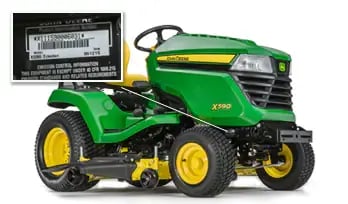
For riding mowers and zero-turn models, the serial number plate is commonly found beneath the seat or on the frame near the engine. On Z-Track mowers, check the frame tube between the rear wheels. On X300 and X500 series lawn tractors, it is usually under the seat or on the frame near the rear axle. Grass clippings and grime can make the tag hard to read, so wipe it with a cloth before you try to write it down.
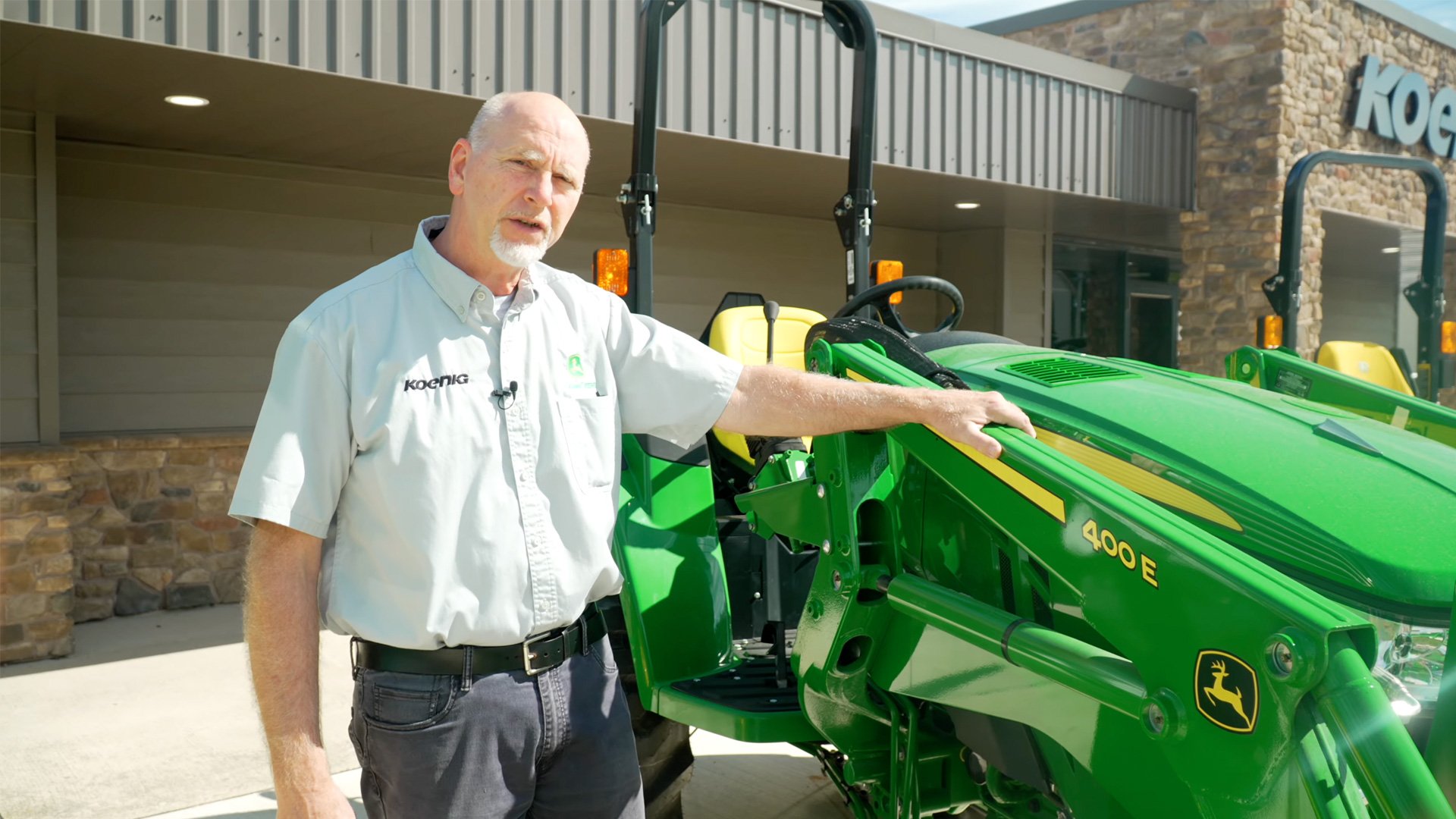
This short video from our team walks through exactly where to find the serial plate on compact utility tractors. It takes less than a minute to locate once you know the spot.
How to Find the Serial Number on a John Deere Gator
Gators keep their serial number plate in a different spot than tractors. On most Gator models, the identification plate is on the rear of the frame, right next to the hitch receiver. Stand behind the machine, look at the frame beside the receiver, and you will find it.
Newer Gators usually have a stamped metal tag riveted to the frame. Older models may have a sticker-style label. Either way, start at the hitch receiver.
Before you crawl around looking, check your original purchase paperwork. The serial number is printed on your sales receipt and on your warranty registration if you completed one. John Deere's Operations Center account also stores your serial number if you have registered your equipment online.
Our team filmed this quick walkthrough showing the exact Gator serial plate location. Bookmark it for the next time you need to find yours in a hurry.
How to Read a John Deere Serial Number
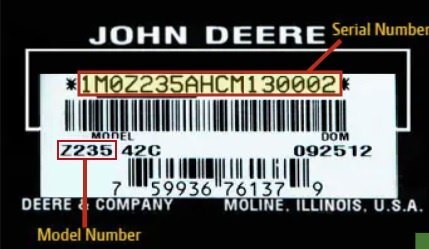
Once you have found the serial number plate, you are looking at a 17-character alphanumeric code. Each section of that code carries specific information about your machine.
If your plate shows a shorter number, which is common on older machines, it follows an earlier pattern and the position-by-position breakdown below will not line up. Do not guess. Text a photo of the plate to your nearest store and our parts team will decode it and confirm the model and year.
Here is how to break it down
Example serial number: 1M0Z235AHCM130002
The first two characters identify the manufacturing plant. "1M" indicates a John Deere factory in the United States. Other prefixes point to other Deere factories around the world.
Characters 3 through 8 encode the machine model. This is the section your dealer's parts system uses to match the exact configuration of your tractor, mower, or Gator to the correct parts catalog.
The 9th character is a mathematical check digit. It does not represent a feature of the machine. Instead, it is a calculation based on the other characters that helps catch data entry errors when the serial number is typed into a computer system.
What Year Is My John Deere? Reading the Year Code
The 10th character in your serial number tells you the year your equipment was manufactured. John Deere follows a standardized coding system that cycles through letters and numbers.
A few important notes about the year code. The letters I, O, Q, U, and Z are skipped because they look too similar to numbers (1, 0, 0, and 2) or other letters. The manufacturing year may also be one year off from the "model year" because production for a new model year often begins in the fall of the prior calendar year. A tractor whose year code decodes to a given year may have rolled off the line late in the year before.
This is particularly useful when you are shopping for used equipment. Knowing how to decode the year from a serial number lets you verify the model year independently rather than relying solely on the seller's claim.
Why Your Serial Number Matters More Than Your Model Number
Many equipment owners assume that knowing their model number is enough to order parts. For example, you know you have a John Deere 1025R, so you search for "1025R parts" and pick something that looks right. The problem is that John Deere frequently updates components within the same model designation across production years. A hydraulic filter for an early 1025R may be a completely different part number than the same filter on a 1025R built a few years later.
Your serial number eliminates guesswork. When you give your serial number to a parts specialist, their system pulls up the exact build sheet for your specific machine. That means every filter, belt, blade, and seal matches exactly what your equipment needs. No returns, no compatibility issues, no wasted trips. You can do the same thing yourself: our online parts store lets you pull up equipment diagrams by serial number and order genuine John Deere parts from them.
This applies to service as well. When you schedule service with Koenig, providing your serial number upfront lets our technicians prepare the correct parts and diagnostic information before your machine even arrives at the shop. That saves you time and keeps your downtime as short as possible.
Deciding between genuine John Deere, aftermarket, or remanufactured parts? Our guide to OEM vs aftermarket John Deere parts explains where each one makes sense and what it means for your warranty.
Where to Find Serial Numbers on Other John Deere Equipment
Beyond tractors, mowers, and Gators, here is where you can find serial numbers on other common John Deere equipment.
Skid steers and compact track loaders
The serial number plate is typically on the left side of the cab, near the operator's seat mounting area, or on the main frame rail visible from outside the cab.
Compact excavators
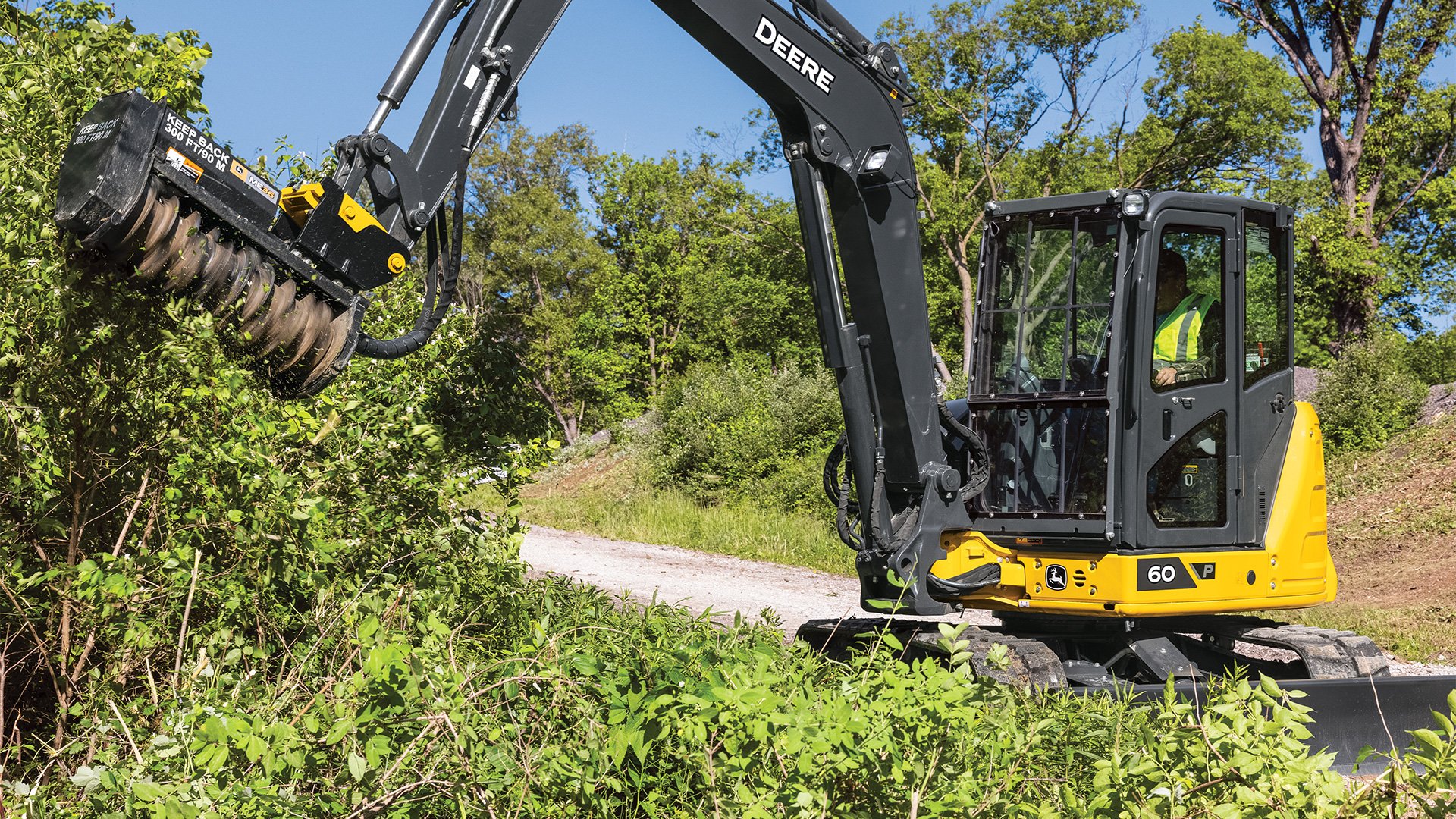
Check the main frame, usually on the right side near the track frame or on a plate visible when you open the engine compartment access panel.
Combines and large ag equipment
The serial number plate on combines is usually on the right side of the frame near the grain tank or on the main frame rail near the front axle. For planters, drills, and other pulled implements, check the tongue or hitch area where the implement connects to the tractor.
Attachments and implements
Front-end loaders, mower decks, and other attachments have their own separate serial numbers. These are usually stamped on the main frame of the attachment, not on the tractor they are mounted to. When ordering parts for an attachment, you need the attachment's serial number, not the tractor's.
Keeping Your Serial Number Accessible
Tired of hunting for your serial number(s) every time you need them?
Take a photo. Walk out to each piece of equipment you own, find the serial plate, and take a clear photo with your phone. Save these photos in a dedicated folder or note on your device.
Write it down. Keep a written log of all your equipment serial numbers in a location you will not lose: a shop notebook, a spreadsheet, or even taped to the inside of your toolbox lid.
Register with John Deere. Setting up a free Operations Center account and registering your equipment stores your serial numbers digitally. It also makes warranty claims and recall notifications automatic. The John Deere Equipment Mobile App makes this easy: open the app, choose to add equipment, and scan the serial plate with your phone's camera. No typing required, and you can find parts and operator's manuals for that machine from the same app.
Share it with Koenig. When you set up an account at Koenig, we store your equipment details so that every future parts order and service appointment starts with the right information already loaded. You can do this during your next visit to any of our stores across Ohio and Indiana, or by calling or texting your local store directly.
What If Your Serial Number Plate Is Missing or Damaged?
It happens. Plates get corroded, painted over, or knocked off entirely.
If you can't find or read your serial number, here is what to do:
First, check for a secondary identification label. Many John Deere machines have the serial number stamped in more than one location. On some tractors, the number is stamped directly into the frame in addition to the riveted plate. Look for stamped characters on the frame rail itself.
Second, check your original purchase documentation. Your bill of sale, warranty registration card, and any John Deere Financial documents will all list the serial number.
Third, contact your nearest Koenig store. If the machine was previously serviced at a John Deere dealership, the serial number is likely on file. Our service records go back years, and we can often retrieve a serial number from a previous work order tied to your name or business.
If none of these options work, John Deere's Customer support can sometimes identify a machine based on photographs and other details like the model, approximate year, and purchase location.
Quick Reference: Serial Number Locations by Equipment Type
Bookmark this table or save it to your phone for the next time you need to find a serial number quickly.
| Equipment Type | Where to Look |
|---|---|
| Compact Tractors (1-4 Series) | Right side of frame, above front axle |
| Large Tractors (5 Series+) | Right side frame rail, near steps |
| Zero-Turn Mowers | Frame tube between rear wheels or under seat |
| Lawn Tractors (X Series) | Under seat or rear frame near axle |
| Gator Utility Vehicles | Rear of frame, next to the hitch receiver |
| Skid Steers / CTLs | Left side of cab or main frame rail |
| Compact Excavators | Right side frame near track |
| Combines | Right side frame near grain tank |
| Pulled Implements | Tongue or hitch connection area |
| Attachments (loaders, etc.) | Main frame of the attachment itself |
Frequently Asked Questions
Where is the serial number on a John Deere tractor?
On compact utility tractors (1, 2, 3 and 4 Series), the serial number plate is on the right side of the frame, just above the front axle. On larger tractors (5 Series and up) it is also on the right side of the frame, sometimes behind a panel or near the steps.
Where is the serial number on a John Deere riding mower?
Under the seat or on the frame near the engine. On Z-Track zero-turn mowers, check the frame tube between the rear wheels. On X300 and X500 lawn tractors, look under the seat or on the frame near the rear axle.
Where is the serial number on a John Deere Gator?
On most Gator models the identification plate is on the rear of the frame, right next to the hitch receiver.
How do I tell what year my John Deere was made?
On a current 17-character serial number, the 10th character is the year code. The letters I, O, Q, U and Z are not used, and the build year can be one year earlier than the model year. Older machines with shorter numbers follow a different pattern, so text a photo of the plate to your nearest store and our parts team will decode it.
Why do I need my serial number to order parts?
John Deere updates components within the same model across production years, so a filter for an early 1025R can have a different part number than the same filter on a later one. The serial number pulls up the exact build of your machine, so every part matches.
What if my serial number plate is missing or unreadable?
Look for the number stamped into the frame rail, check your bill of sale or warranty paperwork, or contact your nearest Koenig store. If the machine was serviced at a John Deere dealership, the serial number is likely on file.
Our team has a full library of short videos showing serial plate locations on different equipment types. These are worth bookmarking if you own multiple John Deere machines. You can also chat with our website assistant on this page (or anywhere on our website) and it will help you understand your product identification number. And if you would rather talk to a person, call or text your nearest store with a photo of the plate and our parts team will take it from there.
Find parts for your X300
Shop genuine John Deere parts that fit the X300 and X500 at Koenig Marketplace — search by your exact model to see what fits.
See how the 1025R compares
Weighing your options? Koenig has side-by-side spec comparisons for the equipment we sell:
Not sure which compact machine is right for you?
Answer a few quick questions and Koenig will match you to the right John Deere machine for your jobsite, based on how you work and what you need.